Watch Film
Synopsis
A model steps into the glare of the fashion world — and learns what its brilliance costs.
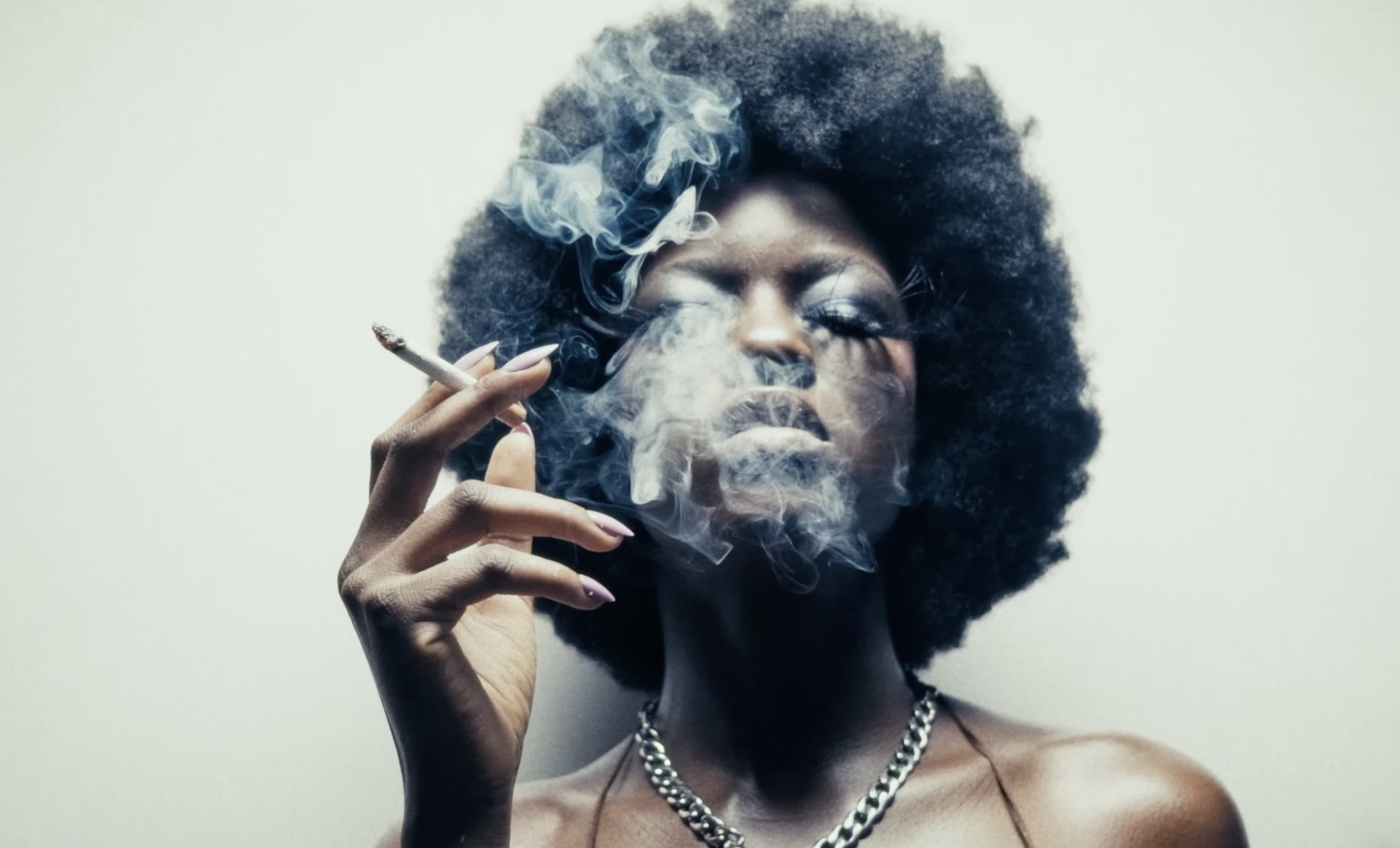
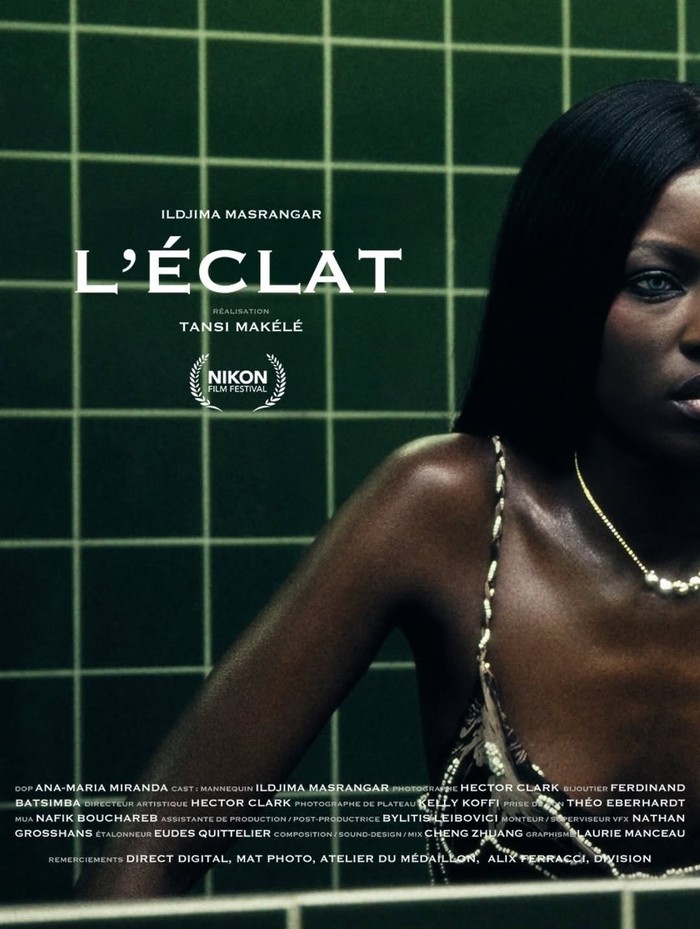
L’Éclat works in the polished language of the fashion film, then turns that beauty back on the industry that makes it. Following a young model drawn toward the gleam of the runway, Tansi Makele’s short uses the seduction of the image against itself — every frame gorgeous, every frame quietly asking what is being paid for it. The title means brilliance, or gleam; by the end, it’s clear that gleam has a cost. Winner of the Grand Jury Prize at the Nikon Film Festival.
Details
Director Interview
Director Tansi Makele on the making of L’éclat. Tap a question to read the answer.
L’Éclat came out of a desire to make my first true fiction film. Until then I’d mostly been directing fashion films and editorial work, and I felt the need to build a fictional world around a simple but powerful idea.
The film began with the image of a dark contemporary fairy tale. I love fairy tales because they allow magic to exist without explanation — the supernatural becomes a language rather than a plot device, which makes it possible to explore very real emotions and ideas.
The Nikon Film Festival, whose theme that year was Beauty, became the perfect framework for that story. Since I was already working in the fashion industry, that world naturally became the setting. I pitched the idea very early to my cinematographer and editor, and from that point on we developed the film together, constantly refining it to fit the festival’s 2 minute 20 second format.
The Nikon Film Festival has always represented emerging filmmaking to me. Every year you discover hundreds of filmmakers putting their work into the world — often with very limited resources, but an incredible amount of ambition.
When I entered, I wasn’t thinking about winning. I simply wanted an excuse to finally make a fiction film that reflected my cinematic universe.
What makes the festival so special is how accessible it is. Anyone can submit a film for free — a student, an established filmmaker, or someone making their very first short. That openness creates an incredibly diverse selection of voices, which makes the recognition even more meaningful.
I think the production value is actually the result of many smaller projects that came before L’Éclat. My team and I had already worked together on fashion films, documentaries and experimental shorts, so by the time we made this film we’d developed a shared visual language. Everyone was involved from the writing stage through storyboards, which meant every department understood the intention behind each image.
We also made very conscious choices. We used a camera I know extremely well rather than chasing expensive equipment, and instead invested where it would actually appear on screen: lighting, production design, accessories and casting. Lighting was particularly important because almost everything was shot indoors, where we had to build the atmosphere from scratch.
The final ingredient was sound. Cheng’s work brought an emotional cohesion to the film that completely transformed the experience.
Ultimately, I believe simplicity creates the strongest cinematic images. If an image is immediately clear, both visually and emotionally, the audience is free to focus on the characters and the ideas underneath.
Originally I imagined the film with a much grittier, almost documentary-like aesthetic. I thought realism would make the protagonist’s actions feel more disturbing. Looking back, I’m glad we went in the opposite direction.
The polished visual language creates a stronger tension with what the audience is actually watching. It raises a question that interested me much more: how beauty can make us accept, or even admire, deeply disturbing things, simply because they’re presented through an aesthetically pleasing lens.
Using the visual codes of fashion therefore became an integral part of the film’s meaning, rather than simply its style.
Interestingly, no. While writing, I was thinking much more broadly about overproduction, self-destruction and the way we can become trapped by our own ability to produce value.
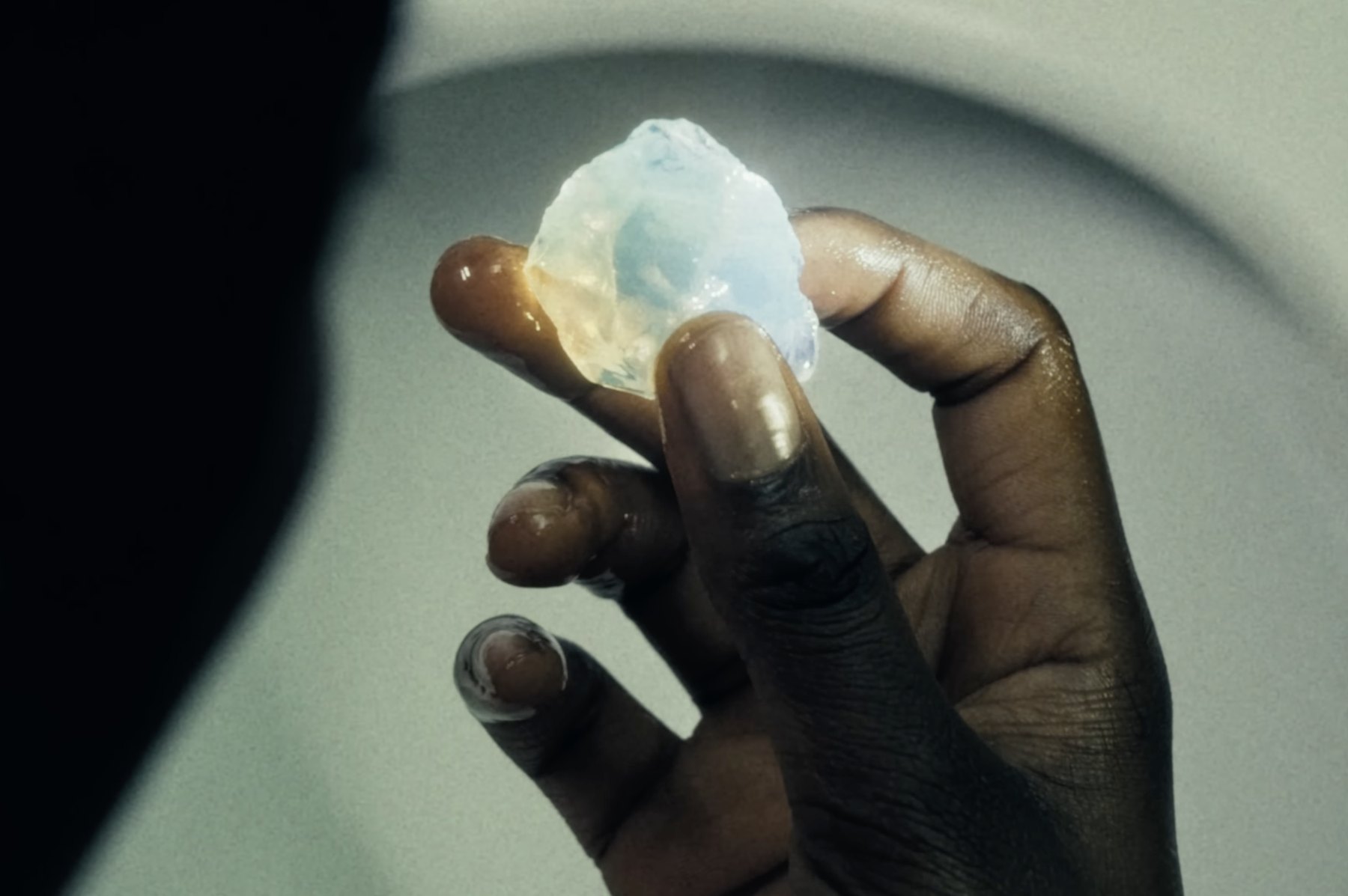
Fashion simply became the landscape in which this fairy tale takes place. The princess became a model. The oracle became a jeweller.
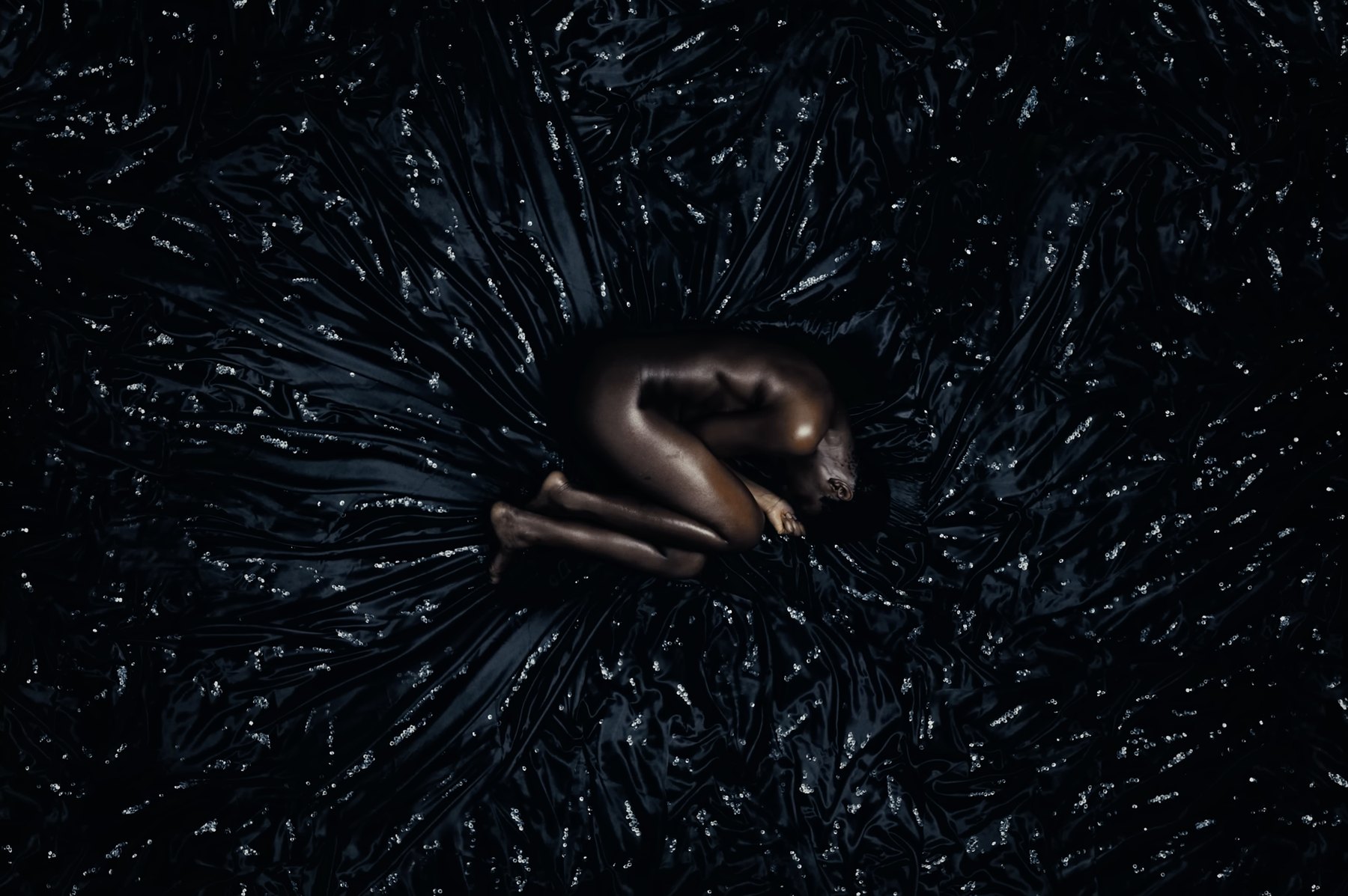
That metaphorical approach opened the film to multiple interpretations. Some viewers see eating disorders; others recognise addiction, creative burnout, exploitation within the fashion industry, or even the history of blood diamonds. One reading that’s particularly meaningful to me concerns Black bodies and the history of extraction: a Black woman producing diamonds while remaining unable to benefit from the value her own body creates.
I wanted the film to invite those different readings rather than dictate a single interpretation.
In French, éclat has several meanings. It can refer to brilliance or radiance, but it also means a fragment — a shard of glass. I loved that contradiction: something can shine while already being broken.
That duality reflects the central question of the film: what happens when the act of creation loses its meaning and becomes pure production? Working in the fashion industry, I sometimes witnessed how constant production can become an end in itself. What once felt prestigious slowly turns into routine, and eventually into exhaustion.
So what I’d say to her is: is it really worth it? For me, L’Éclat isn’t really asking whether beauty is dangerous. It’s asking whether losing sight of meaning is.
I don’t think anyone ever fully finds meaning — but I believe the search itself is worth protecting.
I’m currently developing several projects, all connected by a fascination with myths, fairy tales and contemporary folklore.
I’m interested in stories where the supernatural isn’t an escape from reality, but another way of looking at it. I hope L’Éclat is only the beginning of that journey.
Director
Tansi Makele
Writer & Director
Tansi Makele wrote and directed L’éclat, a fashion-film-inflected drama that won the Grand Jury Prize at the Nikon Film Festival — turning the polish of the fashion image back on the industry that produces it.
Stills

The One-Sheet
Winner — Grand Jury Prize · Nikon Film Festival
Log it. Rate it.
Every film we take lands on our Letterboxd. Follow along and you'll catch the next one the moment it's live.
Follow on Letterboxd →