Watch Film
Synopsis
"A moment suspended between memory and imagination."
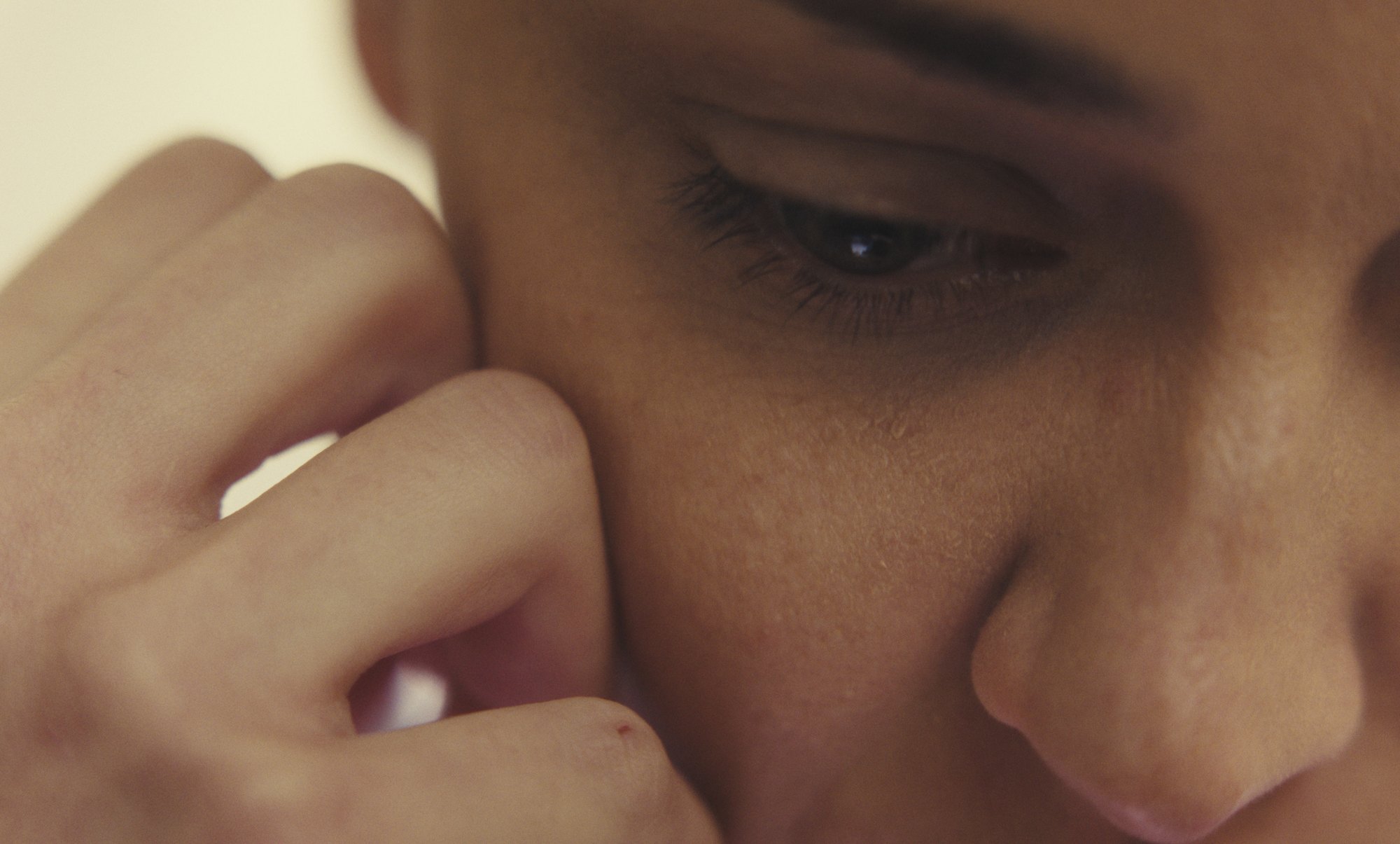
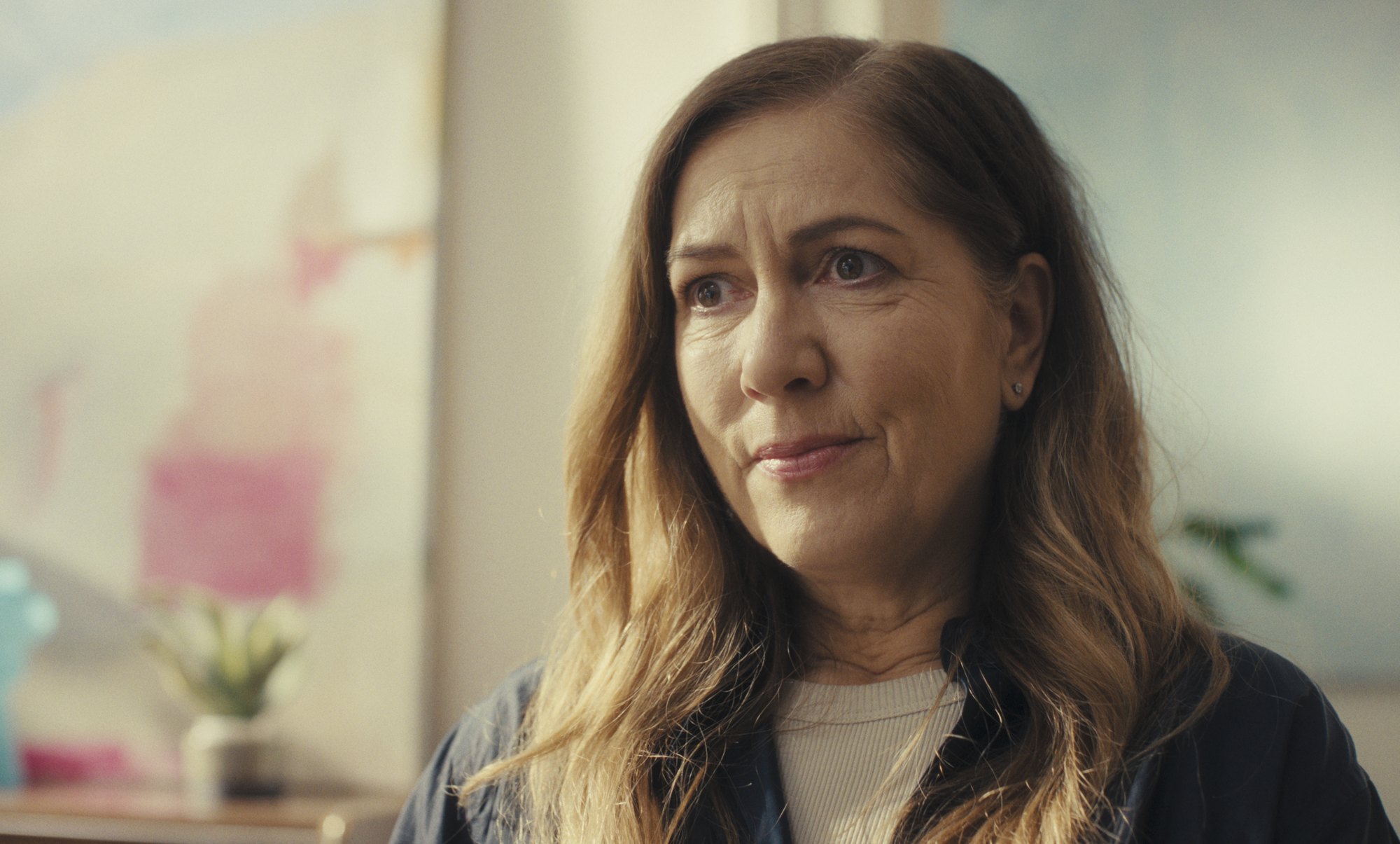
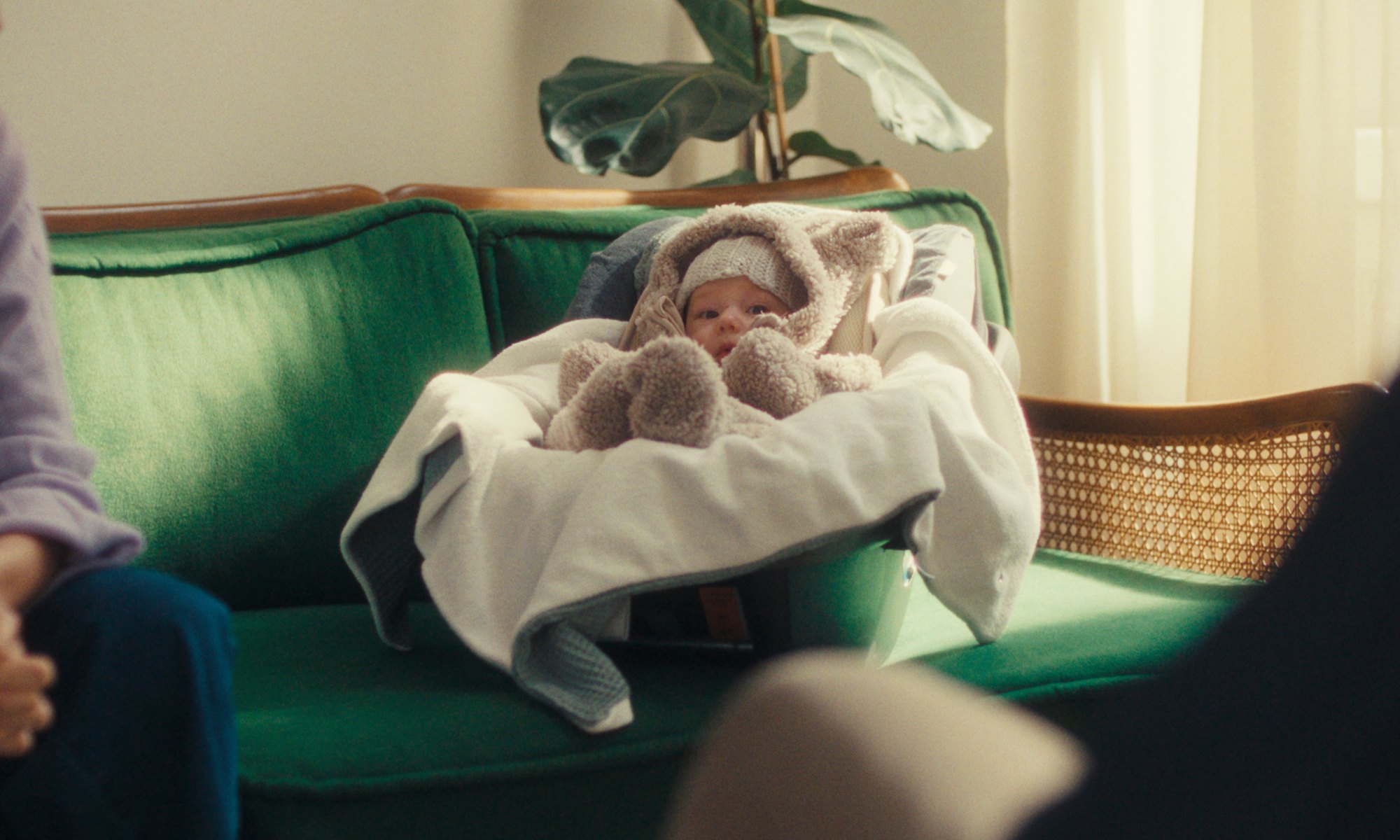
Lina revisits a time in her life marked by emptiness and quiet despair. As she encounters her younger self, a silent truth emerges: some wounds will heal, but their traces remain. Narben is a film about the meeting point between who we were and who we became, told through a structure that moves between the remembered and the imagined, never fully separating the two. At nine minutes, it holds more interior weight than films many times its length.
Details
Director Interview
Director Joshua Haiden on the making of Narben. Tap a question to read his answer.
Being in a room with almost 800 people and watching something that started as a very personal idea come to life on one of the biggest screens in Vienna was incredibly special. It reminded me why I love cinema so much: you can feel the presence of other people in the room. You sense when something is being received, when something is translating emotionally.
To premiere Narben at the Gartenbaukino, which is such a historic and beautiful cinema, made the experience even more overwhelming. We had put so much heart and passion into the film, and suddenly it belonged to the audience as well. The Q&A afterwards was especially meaningful to me, because I could feel that the film had really connected with a lot of people.
Florian Fleischer and I first worked together on my first film, where he acted in one of the roles. At the time, he had studied acting and was becoming more and more interested in writing. Later, he published a book of twelve short stories called „Vom Tellerwäscher zum Geschirrspüler".
After some time without seeing each other, we reconnected, and he gave me the book. One of the stories was called Narben. It describes a young woman sitting in therapy, speaking about her inner emptiness, loneliness, and the feeling of being misunderstood by everyone around her — even by her therapist. At the end of the story, it is revealed that the therapist also carries scars.
That image stayed with me for a long time. I was not immediately thinking about turning it into a film, but I kept returning to it. What moved me was the idea that we should not judge someone before we have, in some way, walked in their shoes. That sentence also became important in the film.
From there, I started thinking about a different approach: what if the two women were not simply two separate people, but the same person at different points in life? What if the older version of this woman had reached a point where she could sit on the other side of the room and offer help, understanding, or simply presence to her younger self? That became the emotional core of the film.
I see Narben as a complete short film. It works in its little more than nine minutes because it feels like a memory — something brief, fragmented, and emotionally concentrated. Of course, the themes could be explored in a longer format, and I am very interested in psychological storytelling, memory, trauma, and the inner layers of a character. These are elements that appear again and again in my work.
The film itself will remain a short. I do not currently plan to expand it into a feature. What it did give me, however, was a deeper sense of how I want to work with actors and with emotional ambiguity. The actresses brought so much precision and honesty to the film, and that experience definitely influenced the way I think about future projects. I would say that parts of its emotional language will probably continue into my future work.
Yes, absolutely. It gives you a completely different perspective. For a long time, I was mainly on the other side: submitting films to festivals and waiting for answers. Being part of Schmeckt! showed me how much work, care, and responsibility goes into creating a space for other filmmakers.
This year, my focus was mainly on partnerships, sponsoring, press, media relations, and communication. Together with the team, I was also involved in shaping the festival and supporting the curation process. What inspired me most was seeing how many strong, honest, and beautifully made films were submitted by people working with very little money — sometimes with nothing more than a small camera, a clear idea, and the courage to tell a story.
That is exactly what Schmeckt! wants to spotlight: filmmakers who begin before they have perfect conditions. People who are brave enough to tell a story even when they are outside traditional structures. I was rejected from film school twice, and I kept going. So for me, this festival is also personal. It proves that there are different ways into filmmaking, directing, and storytelling. There is not just one path.
The biggest challenge was definitely the location, especially because the film looks simple on paper: one room, two people. But the visual concept was actually quite ambitious. We wanted two very different emotional spaces. One part of the film has this warm, almost washed-out, sunlit atmosphere — bright, but still surreal. The other part needed to feel darker and more interior. That contrast was very important to the dramaturgy of the film.
For a long time, we could not find the right apartment. Three weeks before the shoot, we still had no location, which is quite stressful when you have to plan production design, lighting, logistics, and the entire technical setup. We looked at many apartments, but most of them would have required too much work. Then, almost by coincidence, our set manager Leonie found the perfect place through a friend. The apartment already had a lot of what we needed.
Of course, every solution created new challenges. The apartment was on the second floor, so lighting from outside became more complicated and more expensive. We also had to work very precisely with time, budget, and setup. But those limitations forced us to make clear decisions. There is always a bit of film magic in low-budget filmmaking. You plan as much as you can, and then things fall apart, change, or suddenly come together through friends, family, and coincidences. In our case, that energy served the film. It made the process more fragile, but also more human.
I am currently developing my first feature film, The Water Beneath Us, with an Austrian production company. It is in the writing and funding process right now. The film is about two people crossing the North Atlantic Ocean by sailing boat and spending five weeks together on the open sea. It is based on a true event and will be a very psychological chamber piece — intimate, tense, and focused on the dynamics between two people in an extreme situation.
I am also developing two new short films. One is called Alles was bleibt sind wir, which is about the unconditional love between an older brother and his younger brother. It is set in Vienna during the summer and will require a careful casting process, especially for the child role. The other short film takes place entirely in the Vienna underground and follows an unconventional encounter between two strangers.
With Schmeckt!, we definitely have big plans. The festival will return next year, most likely again in June. We are also going to be part of the Rotlicht Festival in Vienna in November, where we will curate a short film block and host film talks. Rotlicht is a festival for analog photography, so it feels like a very fitting context for us.
What we want to build with Schmeckt! is more than just a festival. We want it to become a platform for young artists who need visibility, connection, information, and a sense of community. There is still too much gatekeeping in the industry. We believe there should be more openness, more exchange, and more togetherness. That is what we are trying to create.
Director
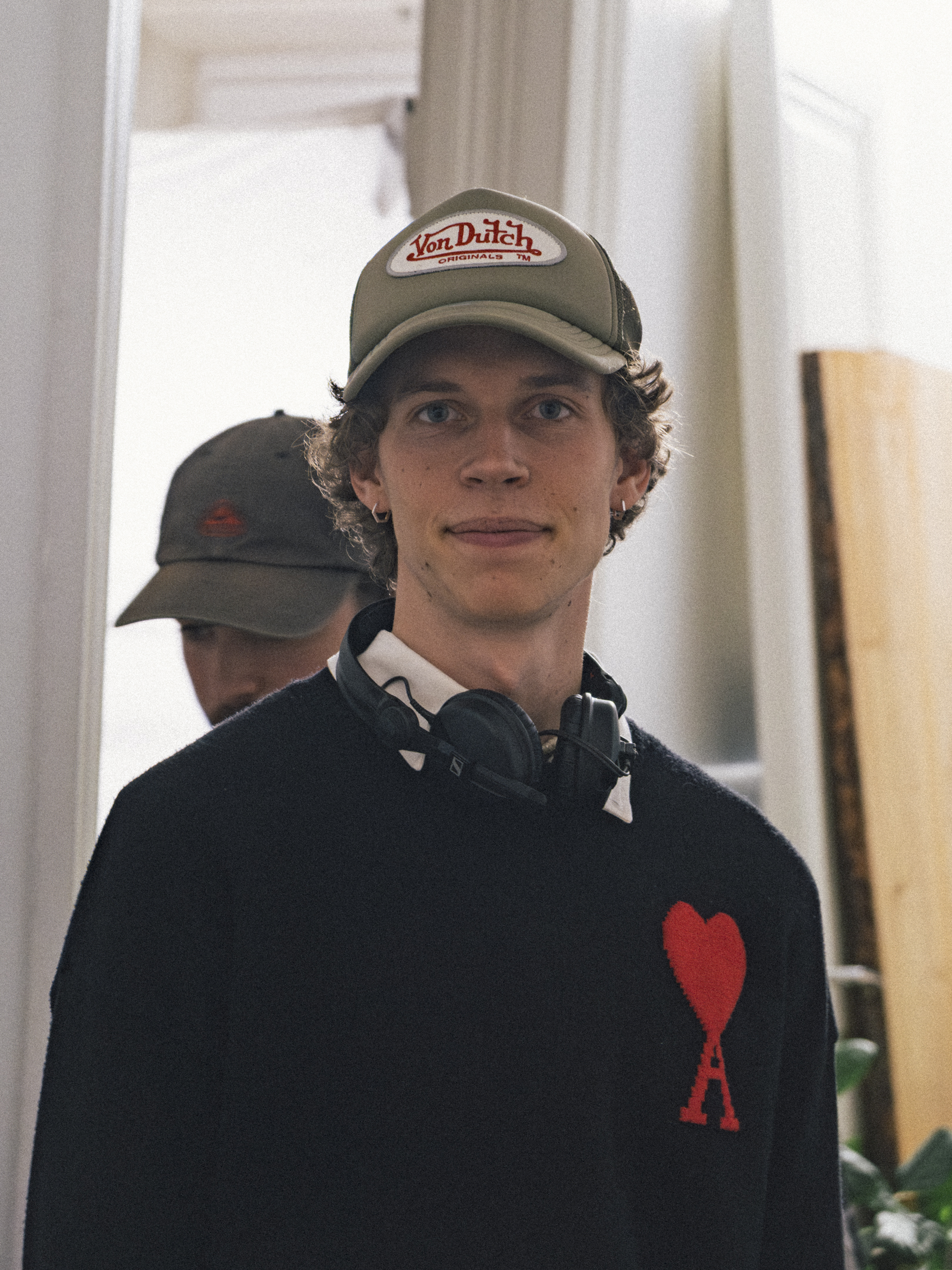
Joshua Haiden
Director / Writer / Producer
Joshua Haiden was born in Vienna. He graduated with a major in Photography and Film in 2021, then spent a year in Los Angeles working with the USC Shoah Foundation, where he focused on the visual documentation of the Holocaust and collaborated closely with survivors to build educational materials from their stories. Alongside this he took part in a range of photography and film projects and produced his own work, which has since gained international recognition.
Back in Vienna he worked with local artists across advertising and narrative filmmaking. He studied Photography and Design at the Faculty of Design in Würzburg, and trained in acting and dramaturgy at institutions including the Stella Adler Studio of Acting in New York and Los Angeles and Anthony Meindl's Actor Workshop.
Narben celebrated its world premiere at the Gartenbaukino in Vienna in June 2025 and was selected for the "Young Professionals" competition section of the 2026 Jung & Abgedreht Festival. Since the start of this year Haiden has also been part of the project management team of the Schmeckt! Short Film Festival. He is now developing his first feature, continuing his focus on intimate, psychologically driven stories rooted in memory, identity and human connection.
On the Film
Memory.
Self.
Healing.
Narben operates in the space that most films avoid — the interior life of recovery, where progress is not linear and the self you left behind does not simply disappear. By staging a literal encounter between Lina and her younger self, Haiden finds a formal language for something usually left to words: the way we carry our past versions within us, not as weight alone, but as evidence of survival.
Stills
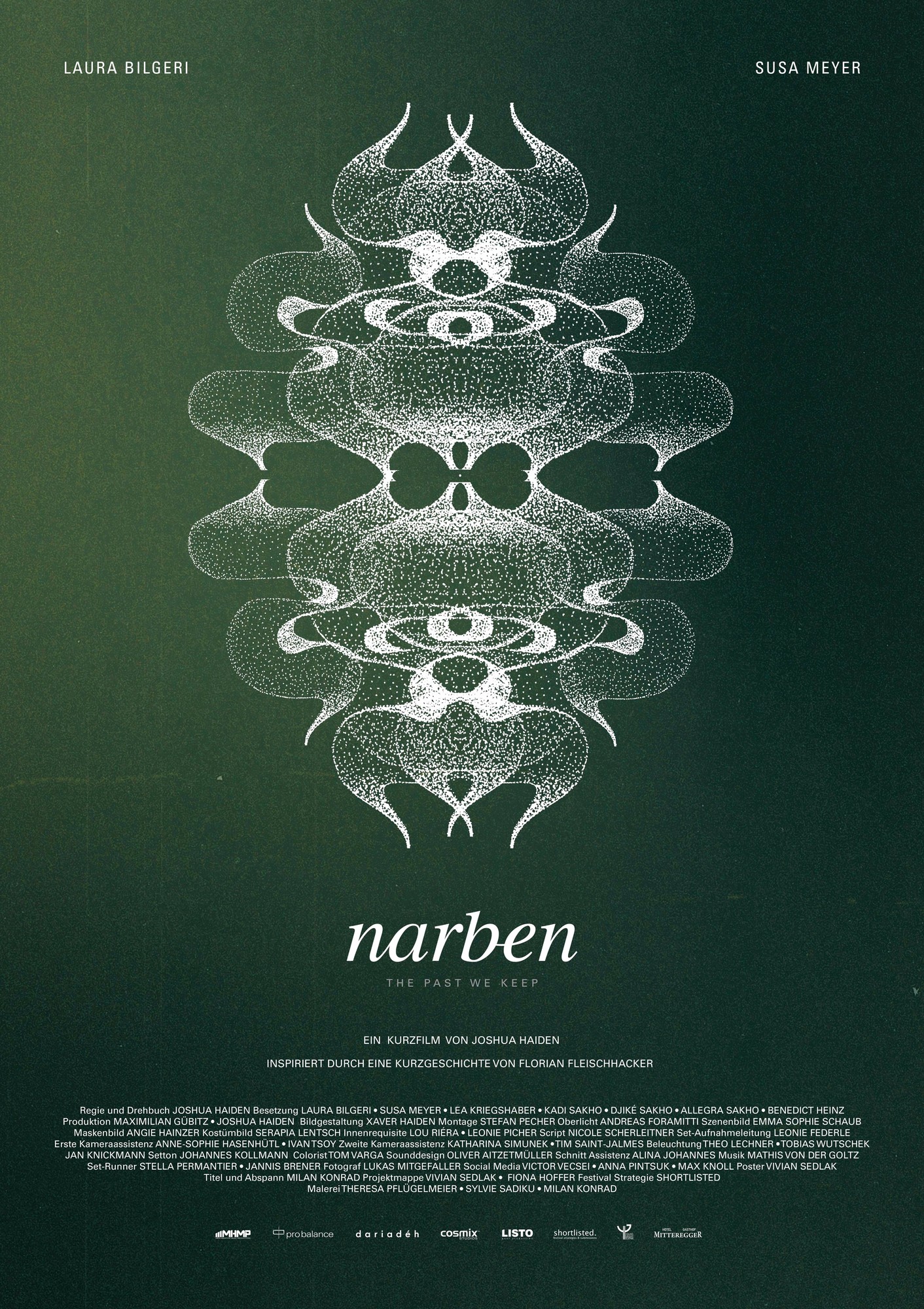
The One-Sheet
A Joshua Haiden Produktion · Austria, 2025
Be first to see it.
Every film we take lands on our Letterboxd first. Follow along and you'll catch it the moment it's live.
Follow on Letterboxd →