Hayyan: I want to start off with the obvious. The release of this film of course closely coincides with Steven Spielberg’s Disclosure Day, a movie that shares a lot of similar themes and ideas about the world at large; is there anything to this close association?
Alex: It's a funny world we live in. We shot Disclosure back in fall 2024, so I'm not even sure if we were in production at the same time as Mr. Spielberg's film. As fun as it'd be to say we were inspired by it, the similarities are purely a funny and somewhat ironic coincidence.
Hayyan: Do you personally believe that we deserve disclosure about the secrets of the world? Would that disrupt the natural order or unite us in a way like nothing else could?
Alex: I do believe disclosure of sensitive truths, as portrayed in our film, would create worldwide unrest at first. But I also think we're at a point where the world needs meaningful change. Whether that change would ultimately unite us, I'm not so sure. If the COVID-19 pandemic taught us anything, it's that even a truly global event doesn't necessarily bring people together. As much as I love films like Independence Day, where humanity unites against a common cause, reality is often much messier, y'know? Like watching that film as a kid I really believed! Haha.
Hayyan: What did you enjoy most about making Disclosure?
Alex: I would say what I enjoyed most about making Disclosure was the lessons it taught me, on and off of set. Coming into production of it, I had taken an almost 7 year hiatus away from the world of indie filmmaking as I pivoted into TV post-production. During that time, I soaked up everything I could and walked away with so much knowledge, which I was then able to impart into directing Disclosure. Much credit to the film's writer/exec. producer Raul Barquet for coming to me with the opportunity to direct and 'get back out there.' That said, it was no joke getting back on the figurative bike that was the director's chair. Then came the challenge of bringing the ship to harbor a second time as the film's editor. Every stage taught me something different about what works, what doesn't, and how a film evolves from production into post. That's what I love about filmmaking: every project humbles you, levels you up, and gives you something new to carry into the next one. I'm enormously thankful to everyone who contributed in front of and behind the camera.
Hayyan: How challenging was it adapting a script written by somebody else? Did you feel a responsibility to bring the screenplay to life 1:1 or did you feel that you can adapt the script to your needs?
Alex: Amazing and perceptive follow-up question. The most challenging aspect, bar none, was adapting Raul’s words to the screen. Though I did lend some input on the script heading into production, I genuinely tried my utmost to honor his words and intent. But it’s tough when it’s simply not your brainchild. You’re given this enormous responsibility to help raise this figurative “child” through one of the most important stages of its evolution. If you’ve written and directed your own work before, as I have, you have to find your own connective tissue — your own heartbeat — within someone else’s story. For me, the biggest challenge wasn’t necessarily adapting someone else’s script. It was finding the balance between being a steward of another writer’s vision while still bringing my own perspective as a director. That’s a delicate line to walk. I wanted to honor Raul’s intent while also finding the emotional rhythm and visual language that felt true to me. Did I succeed? Overall, yes. But I’ll be honest, I discovered more of my directorial voice during the edit. My spicy take is that films are made in the edit, not on set. That’s where performances, pacing, music, and structure all begin to reveal what the film really wants to be. Of course, you still need the right ingredients from production, otherwise the edit becomes an uphill battle. Thankfully, that wasn’t the case with Disclosure. It was an incredibly rewarding experience shepherding the cast and crew to the finish line, first on set and then again in post, and I’m very proud of what we accomplished together.
Hayyan: Bob Jaffe is brilliant in the film, how was he to work with?
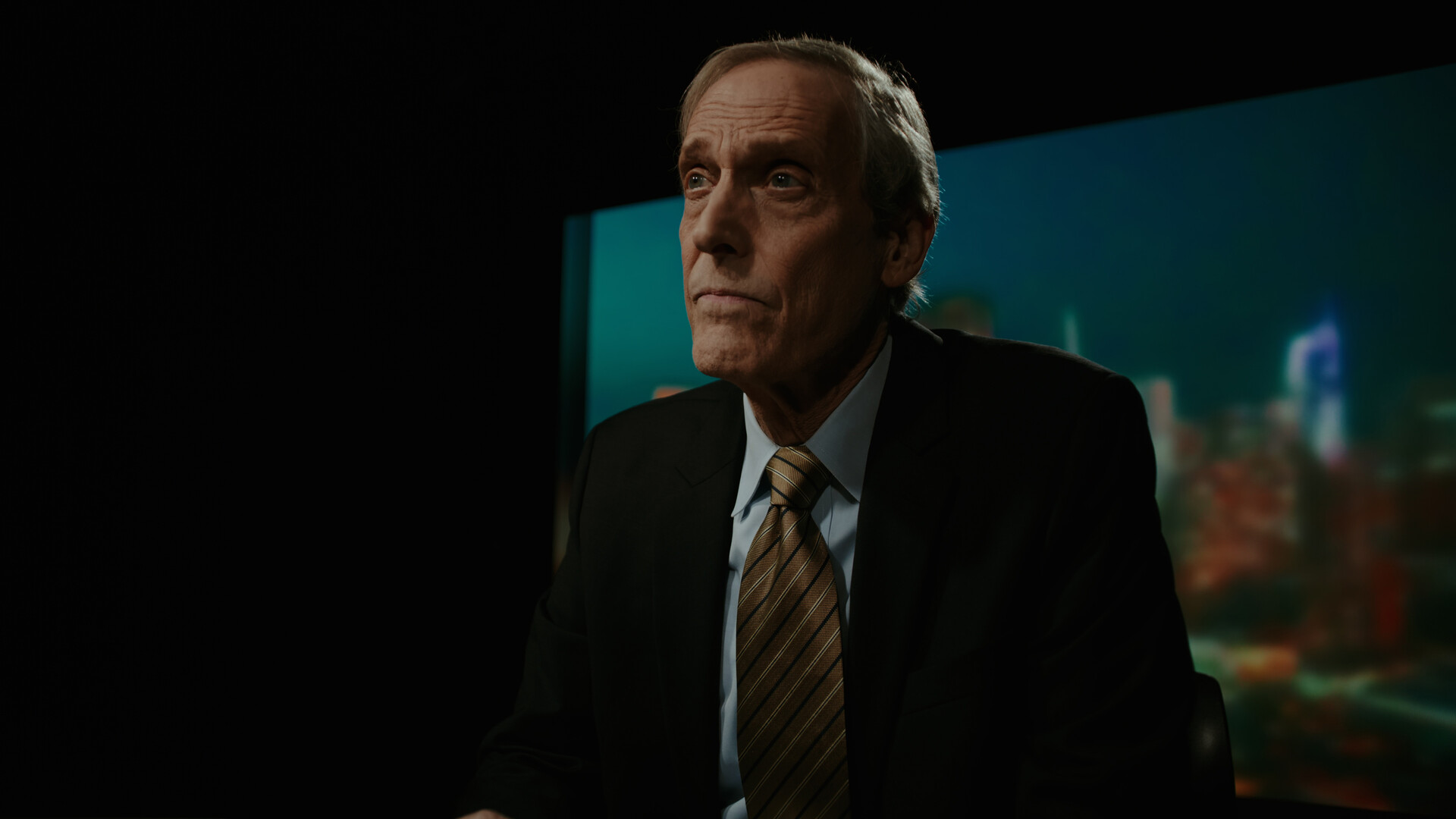
Alex: Bob Jaffe is one of the finest actors I've ever had the privilege of working with, and I was honored to have him play Gary. He brought an immense amount of gravitas and relatability to the role, and I loved watching him shape the character. My favorite scene of his is in the final act when Gary goes on-air one last time. The way Mattie shot it and the way Bob plays it are incredibly resonant. It's mesmerizing and powerful. I love giving actors their moments to eat and he ate down. You really feel his struggle, his sincerity, and his determination to get the truth out there. Off-camera, Bob was just as wonderful. He's one of the kindest and most collaborative people I've worked with, and that spirit carried over into the performance. The entire process of finding Gary together was incredibly rewarding, and I'm enormously grateful we had the opportunity to collaborate.
Hayyan: Finally, what’s next for you? Any projects lined up?
Alex: There’s a few things I’m cooking up next. Firstly, I’m in pre-production for a short psychological thriller/horror film shooting later this year called Surfaces alongside my co-writer/co-producer Arielle Beth Klein which I am very excited about. The film follows a celebrated photographer whose carefully constructed world begins to fracture when a mysterious woman forces him to confront the dark silence he’s built his life upon. Things’ll be ramping up very soon for that. I’m also set to direct Trench Rot, a slasher horror I’m actively co-writing with Raul & writer Kelsey Barnhart (the project is hinted at in Disclosure!) So, I’m definitely venturing further into the world of horror — my favourite genre — and I’m very excited for what’s to come.