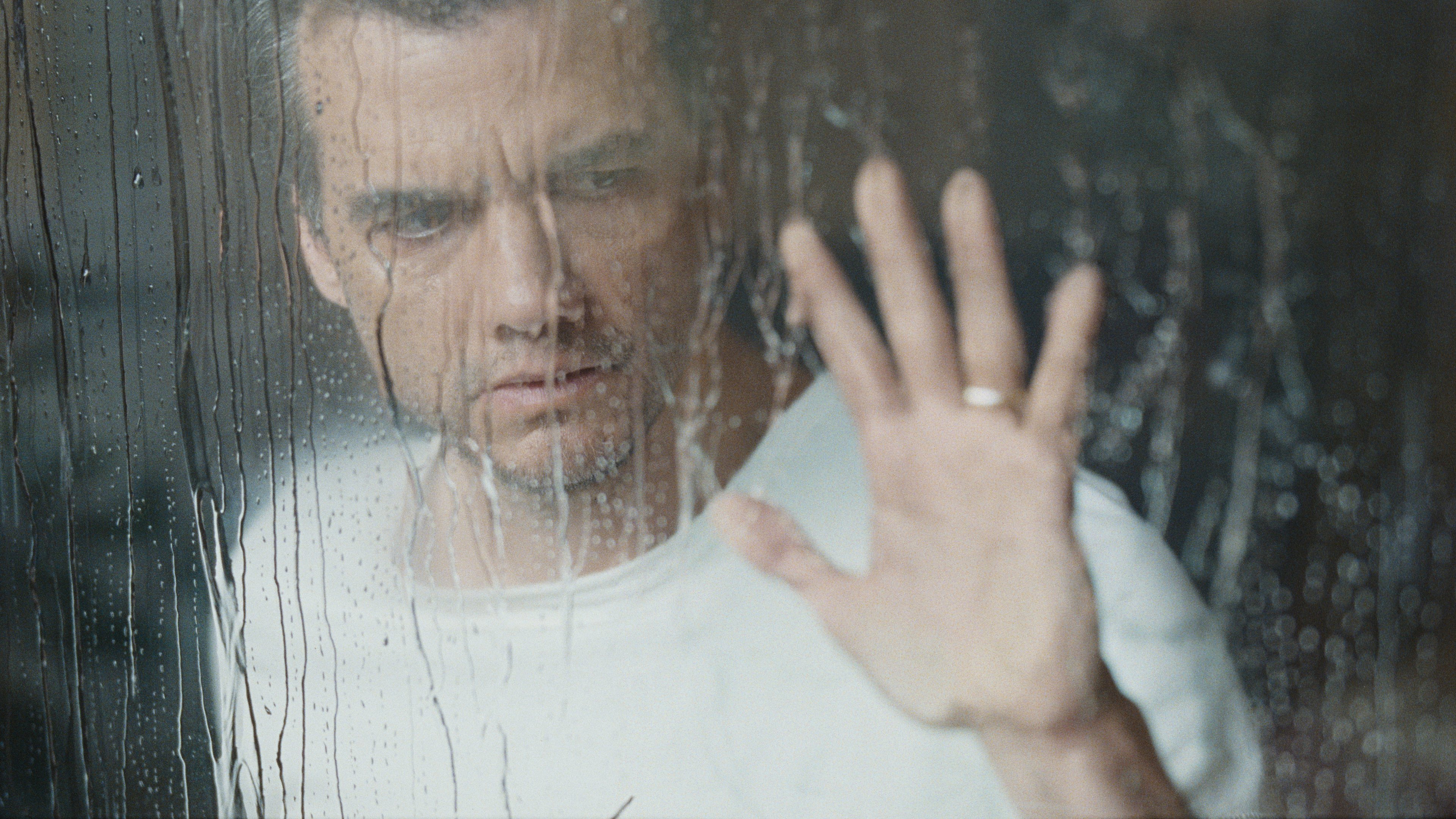
The Last House is Netflix’s newest attempt at an M. Night Shamyalan movie, yet somewhat misunderstands what makes them great. Hell, even M. Night Shamyalan often forgets, so how could Netflix pull it off? While there were some great things here, and this could have been a really interesting outing for Netflix, something we don’t often see in its movies, the second half of this really lets it down.
Firstly, me saying the second half is where this falters by no means says the first half is a masterpiece, because it definitely has its issues. Mostly, this rushes the first fifteen minutes, going from the start of the rain to them finding out its supernatural origins in an inorganic amount of time, making for an awkward progression into the second act.
What I expected from this was a sci-fi reimagining of the COVID-19 pandemic — everybody is shut inside their houses with no escape — and this definitely seemed likely in the first act. If this was how the rest of it panned out, I would have definitely seen this in a more favourable light because it could have at least had an interesting concept. However, this focuses far too much of its energy and screen time on the supernatural elements, being the monsters and the outside world in general.
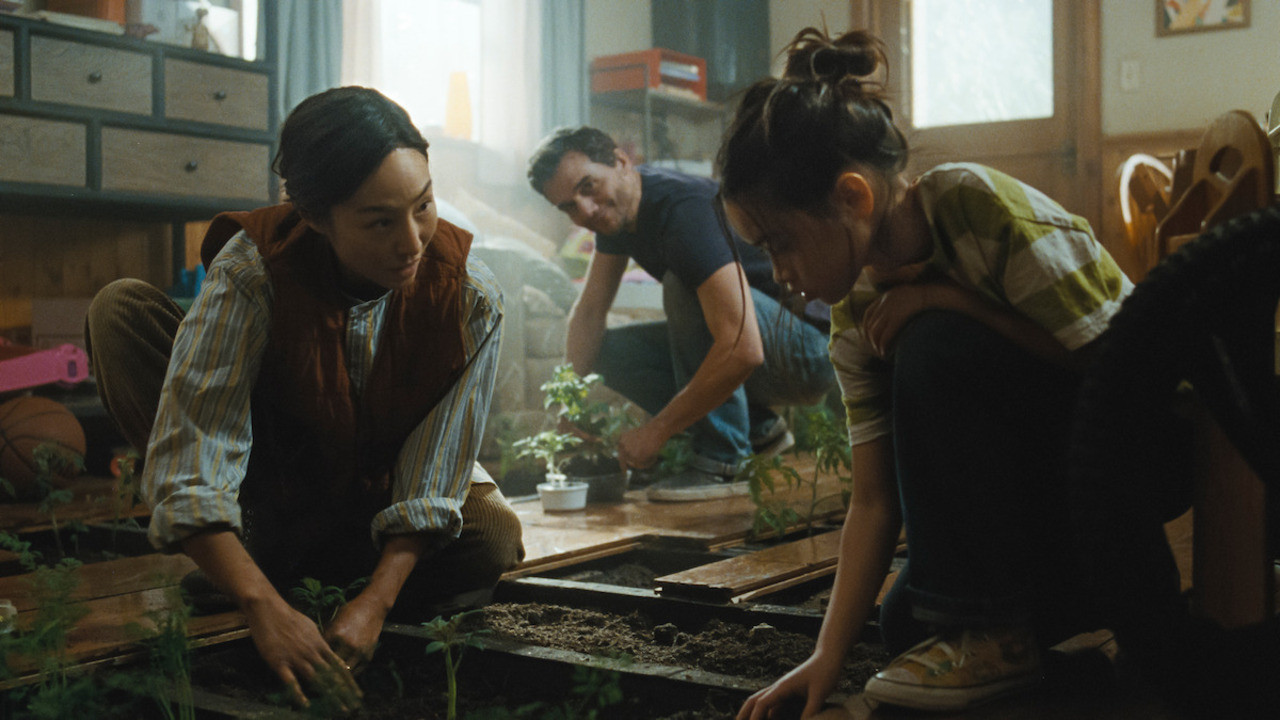
I loved the idea of simply observing this family as they figure out how to live, for as long as possible, within the confines of their home. Where this operates best is the scenes of this family struggling to survive, yet persevering and figuring out their latest problem, whether that’s navigating a simple family dynamic or figuring out their next meal — helped in absolutely no small part by the performances put on by Greta Lee and Wagner Moura. But, Netflix being Netflix, they felt a quite unnecessary need to remind the audience of the mystery of the outside and that something fishy is going on in moments where it’s simply unneeded and, often, ruins the flow of a scene.
The best parts of this often come from the family dynamic, which — at least for the first half — was really the driving force and emotional core of this. Just like I mentioned before, the scenes of them working through a problem together made up some of my favourite parts. Something I loved was seeing how this family comes together to choose hope, rather than becoming manic, until they eventually fall apart as the reality of their situation begins to kick in. However, what I loved was how Wagner Moura’s character changes as the family does. While everybody decides to keep moving and be hopeful for the future, he is as pessimistic as can be, knowing the reality of the outside world. Once everybody else succumbs to his level, he switches roles. He suddenly becomes the voice of optimism in a bid to keep his family with any amount of hope. He knows that hope is needed for them to thrive and when his family can no longer provide it, he knows he must step up.
The five-year time jump is where this really loses me, I simply just wasn’t interested in much that happened after that. As my favourite scenes consisted of this family learning to cope, the jump caused me to worry for what the next act will bring. They’ve now been coping just fine for the last five years, there’s now simply not much more that matters to me. This turns from a beautiful psychological horror story of a family learning to cope and persevere through the most adversity to a monster hunting action movie.
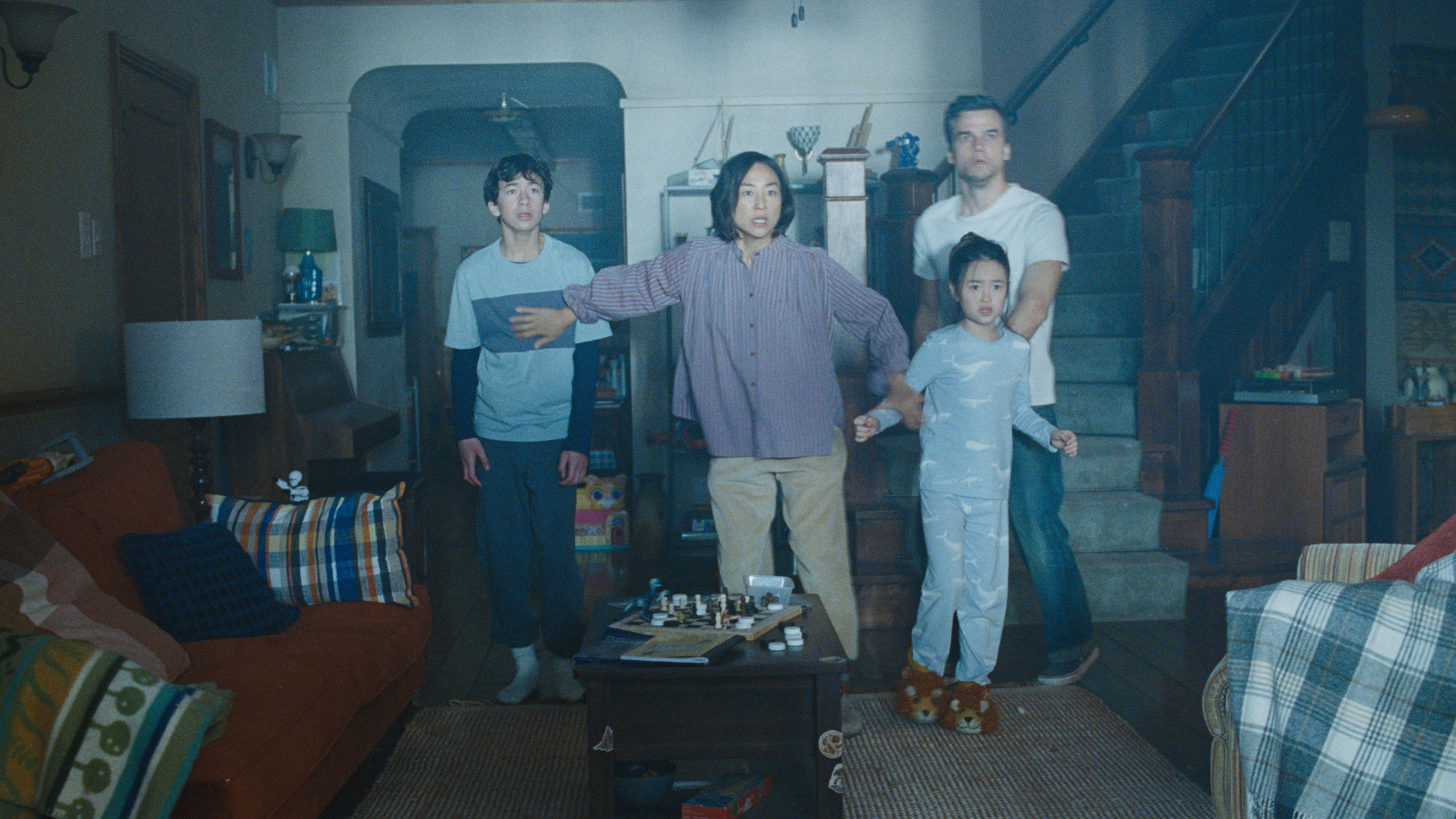
The house being invaded by some sort of kraken and eventually the daughter becoming sick, leading to the eventual exploration of the sewers and these krakens hunting this family, feels like quite a far cry from what made this actually interesting in some way in the first place.
Where this really falters, however, is in its mystery. Shortly after the time jump, we see these monsters quite close up and essentially knowing what they are and what they look like really ruined it for me. I love when a horror movie doesn’t show its monster. Previously, these were shadowy figures that mysteriously came out when it rained, only existing to the audience as sound, which made them feel so much more commanding and threatening than they ended up looking.
If it’s not shown early on, an audience member will always create a scarier monster in their head — because an audience is ready to be terrified and isn’t bound by physics or any world building. Once you show the monster, after an hour of build up, it has to be worth it. The audience will almost always be disappointed because they imagined something so much more horrifying. It’s like when you ask your friend to guess a number of something and they guess an outlandish number that would never be possible, because your friend’s imagination isn’t bound by the real world, making the actual number feel so much smaller and more disappointing in comparison.
Once they made the decision to show these monsters up close, I knew this would take a turn for the worst. Not only were they not as scary as I imagined, but they no longer worked by the tension that was built up throughout. They didn’t loom in the shadows, ready to strike when the time is right, they now leapt through the house in seconds, forcing this to become an action movie about fighting a kraken. It felt much more like a Jason Statham final act than a Wagner Moura final act.
In this final fight, something I didn’t expect at all in the first hour, I was looking at these monsters and I found myself unable to stop myself from drawing similarities between the designs of these creatures and Stranger Things’ Demogorgons. Obviously they aren’t the exact same, but if you cross a demogorgon with an octopus, they look eerily similar and move around much like them too. I’m sure this design wasn’t entirely created to look like demogorgons but I also can’t imagine it was a full coincidence. Why wouldn’t Netflix want to make the antagonists of a story for a movie that isn’t quite as easily bankable as many of their others look similar to the villains of not only their most popular, but one of the most popular series on any platform? This seems like it may have been a simple way for Netflix to market this to Stranger Things super fans, which is likely quite a large number of their users.
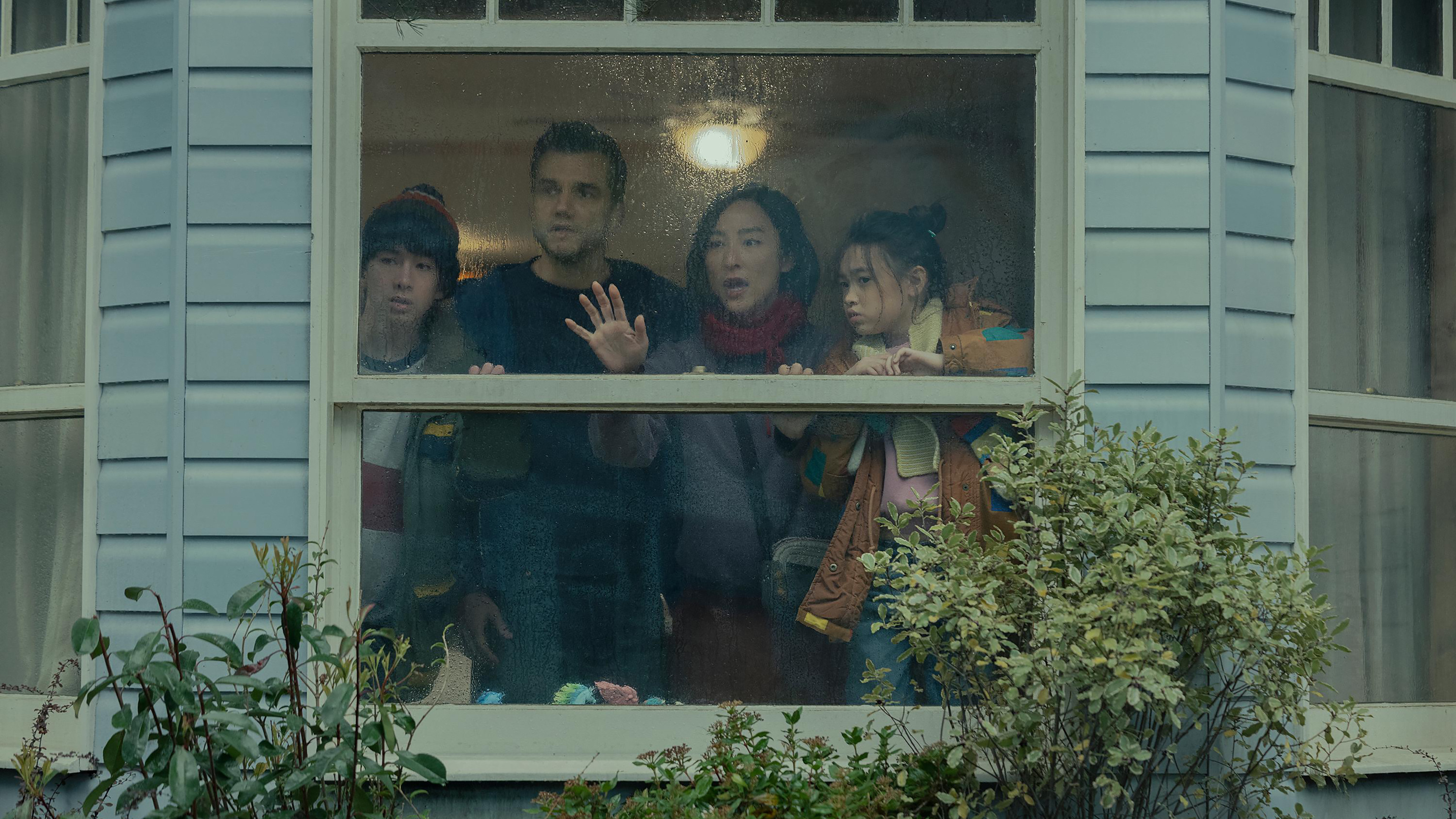
While The Last House isn’t a bad movie, it simply fumbled around the middle and took a pitiful crawl to the finish line. The first half sets up a story that, if continued, maybe wouldn’t have been a masterpiece, but could have been a pretty good story of a family struggling to survive after the entire world has been trapped inside their houses, with undertones highlighting similarities to 2020’s pandemic. However, presumably due to the executives seeing it as too slow of a burn and in need of an action sequence or two, the second half takes an unprecedented left turn, almost flipping the car in the process. I’m sure many enjoyed this, I did too at times, but don’t expect anything revolutionary.