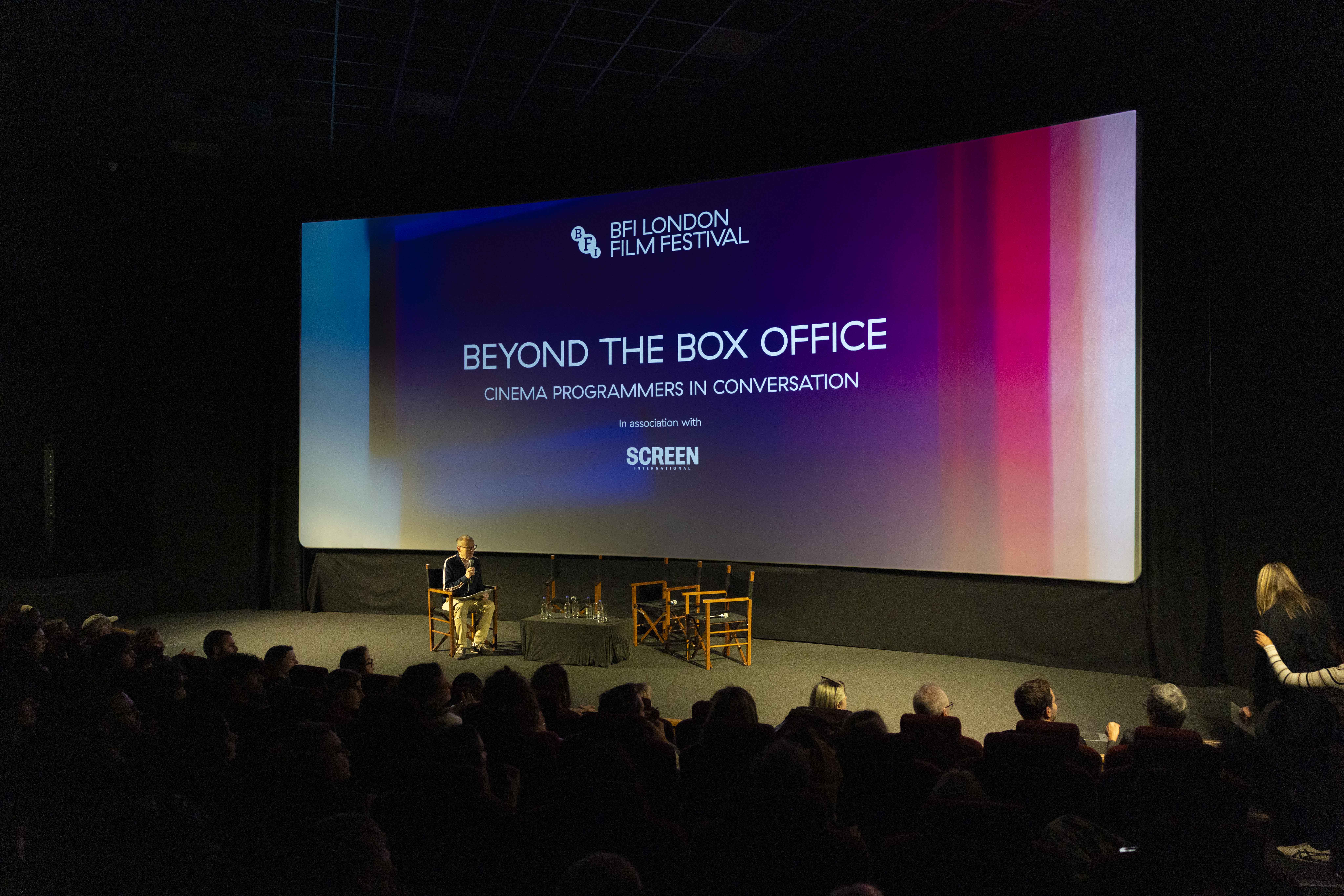
The Industry Forum opened with good news. UK and Ireland box office is up 21% on last year to the end of September, and close to where it sat before the pandemic. On stage to explain why were three people who decide what actually plays: Ben Lyndon, Head of Cinema Programme at Curzon; Carol McKay, Director of Programming at Picturehouse Cinemas; and Madeleine Mullett, Programme Manager at BFI IMAX.
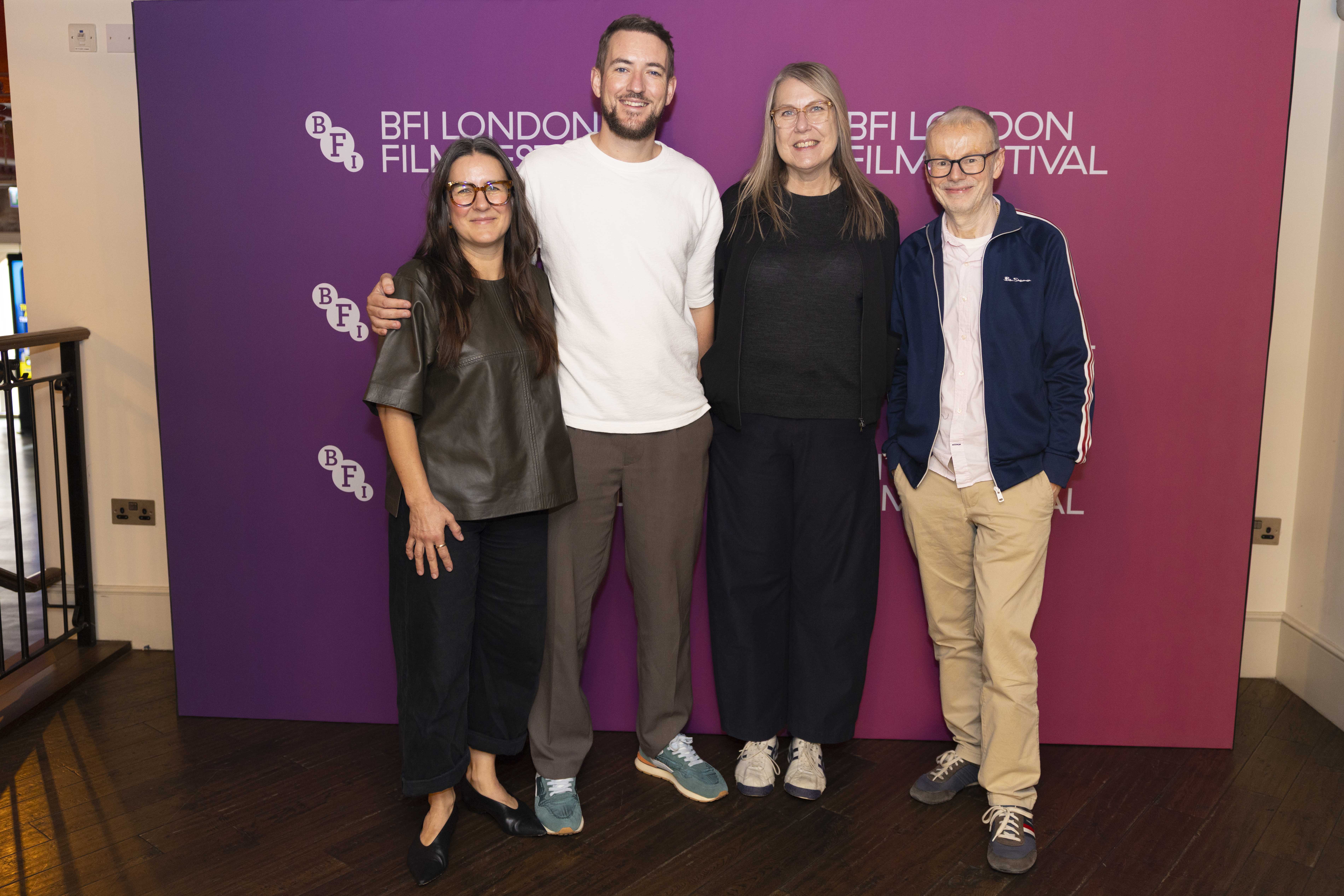
For McKay, the story of the year isn’t one film but the lack of gaps between them.
“It’s been more constant, not the stop-start that we’re all kind of used to having to deal with: having more content for six months, and then scratching around a bit for the other six months.”
The Odyssey and Spider-Man: Brand New Day carried the summer, but the panel kept returning to the films nobody had pencilled in. Lyndon had done the maths: across the previous five years, the UK top 20 averaged fewer than five original films. This year, so far, there are twelve.
“Perhaps these franchises have been mined a bit too heavily, and customers need a bit of respite.”
He gave much of the credit to A24, whose Marty Supreme and The Drama were among Curzon’s biggest hits.
“They have rejuvenated a space that was struggling after the pandemic, which is the mid-range films, a lot of which were going to streaming. The hype that they’re able to generate online is driving customers back towards the cinema.”
That hype is reaching a different crowd. Lyndon offered the most striking statistic of the session.
“Before the pandemic, our biggest audience sector was 65 plus. And now it’s 25 and below.”
Format was the other big talking point. Mullett said BFI IMAX, a single screen of around 500 seats, was the number one international IMAX site for The Odyssey. She argued that directors like Christopher Nolan and Ryan Coogler have taught audiences to care about how a film is made and shown, tracing a line from Oppenheimer through Sinners to Project Hail Mary and One Battle After Another.
“Films that you wouldn’t necessarily associate with IMAX five, ten years ago… It’s not talking to audiences as if they don’t understand what’s coming through on the screens. It’s an intelligent cinema.”
Neither Curzon nor Picturehouse has IMAX screens, or Infinity Vision, Disney’s new premium large format certification arriving in time for Avengers: Doomsday. Lyndon was blunt about the latter.
“We don’t have Infinity Vision, which is a made-up thing. It’s not like IMAX, it’s an arbitrary threshold.”
Both chains are leaning on 70mm and 35mm prints, sound and comfort instead. Picturehouse Central is still playing its 70mm print of The Odyssey, and McKay kept it simple.
“We just want people to come and experience a film in a cinema screen, and if the PLFs are part of that engagement then so be it.”
Mullett agreed that the rivalry matters less than the overall picture:
“When all the cinemas are doing well, everyone’s doing well.”
Not everything has shared in the success. McKay called 2026 “a bit of a poor year for documentaries”, with smaller releases struggling to get noticed on crowded dates and music films drifting towards the biggest screens. Lyndon said foreign language cinema “used to be our bread and butter” at Curzon, and pointed to No Other Choice, Curzon’s own release of The Stranger and a reissue of Amélie as the bright spots. When an audience member asked why fewer of these films are reaching screens, McKay’s answer was two words: “It’s money.”
New audiences are coming from elsewhere. In August, Picturehouse hosted an event for the YouTube travel competition Jet Lag: The Game, with fans flying in from New Zealand, America and Amsterdam.
“Lots of them came on their own, and they came because they just wanted to be with other Jet Laggers. They were having the best time.”
McKay put Obsession and Backrooms in the same bracket, internet-born films that brought in people who don’t usually go. Lyndon drew a line between a strong idea that can grow into a feature, like Backrooms, and fan campaigns, recalling that Curzon was “spammed” with requests to book Iron Lung.
The last word went to the filmmakers in the room. Asked how to balance commercial and arthouse value when pitching, Mullett’s advice was the simplest of the morning.
“There’s a bit of science, there’s a bit of prediction, there’s a bit of box office. But ultimately, making the film that you want to make is probably the starting point.”
The BFI London Film Festival Industry Forum runs until October 15.
LFF · BFI · Curzon · Picturehouse · BFI IMAX · Cinema · Film