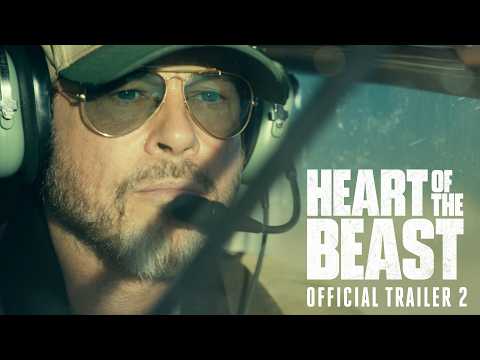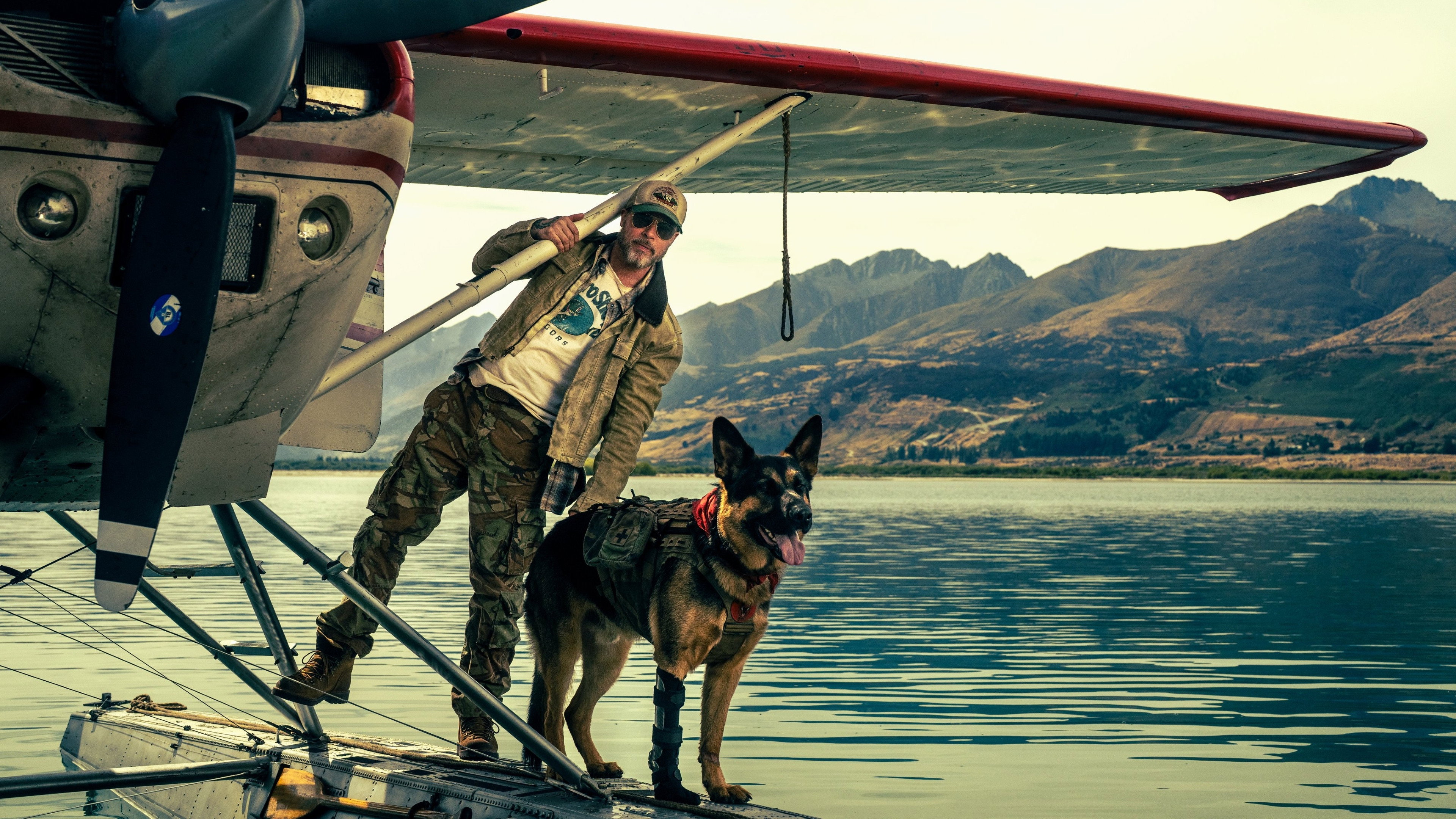
Across his career, David Ayer has become renowned as, essentially, ‘The action guy’. From Fury to Suicide Squad to The Beekeeper to A Working Man, we’ve seen many an action packed thrill ride from this director — most of which have garnered rather mixed reviews. In his latest, though, the Brad Pitt-starring Heart of The Beast, his high-octane action takes a backseat to launch to the forefront of the screen a heartfelt journey of one man and his dog — though his trademark action is still ever so present.
In the opening of Heart of The Beast, we see that Odin, the dog, has survived — though without his owner. This brilliantly flips the opening question of “Do they survive?” on its head to “How do they survive?” — or at least how does Odin. The answer to this question is, of course, by the skin of his teeth, and in making it clear from the beginning that it’s okay, you can relax, the dog lives, it allows us to fully give over to the film’s emotionally-charged story that provides the answer as to why Odin was alone.
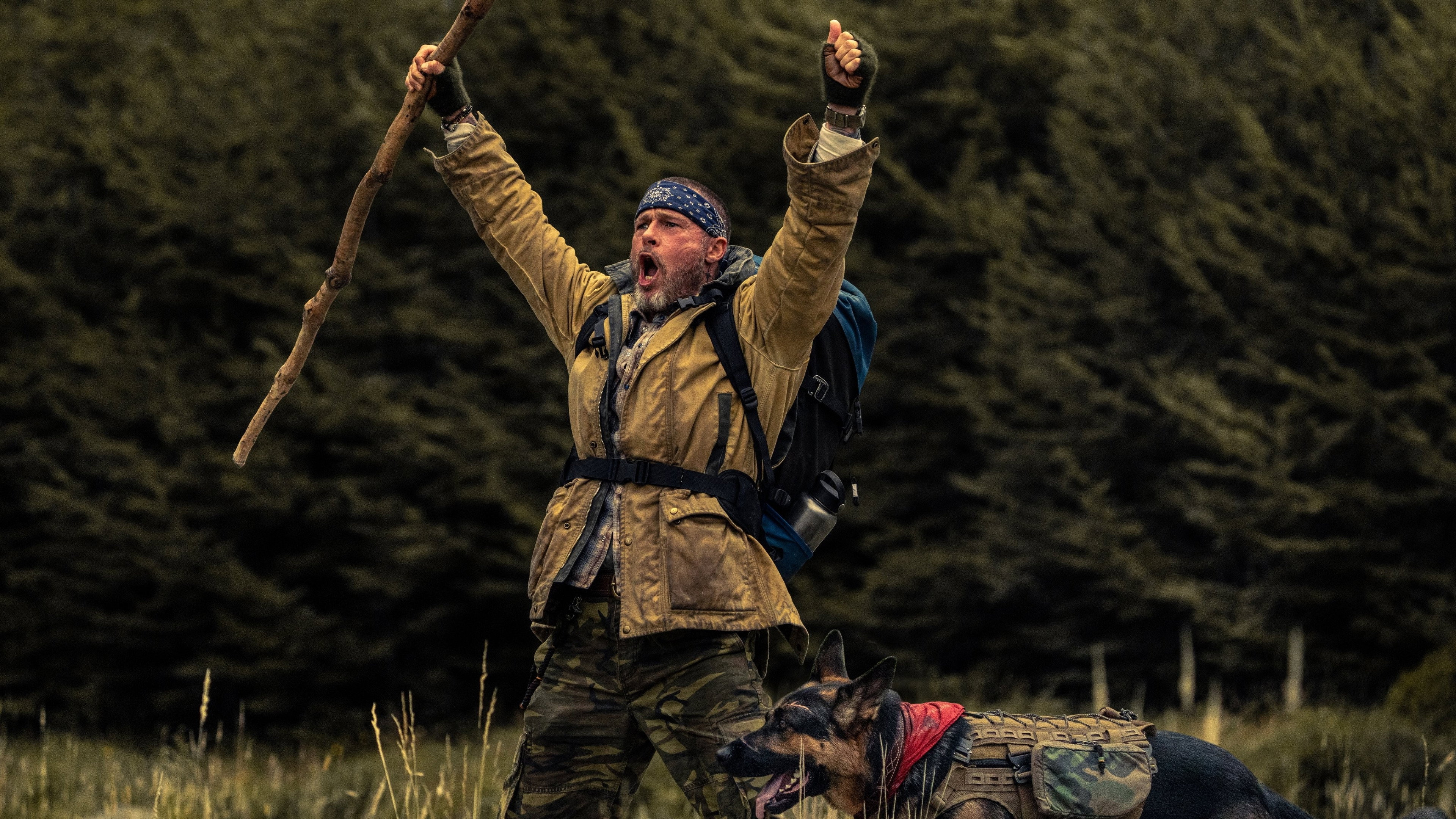
Pitt plays James Belmont — the retired military officer who’s thirty years past his prime, with his only company the aforementioned dog — with such expertise that I may even go as far to say that this is the exact kind of work that he was destined for. When considering the great number of other army-adjacent roles that he’s starred in, it feels much more layered for Pitt specifically. Not only is he playing a character, but is also almost bidding farewell to his past roles as a leading star.
When you enter this picture, you assume this is essentially a lone role for Pitt — he’s acting alone, rather than playing off a costar; Odin is simply his dog companion. However, Odin is just so much more than that. He isn’t just a token of James’ humanity, but is his own character with experiences and much more emotion than I thought could be conveyed on a dog’s face. I believe this is, at least in part, down to the time this movie takes to reveal information. This does begin by conveying Odin as nothing more than a companion, though as you slowly learn more of both his and James’ experiences in war, he becomes so much more layered and earns the right to be labeled as more than just a sidekick.
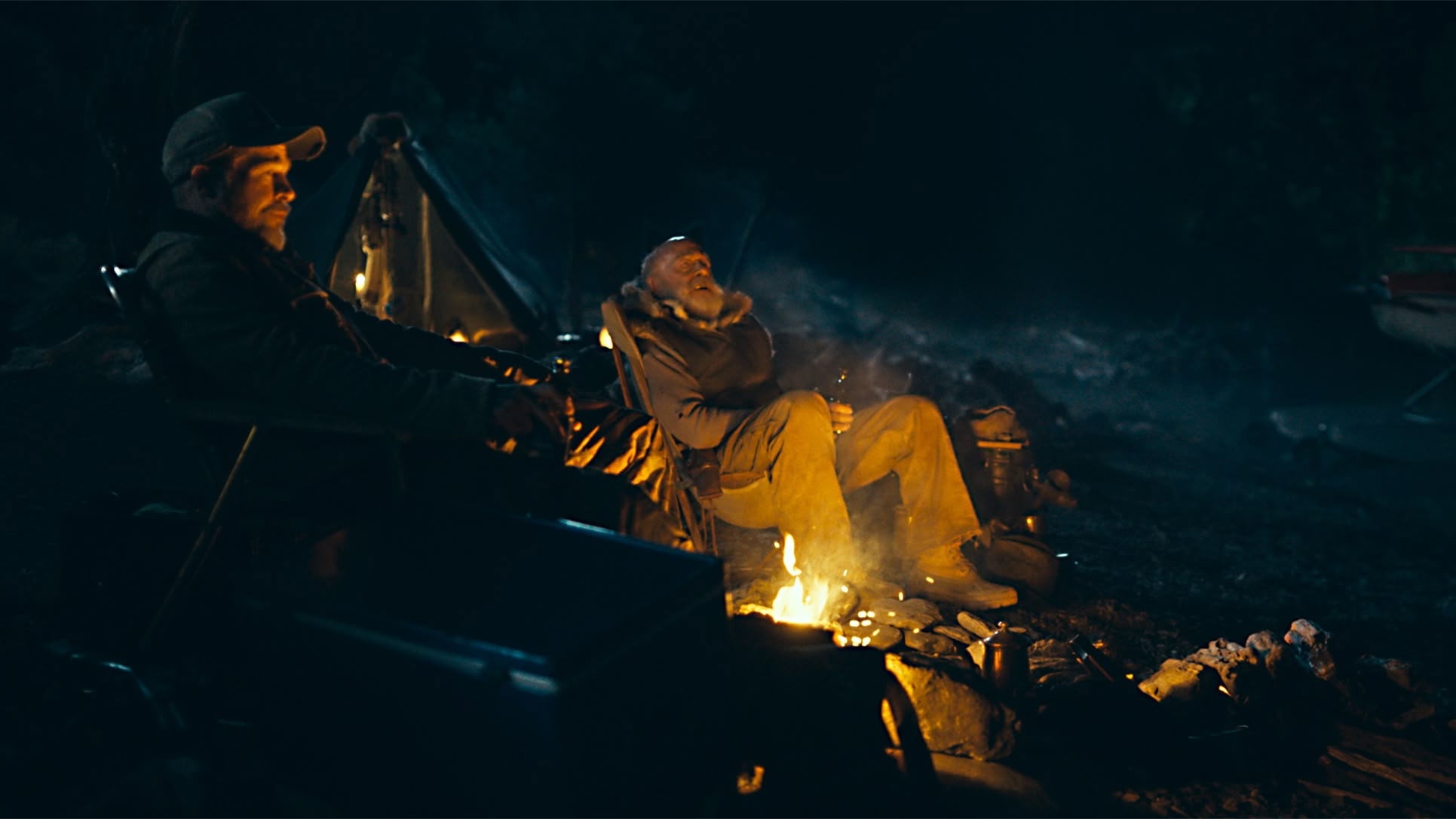
James and Odin have one single visitor throughout the entire movie — J.K. Simmons’ Watkins — who exits their lives just as swiftly as he enters, leaving behind nothing but a book and a faint bittersweet longing for some sort of lost human connection. This is where we really get a chance to see the relationship between Odin and James in the first act, a relationship which is only built upon throughout the rest of this movie.
There are many extreme conditions that constantly push our two main characters back — claustrophobic spaces, ever rushing rivers etc. And every single one of these is simulated to a perfect degree, allowing the audience to almost feel exactly what James feels during these moments. I have to say, this is the only movie I’ve ever seen, possibly aside from Lee Isaac Chung’s Twisters, that I believe would make for improved viewing in 4DX.
Not only are we able to experience every single roadblock in all its terrifying glory, but these constant stoppages and life threatening injuries that they both endure push them forward, displaying their impossible-to-waver spirit. James, however, adds another layer to that spirit. He isn’t just surviving for himself, but also to see Odin through to the end. James believes that Odin deserves — and always has deserved — a life better than his own, and will stop at absolutely nothing to award him that, after his many years of service.
The emotional impact of the finale creeps up on you through the last thirty minutes, and in a way that you don’t even see it coming until it finally jumps out and punches you square in the stomach. You go from simply watching these two traverse the treacherous wilderness, fighting off bears and wolves and scraping through the night, to suddenly finding yourself a weeping mess as Amber (Anna Lambe) reads Odin’s letter.
Even though you’ve only followed the two for quite a short time, this closing montage makes you feel as if you’ve been in their shoes, lived their lives every step of the way — as if you are James, lying on your mossy deathbed, writing this final testament. All he ever wanted was for Odin to find the life he deserves, and he spent his last waking moments ensuring it, even if it had to be without James. Even writing this, I’m remembering how I felt during that scene and almost having the same reaction — weeping more than I thought I ever would for David Ayer — which I believe is a true testament to the power of this scene, not just because it involves a dog.
Usually, this kind of dog companion movie, attempting to tug on your heart strings, only to use the dog as an underdeveloped McGuffin for the only human character’s growth, falls quite flat for me. The dog companion is quite often used as an easy way to get the audience on the main character’s side — nobody wants to see a dog die and everybody wants vengeance for one. However, Heart of The Beast never falls into that trap, and almost does the complete opposite, using James’ death to further Odin’s own story, making it feel as if the dog was the main character the entire time.
Heart of The Beast may not be the greatest movie ever, but all that matters is that it evokes emotion — which it has in spades. Brad Pitt plays off a dog who’s seemingly doing what he wants the entire time, and makes it one of his most vulnerable and emotional roles in recent years, and Uber the dog rivals Pitt’s emotional range, somehow, with a few convincing movements that I’m almost sure he must have read the script.