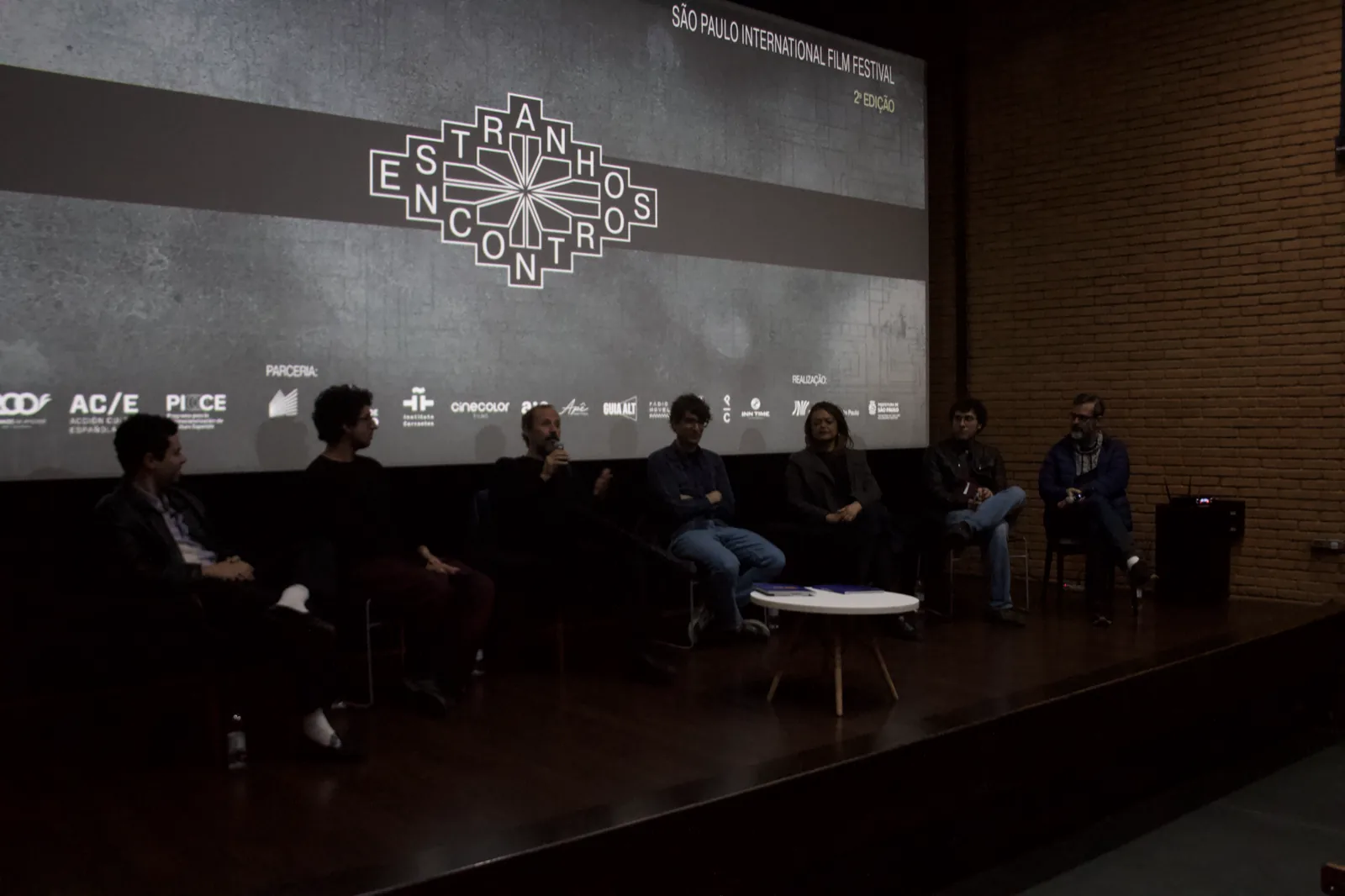
I was all the way in London when I first heard about a film festival that would be taking place in São Paulo, only a one-hour flight from where I live in Brazil. I heard about it through Helena, a sweetheart I met at a birthday party, who was a friend of a friend of a friend and happened to be Brazilian as well. She mentioned the festival casually, and when I opened the link she had sent me, I saw what it was called: Estranhos Encontros, which translates to something like Strange Encounters. Hearing about it the way I did felt quite fitting. I decided to attend and bring to 50% a look at cinema from a little further away from where the mainstream conversation usually is.
Despite being more than four centuries old, I’ve always felt there is something about São Paulo that makes you feel young. Home to over 11 million people and more than 20 million across the wider metropolitan area, the city feels and looks raw. Its beauty is a rough, chaotic one, and the stark contrast between enormous wealth and hardship is constantly visible, its inequalities impossible to ignore.
There’s something both privileged and overwhelming about being in a city like that without necessarily being part of that rhythm, being able to feel as though you’re watching life go on from a slight distance, with so many people going to so many different places and doing so many different things.
São Paulo has a remarkably rich cultural life. There is almost always something happening somewhere in the city, whether it’s an exhibition, a concert, a play, a film screening or a festival. Just last year, it was recognised by UNESCO as a Creative City of Film, a recognition of both its audiovisual ecosystem and its public efforts to make cinema more accessible.
While reading about how Estranhos Encontros came to exist, the original need it was trying to fulfil reminded me of 50% Film. The coincidence made me smile a little, thinking about how similar certain scenarios can be even across countries with really different social realities. Then, as I kept reading what the festival’s artistic director, Cauê Dias Baptista, had written about the project, I came across that exact idea behind making the festival international: that the struggles surrounding this kind of art form, especially when we’re talking about independent artists, can be remarkably similar.
Estranhos Encontros can be traced back to 2023. It started with a group of young cinema professionals creating their own opportunities to host small, almost clandestine screenings around central São Paulo, dedicated to short and medium-length films connected to the city. By 2024, the project had also found a home online, where films could sit alongside interviews, essays and criticism about contemporary Brazilian cinema.
Then, in 2025, the project grew bigger. The team behind it had the opportunity to transform the project into an actual film festival, bringing a curated selection of independent films into physical cinemas, alongside discussions around filmmaking, programming and the industry. All of it free and open to the public. The idea was to create in São Paulo a space focused on work that might otherwise struggle to find somewhere to be shown, particularly films with a more authorial approach.
Films that are self-financed, independently produced, sometimes made with extremely small crews – defying conventional ways of storytelling. Baptista also connects the need for a festival like this to São Paulo’s own tradition in cinema, mentioning Jairo Ferreira, the filmmaker and critic after whom the festival’s main prize is named, and who coined the term cinema de invenção – the cinema of invention.
Ferreira considered the term ‘experimental’ too worn out, preferring an idea of cinema that put invention itself at the centre: finding a way to make something without necessarily following commercial formulas. São Paulo is, at its core, an inventive city. People need to do that all the time there: find ways to slow down in a city that moves at a relentless pace, to bridge the many types of distances it creates, and to carve out spaces for connection.
The festival is extremely young, this being only its second edition, and that youth is palpable in the team behind it. Its programme brought together films of many different styles and origins, from work by emerging independent filmmakers to a tribute to this year’s honouree, Spanish filmmaker Pablo Llorca, and a retrospective devoted to the work of Dutch filmmaker Frans van de Staak.
International institutions helped to make parts of the programme possible. The Van de Staak retrospective – the first devoted to his work in Brazil and Latin America – was organised in partnership with Amsterdam’s Eye Filmmuseum, with support from the Dutch Consulate. Llorca’s presence at the festival began at its opening event, hosted at Instituto Cervantes, before he went on to present several of his films and give a masterclass. These are rare films and rare opportunities: the kind of encounters that are difficult to come by.
And yet, despite the seriousness and rarity of some of its programming, the festival maintained a light atmosphere that constantly reminded you that it was being made by young people: from its visual identity and merch to its playful Instagram posts, with even a kind of “festival tinder”, where people could fill out a form, be matched with someone who shared their taste in film, and go to a screening together.
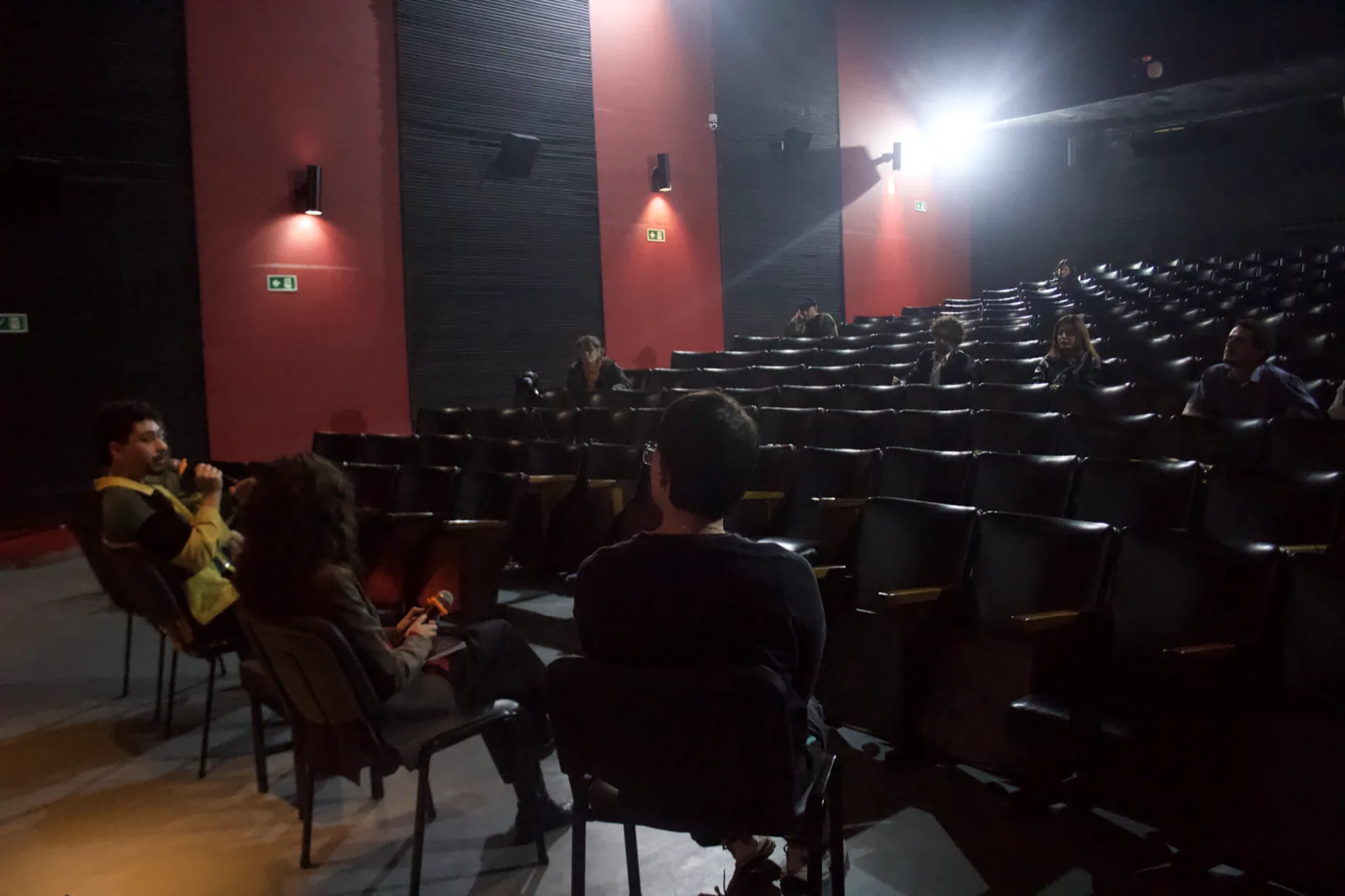
As a member of the audience, the festival felt like a cheat code for finding films and watching things I would probably never have had the chance to see otherwise. Pablo Llorca’s Ternura y la tercera persona (Tenderness and the Third Person), for example, is a beautiful one-hour film from 2017 that follows a working-class family from a peripheral neighbourhood of Madrid, exploring how the place has evolved and how its inhabitants experience it. After watching such a lovely, warm portrait of one of the city’s neighbourhoods, it was curious to hear Llorca say in his masterclass how difficult it has been for his films to find sustained exposure in Madrid, with screenings often being few and short-lived.
The same goes for Brazilian director Julio Napoli’s Sob o Domínio (The Embodiment), a terrifying horror film about possession set in Rio de Janeiro – a setting not exactly known for being the natural habitat of that kind of story. I’ve already added another one of his films to my watchlist, A Última Casa no Topo da Colina (Road to the Mouth of Hell), with the hope of eventually writing more about what Brazilian horror can look like. I’ll be discovering that along with you.
Then there was the oddly funny and heartbreaking German-Austrian-Argentine film Fernlicht (Headlights), directed by Johanna Schorn Kalinsky. From its synopsis and trailer, I had imagined something completely different, with a totally different rhythm, and probably wouldn’t have sat down to watch it if it hadn’t already been part of what I had planned for myself that day.
The short-film programmes showed different cuts of life around Brazil and around the world. Special mentions go to A Happy Place, by director Siddhant Sarin, Encomendação das Almas, by Luiz Gabriel Franco, Interior, Dia, by Luciano Carneiro and Paulo Abrão, and Estrelas Terrestres, by Rafael Neri.
All of them tell completely different stories, but each from a very personal point of view, focused on the everyday experiences, on the beauty there is in ordinary-looking days and ordinary-looking lives. The last two were especially dear to me, showing the familiar characters and places that seem to exist in every town in what Brazilians call the interior – stuff you hardly ever get to see on the silver screen.
These programmes were followed by discussions with some of the directors, which gave the audience a chance to understand more about what went into making the films and to feel closer to the people behind them. Among them were young filmmakers for whom cinema wasn’t even a full-time profession, but who were still out there making films with whatever time and resources they had.
This was quite a common discussion throughout the festival: how easy it is to make films nowadays, and yet how rare it still is to see people making something simply for the sake of making it. Pablo Llorca spoke about this on the opening night, arguing that it has never been easier to record and make films, and yet people still don’t approach filmmaking in the same way they might approach writing or painting.
There still seems to be a certain fear around getting close to the actual making of cinema, perhaps because the image we tend to have in mind is that of a Hollywood production – something that looks impossibly large and complicated to make. But that grandeur is not necessarily what cinema, at its roots, is about.
Brazilian director Lina Chamie also gave a beautiful speech, talking about her feature-film debut Tônica Dominante and how she sees the cinema industry nowadays. She spoke about creative risks, and about how important it is, perhaps more than ever, to keep taking them.
Chamie also encouraged the audience to rethink the way we approach storytelling, questioning why film is so often expected to follow such a strict sense of structure and form. In music, for example, we don’t always ask for a clear story or an easy-to-follow beginning, middle and end. So why should cinema always have to?
What she was advocating for was the freedom to tell stories through unusual and unexpected forms and narratives, moving away from relying only on classic storytelling. She beautifully concluded her speech with the message that a story is not its plot, but rather the way it is told. Because films are allowed to be more felt than they are understood. Or at least, felt first.
While I was listening to these discussions, I was reminded of something I had been thinking about earlier that day. A fiction teacher once told my class that it is almost impossible for two stories to be told in exactly the same way. We’re living in a time when it’s borderline impossible to come up with a story or narrative structure that is completely new, never tried before, never made before. But one single story can unfold into a million different ones, because the uniqueness of each project lies in the particular soul of the storyteller: how they choose to tell it, and which tools they choose to use.
Pablo Llorca mentioned that he had been to São Paulo twice to talk about his work, and both times he found himself surrounded by very young people – young, but already deeply knowledgeable about cinema and, more importantly, genuinely interested. If nothing else, that feels like hope.
That is part of what makes this city such a fitting home for a festival like this: cinema seems woven into the city, its threads stitched through the skyline and into everyday life. A couple of days after seeing Sob o Domínio, I actually ended up sitting right next to its astounding leading actress, Raquel Monteiro, at a restaurant. I mentioned that I had watched the film at the festival and told her it had won the audience award. She said that unfortunately she hadn’t been able to attend its screening, and had just arrived in the city that day to attend yet another film festival that was happening.
That’s São Paulo right there: a cultural goldmine waiting to be explored, with its abundance of events, its potential as a global centre for cinema, and its lovely coincidences. Full of strange encounters, indeed.