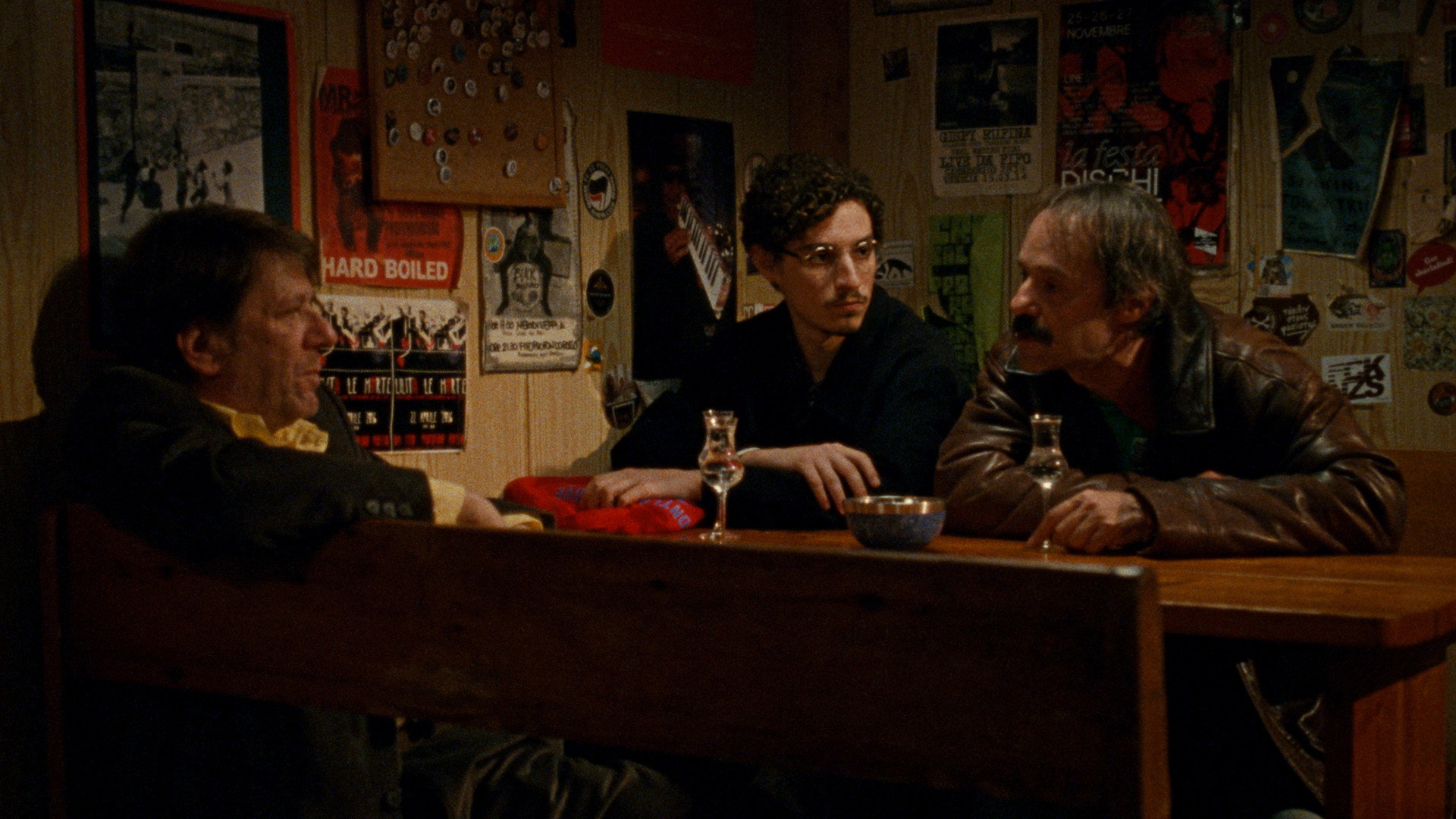
When it comes to Italian cinema, more often than not, it is the likes of Fellini, Rossellini, or Antonioni that spring to mind, and their picturesque portrait of a 1960s Italy where you can stand with your lover in the Trevi Fountain and revel in “la dolce vita.” But what happens when the camera’s eye turns away from the capital, and the golden post-war era, and looks instead at the modern realities of a post-industrial region where disillusion and cynicism reign triumphant? Francesco Sossai’s Le città di pianura (The Last One For the Road) asks this very question, and the answers it comes up with are bizarrely comforting.
The film follows two middle-aged men who spend their days in pursuit of “l’ultima” — the final drink before calling it a night — and end up adopting a meek university student to join them on their alcoholic pilgrimage. Their journey not only takes them through the odd bars and clubs dotting the towns of the Veneto — whose reputation as the heavy-drinking region clearly supplied the film’s main gag — but also through the waning memory of a lost generation and era. An unlikely trio, Carlobianchi (Sergio Romano) and Doriano (Pierpaolo Capovilla) become mischievous mentors to Giulio — played by Filippo Scotti, the break-out star of È stata la mano di Dio (The Hand of God, Sorrentino, 2021) — and introduce him to a carefree way of life beyond the anxieties of appearance, convention, and responsibility.
However, it soon becomes clear that their laid back attitudes are less a hedonistic lifestyle choice, and more the conditions they’ve been forced to live in by a crumbling state system unable — or unwilling — to provide support for those hit hardest by the 2008 financial crisis. Far from simply embodying the “fancazzista” stereotype — literally “f***ing around” — the film’s protagonists are emblematic of the many Venetian workers brutally laid off from their factory jobs around this time, despite being assured by the patriarchal boss figure that they were “a part of the family.” Cast aside once their labour is no longer affordable, and considered economically worthless, these figures are let to squander their meagre pension funds at slot machines and left behind by a society run by capital and profit-based value.
In fact, Carlobianchi and Dori seem haunted by their losses, often visiting old hang-out spots that are now derelict, sharing stories with a markedly nostalgic tone, and even chasing the spectral third musketeer of their gang — Genio (Andrea Pennacchi). Often starring as the central urban legend in all the men’s accounts, Genio’s return from Argentina is what set them on the road in the first place, spurring a narrative which Nell Minow terms “an existential story that is a less bleak and more scenic version of Samuel Beckett’s Waiting for Godot, a psychological journey about connection, regret, memory and meaning.”
The political undertones of Le città di pianura soon become more obvious, and through Massimiliano Kuveiller’s strikingly spare cinematography, we realise that the land to which these memories are tethered is in just as much danger as the bygone era itself. One comedic encounter at a rural villa turns melancholy as Giulio points out a form of fantasy architectural painting called a “capriccio,” in which the artist had captured an ideal version of the Venetian expanse by eliminating all the “terre di mezzo” — or middle lands. In order to create a network of what were, and still are considered the more important hubs of the region, the capriccio wilfully ignores the eponymous “città di pianura” — the towns of the plain, or Po valley — delivering a painful metaphor for the fate of the overlooked and neglected in postmodern Italy.
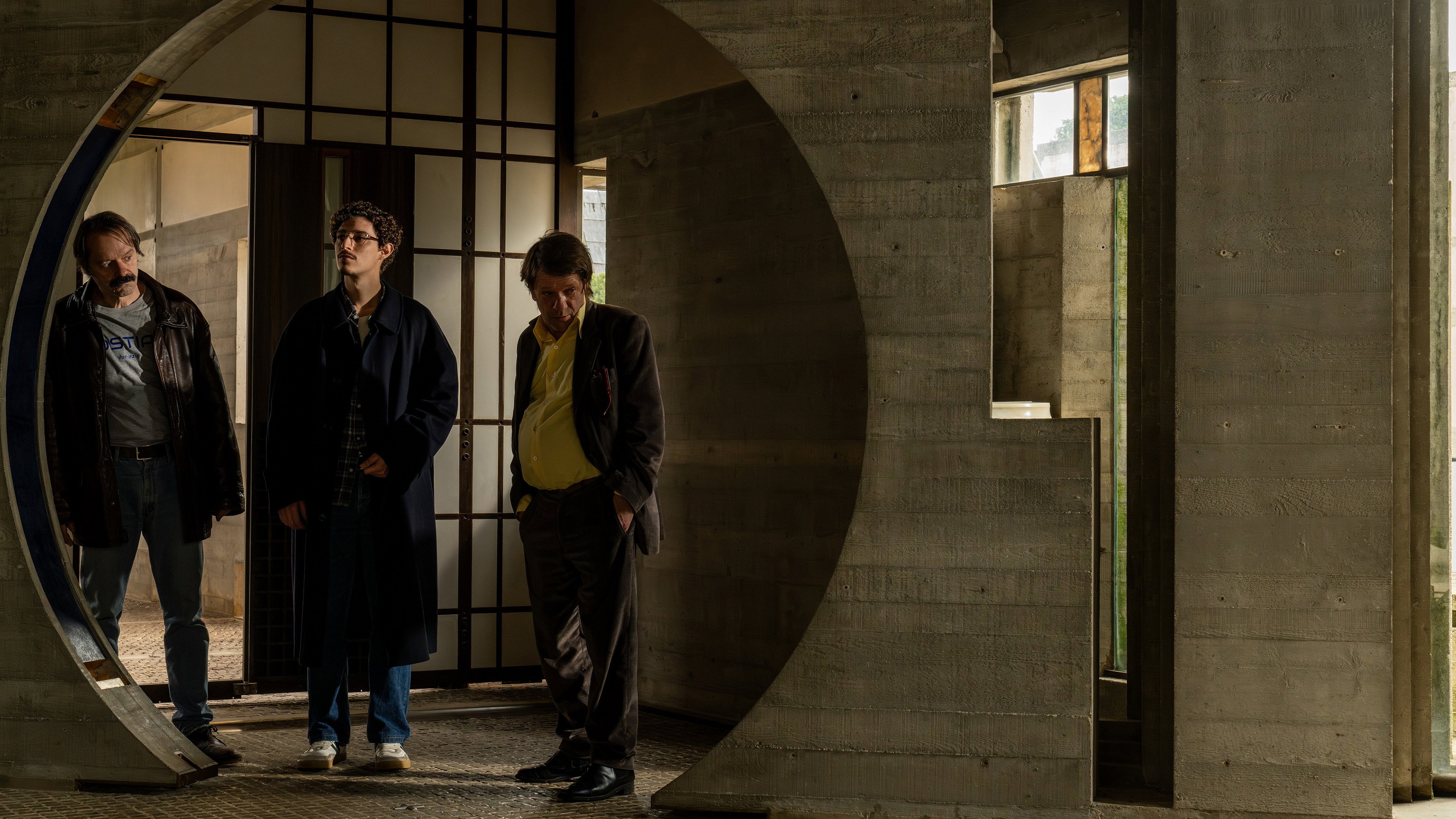
It’s no surprise, then, that the film captures such mundane places as bars, car parks, and run-down blocks of flats with a cinematic flair, while locations such as Venice and Padova are hardly given any attention at all. In fact, as Peter Bradshaweloquently puts it, the film spends less time at these recognisable paradigms of Italian culture, and instead focuses on locations such as “the world’s most unglamorous travel hub: Venice Treviso, Italy’s equivalent of Luton airport.” Firmly grounded in the local, yet appealing to the universal in the scope of its narrative, the film delivers a revelatory truth about the fate of the little guy in rural Italy. Unfortunately, the emphasis falls on “guy” in this instance, as there seems to be very little space for women on this journey, aside from their appearances as the prototypical girl that got away, homemaking sister, or fleeting raunchy encounter.
Set to the bittersweet tones of Krano’s soul/rock pieces, Le città di pianura clearly packs a meaningful message which not only resonates with those of us lucky enough to call the film’s setting home, but also captured international audiences after its world premiere at the 78th Cannes Film Festival last year, in the Un Certain Regard section. However, far from claiming to hold the answers to life’s mysteries, the film simply suggests that we make our own happiness by looking to those closest to us, and navigating the ups and downs of life with them. In a world where value is increasingly based on profit, and not on sentiment, memory, or happiness, the only way surviving is making meaning for ourselves.
This is encapsulated in the inclusion of two mirrored scenes at the beginning and end of the film, in which a piece of life advice is shared with all the airs of being a major revelation, and yet is inaudible to the person listening. If we’re initially baffled and a little frustrated by this, it only makes the second instance more comedic and heartwarming — if there’s anything that this chaotic road-trip teaches us, it’s that we’re not meant to know what we’re doing, and that’s ok, as long as you’re willing to laugh off the rough times and enjoy the rest.
After all, life is much like the “fior di latte” (literally milk flower, creamy) ice cream that Doriano is given instead of the lemon flavour he ordered; “me l’aspettavo amaro, e invece alla fine è dolce.”
“I expected it to be bitter, but it turns out it’s sweet.”