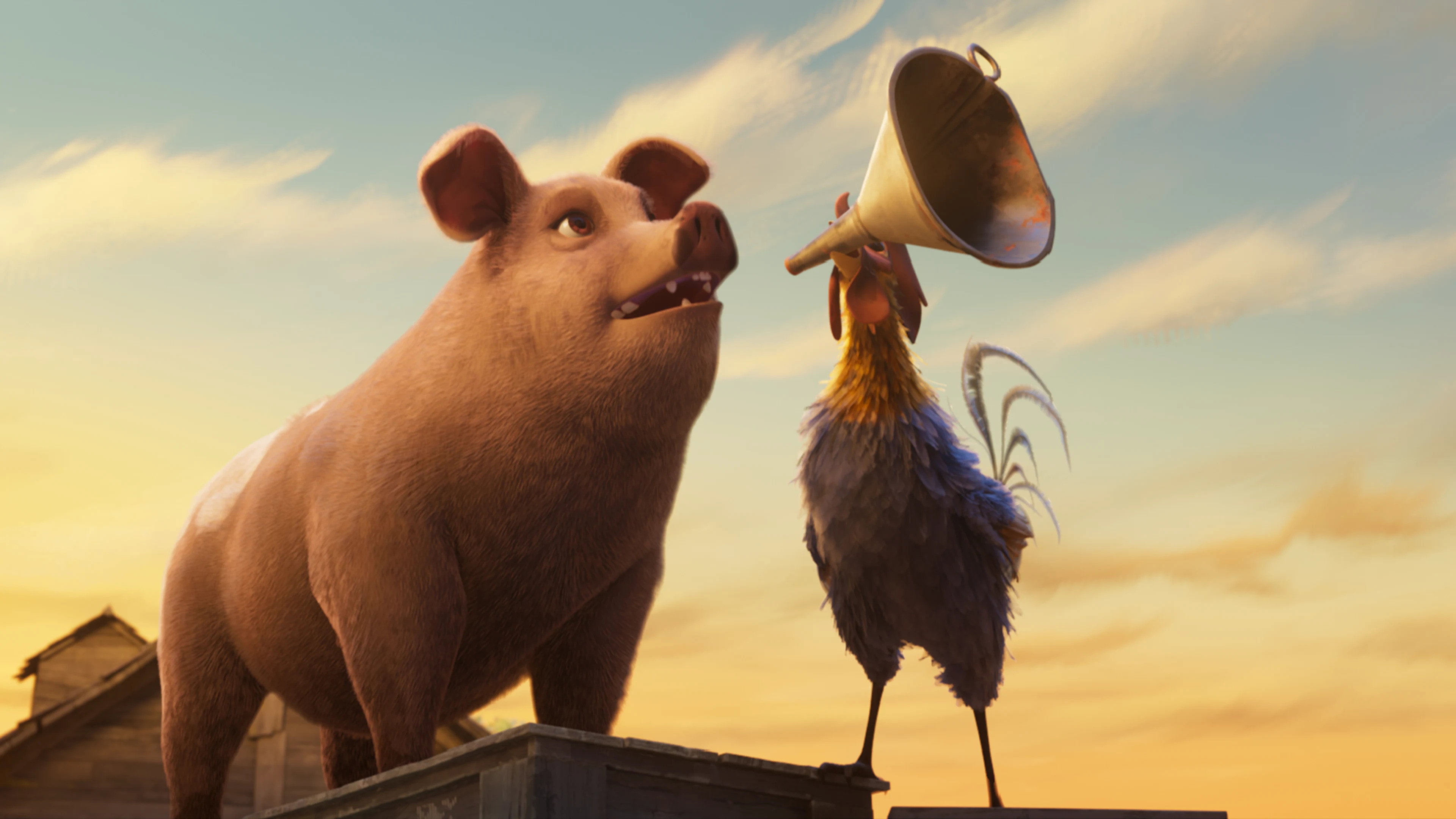
Animal Farm by George Orwell is one of history’s greatest cautionary tales. The author takes direct inspiration from the Russian revolution of 1917 to craft Manor Farm and its array of characters. In 2026, we’ve been given a new adaptation of this great story for the first time in almost 30 years, this time for a more modern audience. However, this movie has done something that George Orwell would have never intended — marketed it towards children.
It seems as if the creators of this movie didn’t read, or even know anything about, Animal Farm or the Russian revolution, were given a vague description of a few characters and events, and decided to make their own, completely different story. Not only does this stray so far from its message and much of its uniqueness by making humans a main player in this movie, it also treats its audience with the utmost disrespect — as if they expect us to have no comprehension of what’s going on whatsoever. It got to a point where I’m surprised they didn’t change Napoleon’s name to Joseph Stalin.
There are so many chants throughout — essentially whenever there’d be a rule change or even a significant line, the sheep would repeat it a few times — to the point where I think it was simply because they didn’t think the audience would be smart enough to understand anything unless they were shouted at multiple times. However, this can’t even just be attributed to the sheep and a comic relief excuse, as after the final rule change that “some animals are more equal than others”, the crowd of humans starts chanting. They may as well just have Napoleon look directly into the camera and tell us “this is important”.
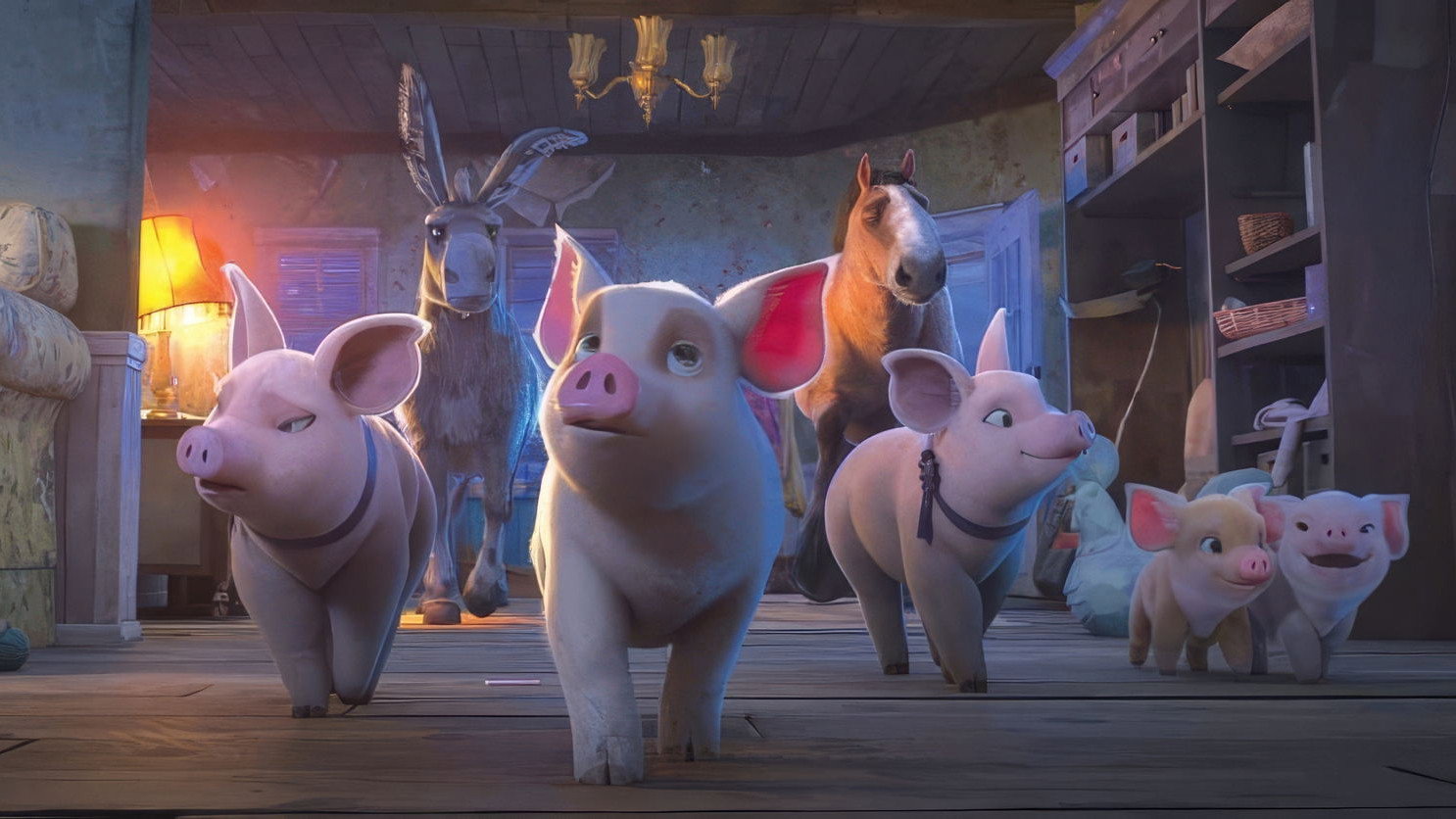
The biggest praise I can give this is that it’s at times a somewhat fun, if not quite generic, family movie. However, not a single one of those descriptors should ever be used to describe Animal Farm. It’s easy to forget that this is meant to be an adaptation — partly due to how unfaithful it is — and based on the source material it’s adapting, I can’t praise it for what it is. ‘Fun’, and ‘family’ is not something that this movie should be going for.
There’s a B-plot about consumerism in the modern day throughout, which could have been quite an interesting addition… if this wasn’t Animal Farm. Ultimately, this arc just left the movie feeling bloated more than actually adding anything worthwhile. Not only was this a useless addition, it actually detracted from the story as it often overshadowed the main plot and metaphor.
One thing I absolutely hated was that it seemed like the majority of the animals were peacefully going along with Napoleon’s new regimes, when in reality it should be Napoleone leading by fear — that is if they want to actually send the right message in a proper way, which doesn’t seem like a priority. A big example of this is the animals selling their products. In the original, these animals are unwilling, as they were originally told they’d never have to do this again after taking over Manor Farm. Napoleon threatens these animals and forces them to give up their products.
In this remake, however, all the animals mutually agree to sell their products at a market and are happy to do so. I assume the filmmakers made this change because they thought the original may be quite harsh for a children’s movie — like I suspect many of the decisions made were for. However, if that’s the case, why make an Animal Farm remake at all?
One change I really didn’t understand was why Snowball was kicked out of Animal Farm. In the original, he simply created a plan for a windmill and put it to a vote between all the animals. This frames Snowball as a fair leader who sees all animals as truly equal. When Napoleon gets him kicked out, it shows how harsh and dictator-like he is, right from the start.
However, in this remake, Snowball shares this plan for a watermill with Boxer in private, telling him that the other animals aren’t smart enough to understand. Not only this, they also start building this watermill without the knowledge of the other animals. When Napoleon kicks him out, he does actually have probable cause — Snowball did break the rules by entering the farmhouse. This flips the roles and actually makes Napoleon seem like the fair leader, completely missing the point of this small arc.
Many of the side characters, essentially anyone who isn’t a pig, just didn’t seem to have any kind of personality or defining character traits. Even Napoleon, the main character, seemed to be adapted incredibly disloyally. This character represents Joseph Stalin, the dictator who seized control over Russia and uses propaganda, fear, and his own secret police force to consolidate power. We see none of this in the remake. The closest thing we do see is the dogs, but they never actually do anything. From what I can remember, they’re used in one single scene, just for Napoleon to show Boxer, proving their existence, without actually striking any fear into any animals.
Propaganda is the one thing I would expect to exist in this movie, as it seems to often be a staple of dictatorship in the media. The only thing that slightly resembles this is Boxer being manipulated by Napoleon, but it’s never shown on a bigger scale. In this remake, all the animals do dislike Napoleon, they just have no power to try to overthrow him.
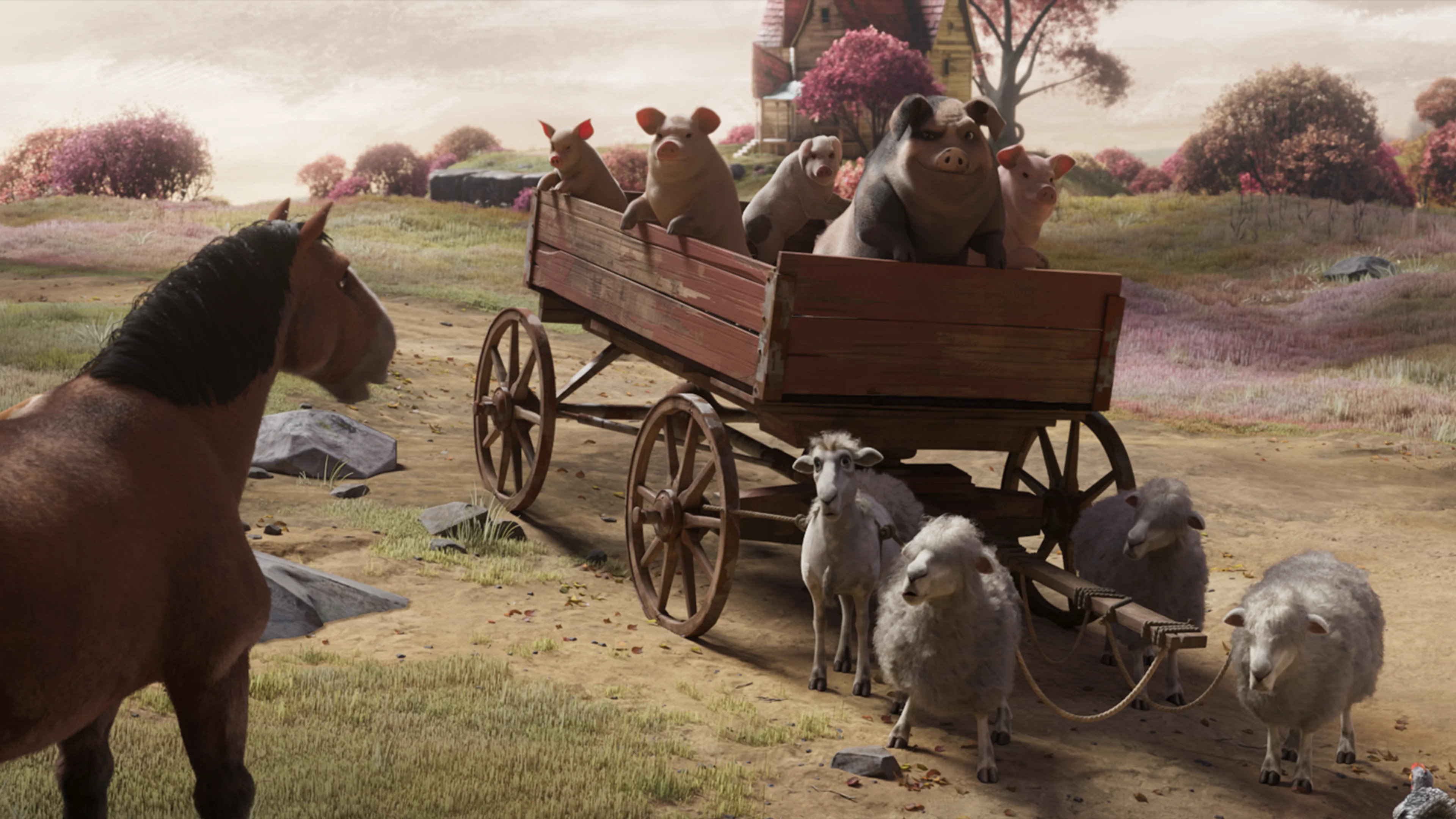
Ultimately, while I’m sure many families can have a good time here, by no means can this be described as Animal Farm. This throws away anything that made the original interesting and takes away much of the metaphor. The main decision that doomed this from the start was to make this for children, causing them to have to take away many harsher parts of this story — but if that’s the case, why make an Animal Farm movie at all?