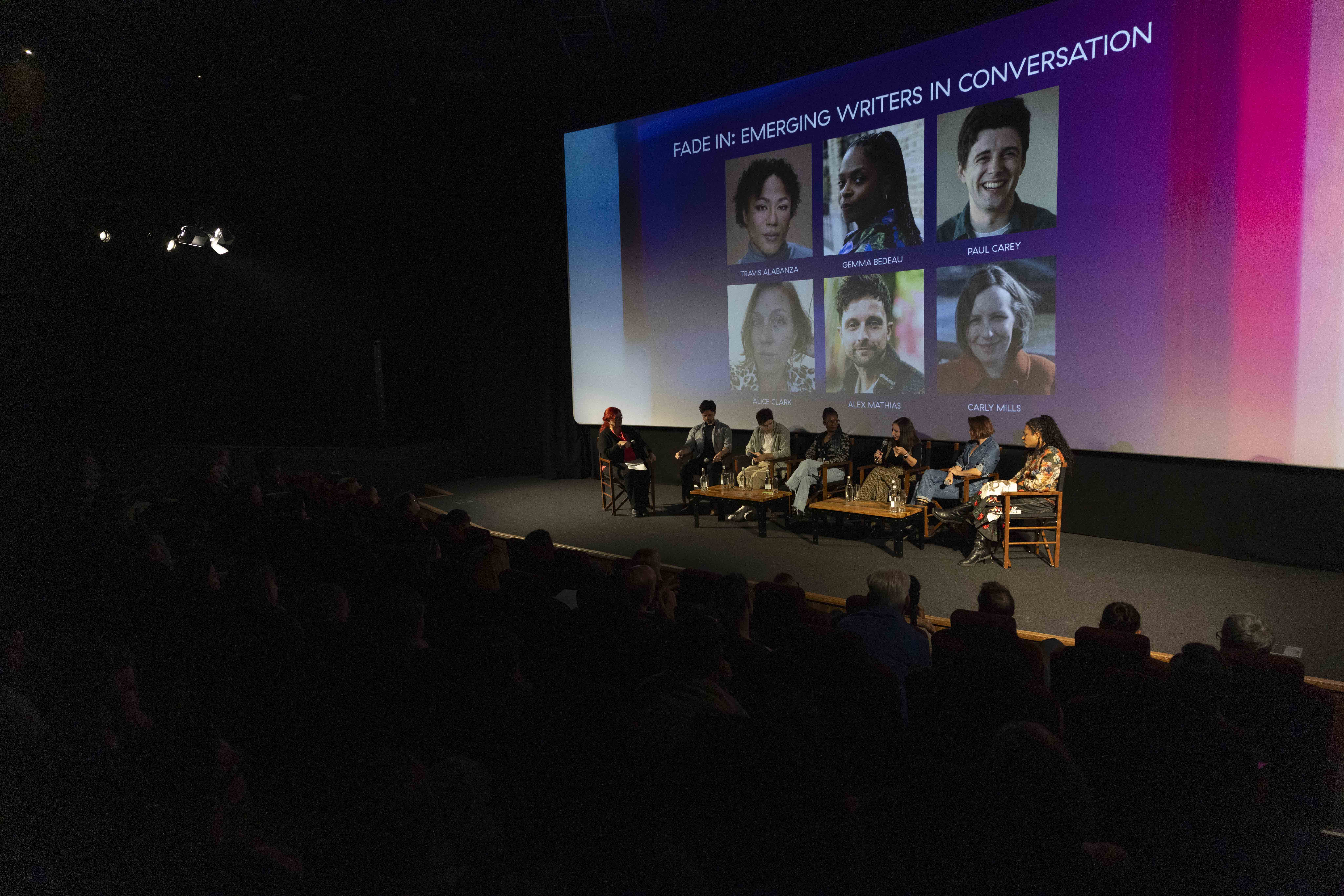
50% Film went to Picturehouse Central for Fade In: Emerging Writers in Conversation, part of the BFI London Film Festival Industry Forum. Host Holly Daniel of Take Three talked to six UK writers, Travis Alabanza, Gemma Bedeau, Paul Carey, Alice Clark, Alex Mathias and Carly Mills, about how they got here, where their ideas come from and how they get through a first draft.
The festival’s own billing for the session put it plainly: there is no single route into screenwriting. Within ten minutes of Sunday morning’s panel, that was obvious. The six writers had come from costume design, nightclubs, community theatre in China, homemade parody shorts and film sets.
Gemma Bedeau started as a designer working in costume, styling and props. While unemployed, she and a friend decided to write a comic.
“We thought if we wrote a comic, actually, we’re employed. We’re doing something.”
Next came a radio play competition, BBC Writers and an agent, and now she writes children’s animation, including JoJo & Gran Gran. “It’s a sort of zigzaggy path,” she said. “There’s no straight line.”
Travis Alabanza started out as a club performer after leaving school at 18. That led to theatre, and their show Burgerz was optioned for screen in 2018.
“I had to Google what ‘optioned’ meant.”
Alabanza’s first BFI short, Choked, is now on the festival circuit, and they still work the clubs every weekend. What draws them to screen is permanence.
“The world is constantly talking about transness without us in the room. And down in the underground, there’s all of us there talking about it all the time. It’s normal to us. But when you translate that from the underground to the screen, what weight does it give the thing? This isn’t going to be at 2am and go away. This is going to be in a dark room at 11am, to loads of people watching it.”
Alice Clark worked as a community theatre facilitator, then moved to China for what was supposed to be six months and stayed for twelve years, writing picture books and animation scripts. Back in the UK with young children, she listened to the Scriptnotes podcast and tried a feature for adults. She didn’t start until her early forties.
“It’s just been a long, part-time path to get here, really.”
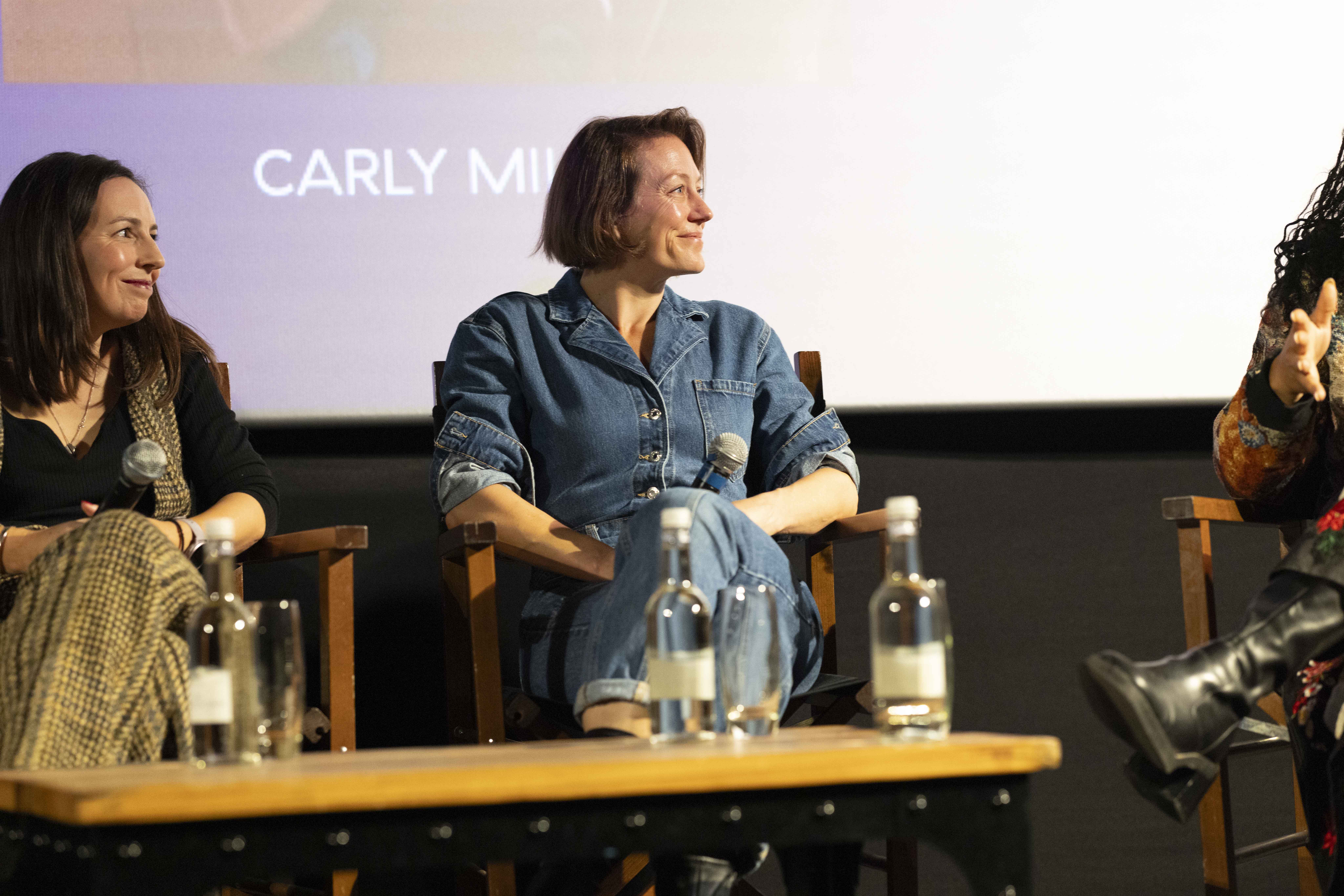
Paul Carey, from Ireland, had no contacts in the industry, so he made parody shorts with friends, “writing, directing, producing, editing, sometimes acting, doing stunts, probably breaking all sorts of risk assessments.” Over time he realised writing was the part he enjoyed most, and that led him to the NFTS on a ScreenSkills scholarship. Carly Mills worked her way up from floor runner to assistant director in Belfast and London. Reading scripts between jobs, she began writing her own. Welsh writer Alex Mathias, who works on continuing drama, got onto BBC Writers in 2019 with a feature set in Wales, a subject he’d avoided after years of absorbing American media.
Six Words
Before the panel, each writer sent Daniel one word, which went up on screen. Clark chose lemon. While baking with her children, they planted a used lemon’s pips, and one became a tree that grew alongside her writing.
“Becoming a screenwriter is not a quick thing, like growing a lemon tree is not a quick thing… You eat a lemon and your face changes. I like film and TV and writing that’s like that. You don’t want to be bland.”
Mathias chose dumbfound, from Dylan Thomas’s Under Milk Wood, which he heard at about 13.
“It was one of those seminal moments where I just fell in love with language… I want to trade in that.”
Bedeau’s spirits came from All Souls on Carriacou, the island her family is from, where families light candles for their ancestors and pour out rum. Alabanza chose detour, partly as a defence of never using Google Maps and partly as a description of their work.
“Sometimes there’s an ending that you think a character should have… what would it mean to show a detour in who they are?”
Mills chose mum dates, after the baby groups she joined when her first child was born, where talk never went past sleep and feeding.
“What I always wanted was to cry under that: who were you before this happened? What did you love?… How do people put who they were before together with who they are after a seismic event? That’s what I started to write about a lot.”
Carey admitted he’d missed the deadline, looked up the most commonly used word in English and sent that: the.
Getting it Down
On process, the panel agreed that a first draft is supposed to be painful. Clark called hers “grim, and grubby, and you feel disgusting about yourself”, and said her favourite stage is rewriting. Carey calls his first pass a “vomit draft”. Bedeau keeps every line she cuts in a running document she used to call “spare text”.
“I now call it the graveyard… I don’t think I’ve ever reused any of it, but knowing that nothing’s ever really gone helps.”
Alabanza sends zero drafts to a small group of friends “as savage and funny as I think on my good days I can be”, and they don’t do compliments first.
“I’m allergic to a praise sandwich.”
They also build a pause into every job. After notes come in, they don’t touch the script for about two weeks, to see which ideas they keep coming back to: “That tells me something about the urgency of the idea.”
From the Floor
In the Q&A, a trans audience member asked Alabanza how they balance staying true to their community with notes from mostly cisgender producers. Alabanza said festival audiences had called Choked “extreme and graphic”, while the trans women they showed it to shrugged.
“I can’t make these huge generalisations… I just have to focus on what I want to tell. And I do a trans screening before everything I make. I get all my trans girls in the room, and if they don’t laugh once, then I’ve messed up.”
As for what the room should know about them, Clark’s answer was the shortest of the morning. She wants to “inject joy”, and her scripts are direct.
“I don’t overwrite. I’m not a fan of a very long script.”
The BFI London Film Festival Industry Forum runs until October 15.
LFF · BFI · Screenwriting · Fade In · Take Three · BBC Writers · Film · TV