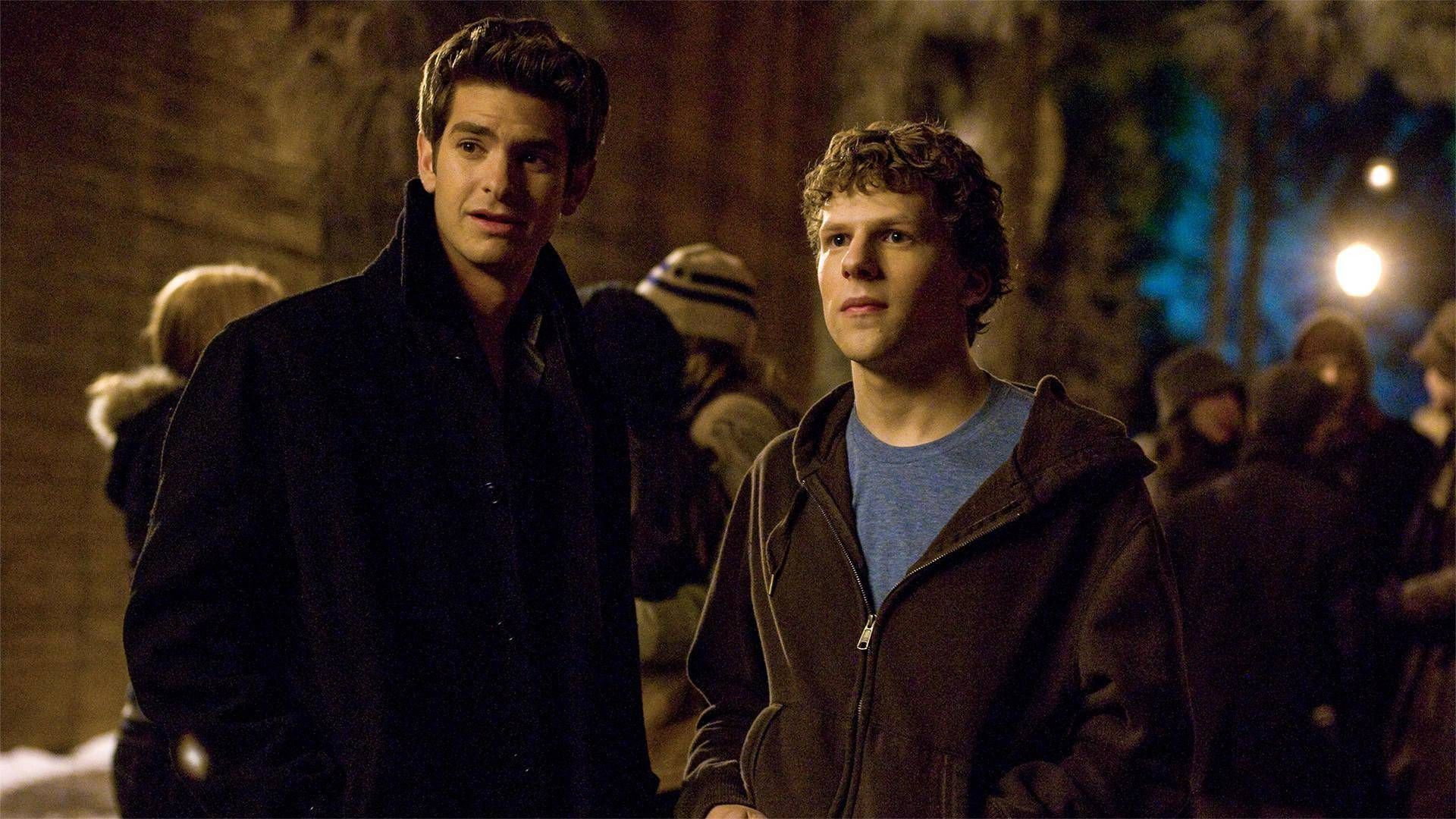
Picture this: it's 2009, Facebook has recently overtaken MySpace as the world's most popular social media site, and news breaks that director of Fight Club, Seven, and Zodiac, David Fincher, is set to direct a movie about the platform. Understandably, there might have been some confusion. Imagine if today we heard that Christopher Nolan's follow-up to Oppenheimer and The Odyssey is to be 'The TikTok movie' — sounds inconceivable, but that's more or less what happened some 17 years ago with the announcement of Fincher's eighth picture, The Social Network. On the surface, a docudrama recounting the twin lawsuits Facebook creator Mark Zuckerberg found himself up against; one from Tyler and Cameron Winklevoss (Armie Hammer) and Divya Narendra (Max Minghella), and the other from former best friend and Facebook co-creator, Eduardo Saverin (Andrew Garfield). But as the movie unfolds, the Aaron Sorkin-penned script blossoms into something much more: A thrilling, and ultimately correct, character study of Mark Zuckerberg and the generation of chronically online individuals that his actions would birth, blowing expectations away at the time, and living on as a definitive 21st century text that now looks to have seen the future.
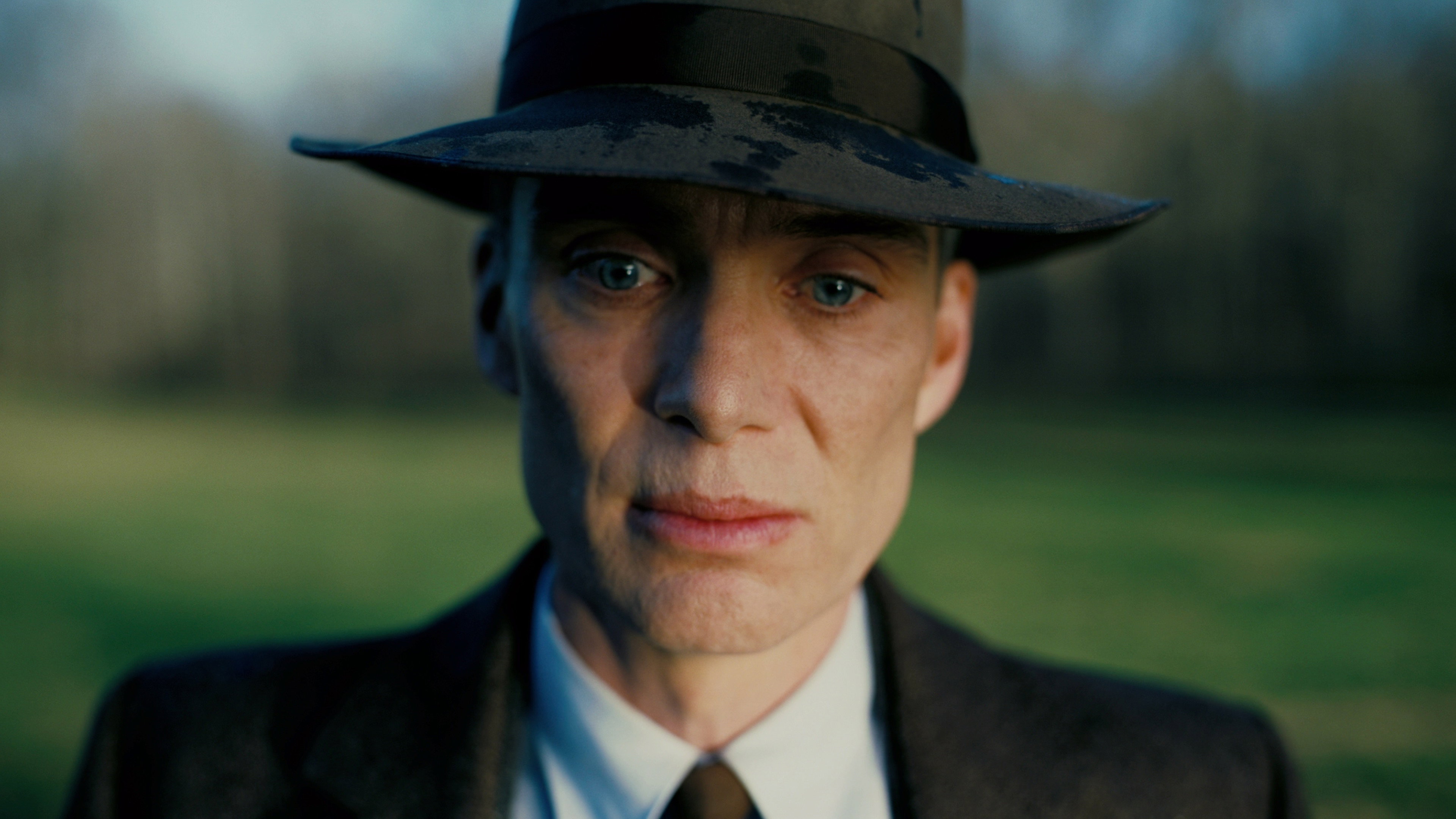
To get straight into it, the long and short of why I think this movie is so special, and in particular why I believe it to be the most important of the century, is simple: Though Christopher Nolan — correct as he may have been — spent his Oppenheimer press tour telling us that it was J. Robert Oppenheimer's world that we were living in, I believe it is, too, Mark Zuckerberg's. As though social media — which has completely redefined what it means to be alive in the 21st century — can technically be dated back as far the 1997 with the launch of Andrew Weinreich's first-of-its-kind social networking site, SixDegrees, it isn't until the digital boom of the post-Matrix '00s that the day-to-day human experience becomes as much online as not — and there's nobody more directly responsible for that than Zuckerberg himself. Vanity Fair even placed Zuckerberg at number one on their Vanity Fair 100 | The New Establishment 2010 list that ranked the 100 most influential figures in the world at the time. Tom Anderson and Chris DeWolfe (the creators of MySpace) certainly had a say too, no doubt — with MySpace popularising the virtual community experience on a mainstream scale — peaking with 115 million global monthly visitors in 2008. But their rule would ultimately fall to the cleaner, grander, and more powerful experience offered by Zuckerberg's Facebook, causing MySpace to unofficially close its doors on being a major social network around 2011 whilst Facebook's empire and its legion of finger-scrolling offsprings would go on to determine what successful socialising looked like in the 21st century. No longer defined by one's ability to handle close encounters of the face-to-face kind, but instead, by how many likes your latest status update got, how many 'friends' you had, or, if you really had that something special, whether or not your relationship status was on display for the entire world to see. All forms of an all-new social currency that was now the defining factors for deciding social classes — particularly for those young, impressionable, and in education — as we learn in The Social Network, Zuckerberg's initial target market.
Completely reshaping the human existence in this manner, in my view, makes Zuckerberg just as influential a figure as the Father of the Atomic Bomb himself. With each fundamentally remodelling what the consequences are of bringing life into a world post each ruinous invention. And what makes The Social Network such a critical 21st century text in particular, is that despite the full consequences of Zuckerberg's actions not yet being clear in 2010, Fincher, and screenwriter Aaron Sorkin, in just two hours, manage to lay bare the story of why and how the world is the way that it is today before that world had even fully come into effect. With the movie, 16 years on, now looking almost prophetic in a society whose dependency on the digital landscape propagated by the platform has only escalated in the time since its release — perhaps best epitomised by a line in the movie spoken by Justin Timberlake as Sean Parker: "We lived on farms, and then we lived in cities, and now, we're going to live on the internet!". Are we sure Sorkin isn't clairvoyant?
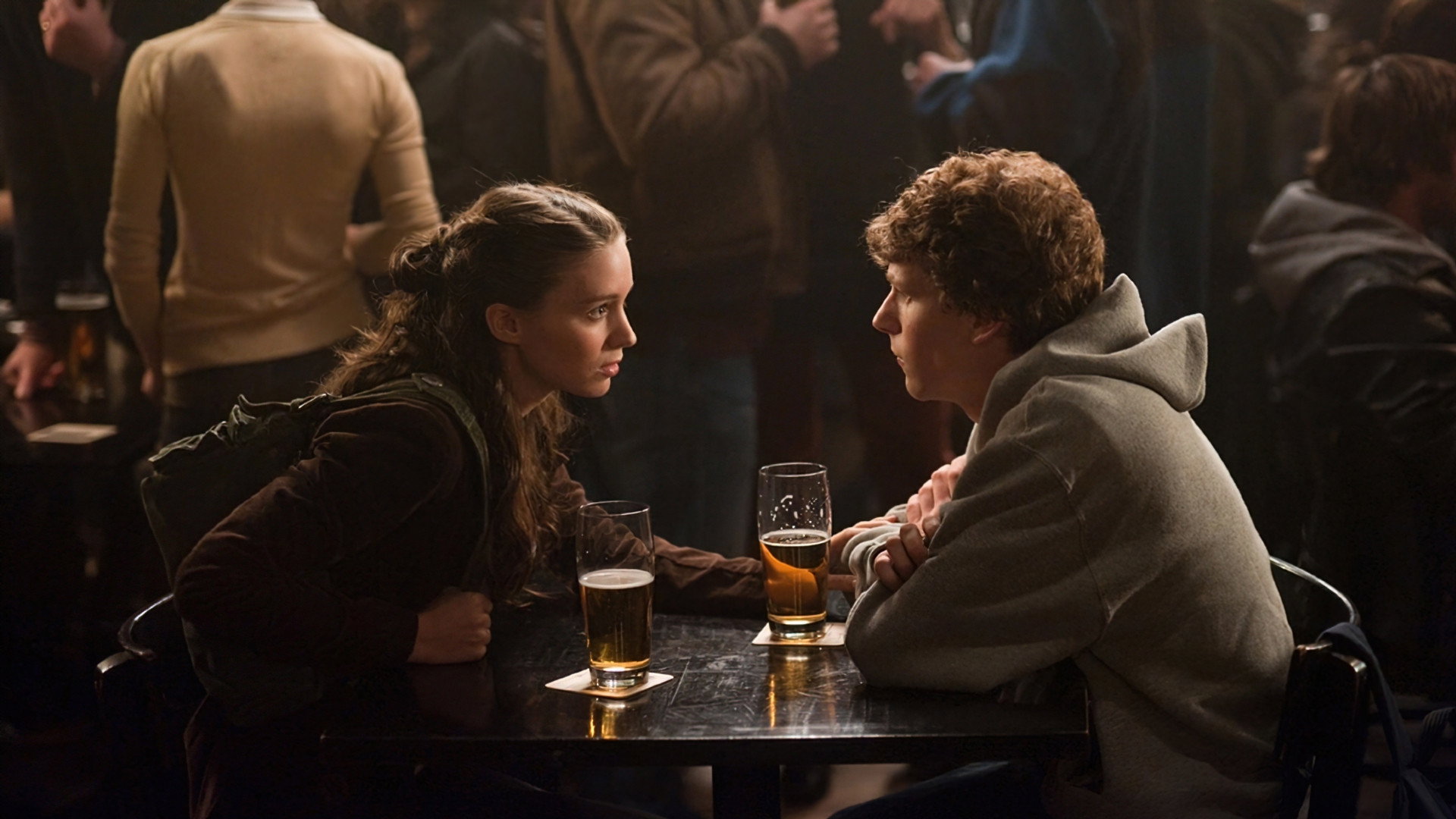
There's a fascinating approach that the movie takes right from the outset; it attempts to discover what Zuckerberg's initial motivations were for creating Facebook. Going on to suggest that he did so as a response to 'the girl who broke his heart' — something that Zuckerberg did not appreciate — stating in a talk at Stanford University in 2010 that he did not enjoy the movies framing that "The whole reason for making Facebook is because I wanted to get girls". And look, maybe Mark is right. Maybe he didn't create Facebook because of a girl. But Mark is missing the point. The character of Erica Albright (Rooney Mara) — fictitious as she may be — feels authentic regardless as a microcosm of the pettiness displayed by Zuckerberg and the army of incels spawned by his actions. The girl might not have been real, but the spiteful 'I'm gonna show you' attitude she represents very much was. Men really would rather reshape the world for the worse than go to therapy, wouldn't they?
But it's in this analysis that the movie reveals itself to be something truly special, interested not just in understanding the makings of the platform that currently runs the world, but, too, in the man behind the wheel. A man whose Adidas sandals have been applying pressure to the pedal at a rate that suggests he places as much thought into his earth-altering choices as he does his outfit of the day: Not a whole lot.
Regrettably, though, this is the man most directly responsible for shaping the experience I, the writer of this piece, have had on this earth. As a 22-year-old, Facebook has been around for almost as long as me, and for as long as I can remember, I've had a Facebook account. Isn't that bleak? But what this does mean, is that I, and anybody else my age, am the target whom Zuckerberg's virtual atomic bomb hit most directly, with our childhoods, and lives as a whole, spent as much online as not. Consequentially, this kind of does unfortunately make Zuckerberg one of the most important, if not the most important — or at least consequential — figures alive today, certainly for those of us who have only walked the path paved by the man's actions. And this movie's understanding of this, at such an early stage in this development, is what leaves me so in awe. It knows something it couldn't have possibly known yet. It knew that the world we knew had come and gone. The way of life we had become accustomed to was no longer tenable. And the individuals responsible? A load of facetious, overly sensitive nerds who didn't quite fully understand just what they were doing. The consequences of which are still being felt years later, with no sign of salvation on the horizon anytime soon.
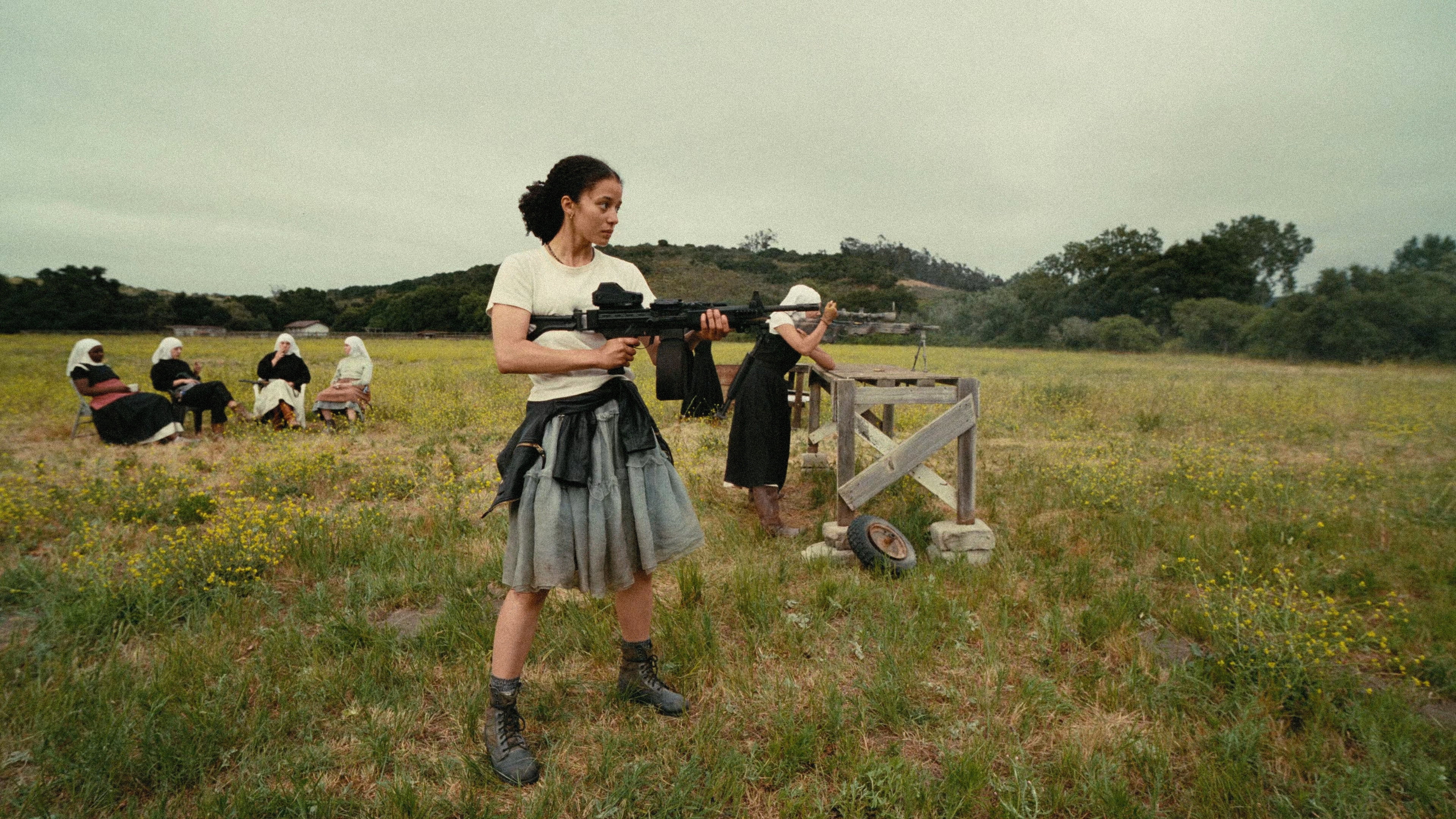
Maybe my favourite piece of evidence in support of the movie's staying power, though, is the most recent Academy Awards. A show that awarded Paul Thomas Anderson's One Battle After Another — a movie that spent its almost three-hour runtime apologising to the youth of today — Best Picture.
There seems to be an acceptance, not just at the movies but in the world at large, that the youth of today have never been given the same chance at life that those before us had. Fascists are in charge of the world, employment rates have never been lower, living costs have never been higher, and to top it all off, we're all addicted to our phones. Everything seems to be just a little bit screwed, basically. And the generation whose fault that is seems to be feeling a little bit bad about that. But One Battle offered a glimmer of hope in the form of Chase Infiniti's Willa Ferguson; a young person whose relationship — or lack thereof — with the technology that surrounds her, is exactly what made her such a symbol of optimism for the future. The sheltered nature of her upbringing — no phones, no social media — seemed to me to be PTA's way of communicating to the world how he thinks we should answer the question to what I'm calling 'The Facebook Problem': Destroy Facebook, I think? Or at least maybe put the phone down for a while. Go outside. Help some people in need. Do some good in the world. I don't know, though, I think destroying Facebook could work, too.
The clear, protruding message that's rising from the movies that are WINNING BEST PICTURE GUYS, is that our actions have consequences. The decisions we make can impact those that come after us to a degree unimaginable in the moment. And yet, The Social Network tried to tell us all this 16 years ago. Does anybody else wanna just retroactively award this Best Picture too? Can we get that going?
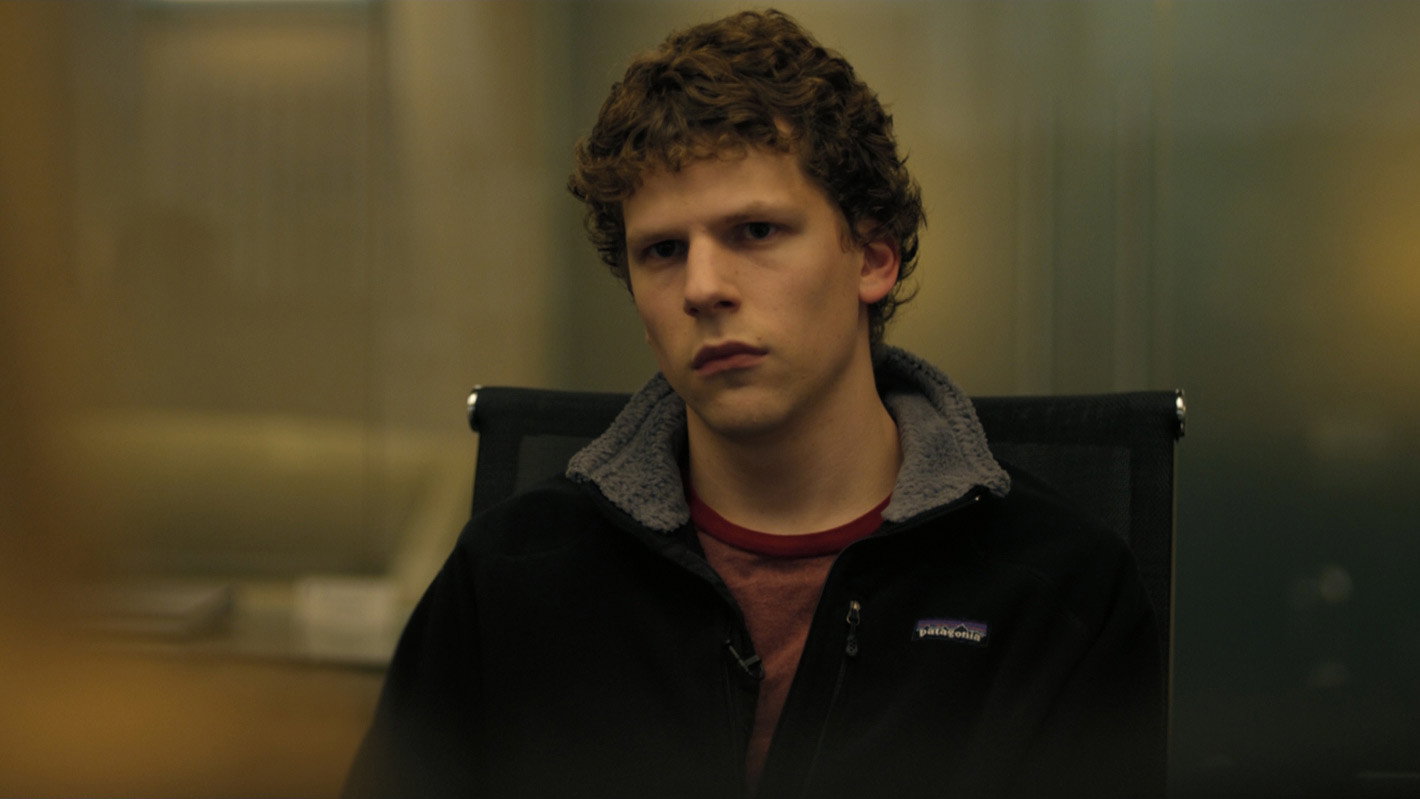
Anyway, whilst we're here, isn't the casting great?
The casting of Jesse Eisenberg in particular, is still absolutely miraculous. Sure, he was coming off the back of a handful of noteworthy performances, but I'm not sure anybody could've known just how well-suited he'd be to this role. A performance so iconic that for many — certainly for me — the face that comes to mind when you hear the name Mark Zuckerberg is not that of Mark himself, but of Eisenberg in the movie, and I feel this is down to the fact that the entire movie's success rests on Eisenberg's ability to hold the audience at an arms length. Every time a smidge of humanity begins to shine through, every time you start to feel just a little bad for Zuckerberg, Eisenberg snatches it right out from under your feet and brings you back down to the crushing reality that the men who shaped our future unfortunately really were just that inconsiderate. The same kinds of men who now find themselves having their own 'Oppenheimer moment' with the advancement of artificial intelligence, mind you, cough Sam Altman cough (look out for Artificial directed by Luca Guadagnino in the next year). Let's just hope those guys learned a thing or two from Zuckerberg's mistakes, or maybe read Dune or something.
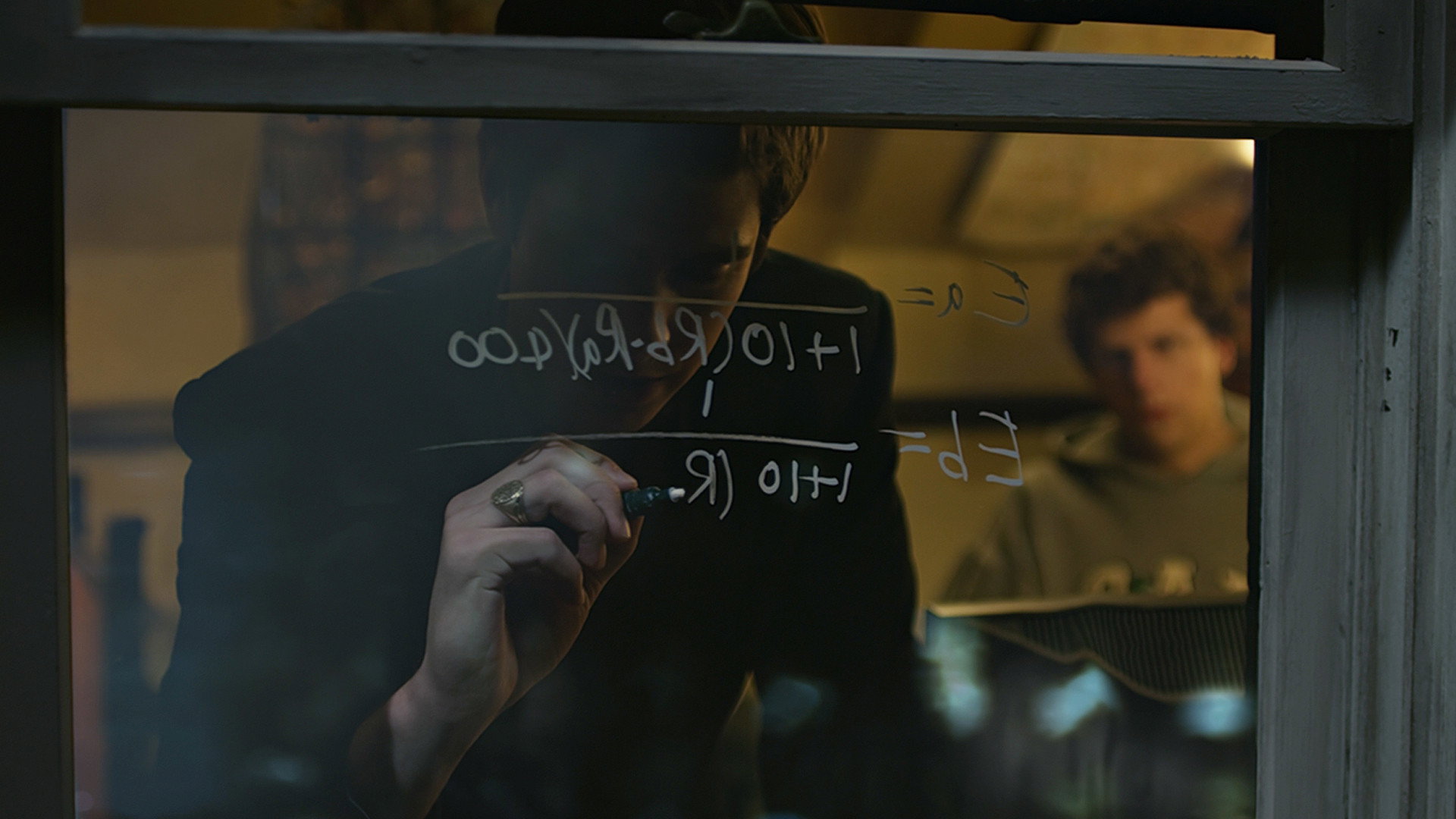
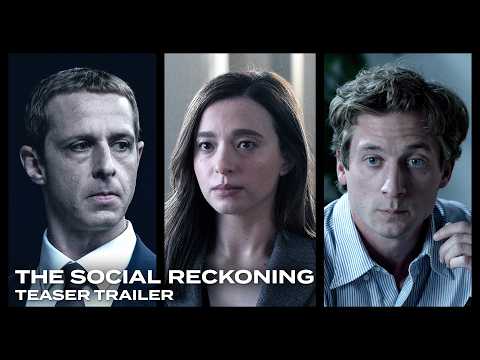
But despite all this, the actual single greatest indictment of the movie's quality and importance, is that now, in 2026, after years of failing to recapture the magic as a director that other filmmakers found when adapting his scripts, Sorkin is returning to his finest material. His upcoming sequel, The Social Reckoning, starring Mikey Madison, Jeremy Allen White, and Jeremy Strong, is set to depict the events of the 2021 leaking of 'The Facebook Files' to the Wall Street Journal that exposed the company's prioritisation of profit over user safety by former Facebook data scientist, Frances Haugen. Speaking to not only the quality of its predecessor, but to the relevancy of the material in today's cultural zeitgeist.
And I mean, just look at the stats. The site is bigger than ever. As of May 2026, it sits at over 3.07 billion monthly active users, and generated over $200 billion in 2025. Its reach expands by the day, and has continued to do so since the site was first published — but all you need to do to see that, is to go and look at the credits of The Social Network. There, you'll find a statistic; it states that Facebook is currently valued at $25 billion. Today, that number is closer to $1.5 trillion. Facebook — and social media as a whole — has never been in more homes, never affected so many people, and never been as important and influential to the human experience as it is today. And who's to say how long this upward trajectory will go on for? Who is going to be responsible for shaping the world of tomorrow? What will be the cultural currency 10, 15 years from now? If the prophetic nature of The Social Network is anything to go by, then the answers to those questions may well lie in its sequel.
The Social Reckoning is released in theatres on 9th October 2026, directed by Aaron Sorkin and starring Jeremy Strong, Mikey Madison, and Jeremy Allen White.