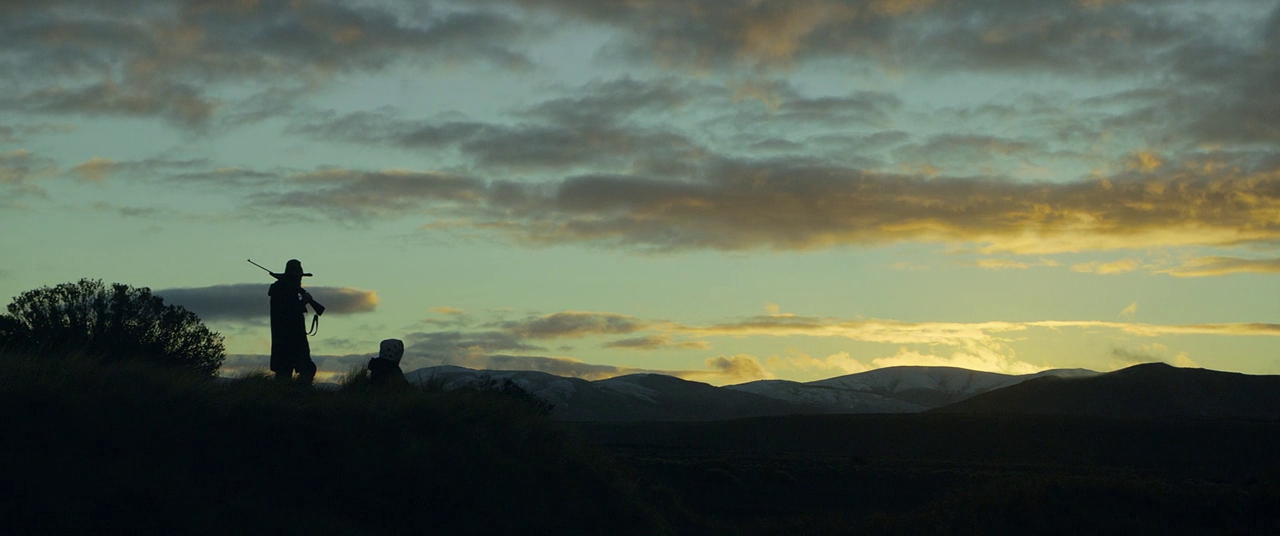
“Don’t listen to old people,” Taika Waititi told me. “Don’t listen to people who have done as much work as I have, because we’re old and often we’re wrong.” I had asked him what he would say to a filmmaker sitting on a ten-minute short with no idea what to do with it. That was the answer. On its face it is useless. It is also the most useful thing anybody said to me that night.
A press line gives you ninety seconds. Nobody tells you that; you work it out by watching the person in front of you get cut off mid-sentence. Two questions if you are quick, one if you are not. So nobody gives you a considered answer — you get the first thing that comes into their head, which is why I think the three of them ended up agreeing without ever conversing together.
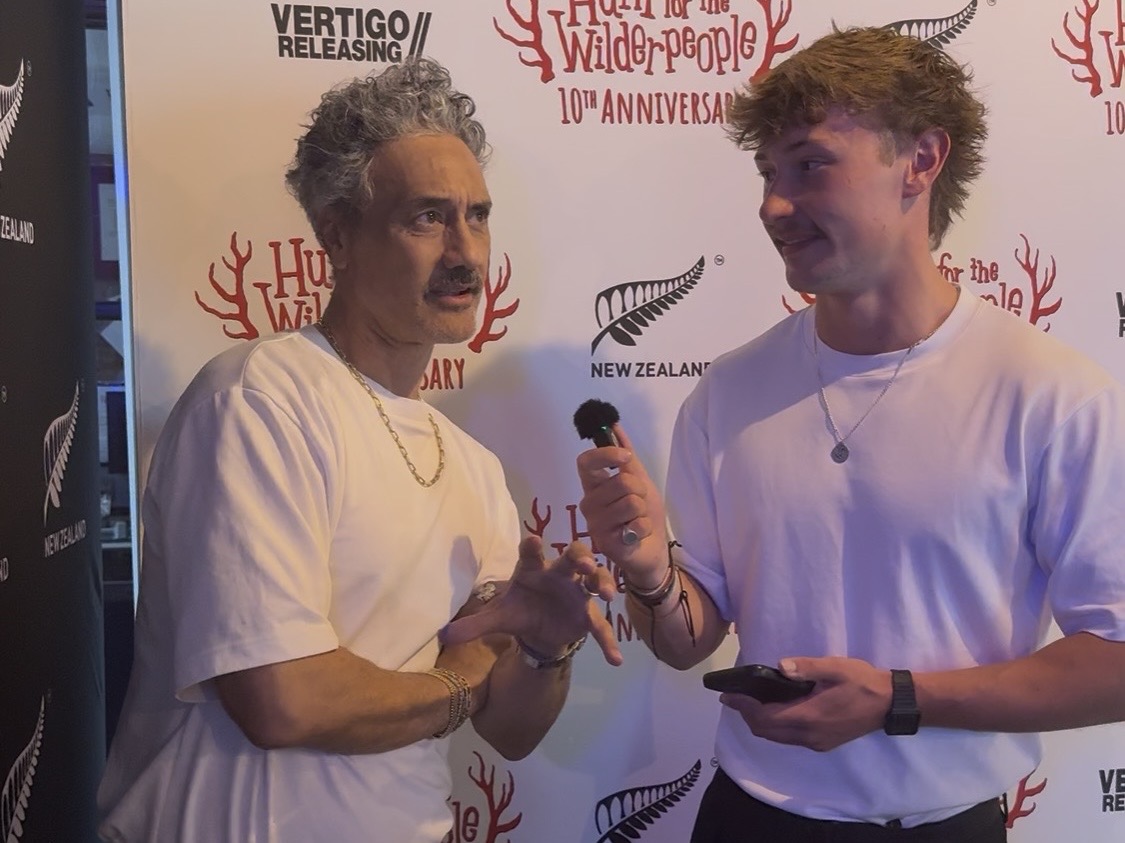
What follows comes from those three conversations, except where I say otherwise. A few things were said on stage in the Q&A afterwards, and I have marked them.
The calling card
The received wisdom about short films is that they are a calling card. You make one to prove you can make the other thing. The short is the audition tape; the feature is the job. Nobody in the industry says this out loud in quite those words, because put that plainly it sounds insulting to the work — but the whole apparatus behaves as though it were true. Funding bodies behave as though it were true. So do programmers. So, most of the time, do the filmmakers themselves: enough of them apologise for their own films before we have watched a frame that I have stopped being surprised by it.
Waititi was nominated for an Academy Award for eleven minutes of black-and-white footage of three kids in a pub car park in Te Kaha. That was 2005. His first feature came two years later. If anyone has earned the right to call a short a stepping stone — the thing he made on the way to the real work — it is him.
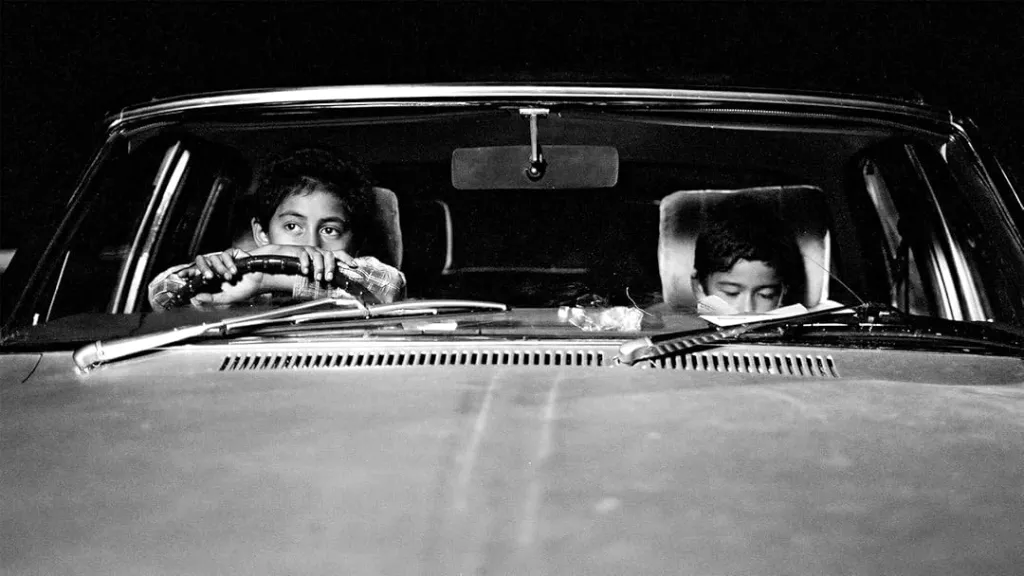
He won’t do it. Asked whether he still thinks of shorts as calling cards or as complete films in their own right, he answered in about a second and a half: “Definitely a complete film in their own right.” He reached for short stories and novels — different disciplines, not different tiers. And then, immediately, he complicated it. “Sometimes I don’t think it’s quite the right thing to just rely on it as your sole entry point into the industry — it doesn’t work that often, especially nowadays. People don’t watch shorts as much as they used to, I think.”
Both of those things are true at once, and the fact that he said them back to back in the same breath is the most honest account of the short film I have heard from anyone at his level. The form is complete. The pipeline is broken. The films are not lesser; the route out of them is unreliable, and getting worse, and pretending otherwise does nobody any favours. That gap — a real art form with a collapsing audience — is not an argument for making fewer shorts. It is an argument for someone building the audience back. It is, more or less, the reason 50% Film exists, so weigh that paragraph accordingly.
Not the finish line
Julian Dennison is the only one of the three who actually took the escalator. He was thirteen when he shot Wilderpeople. He was on a Marvel set inside two years. If the calling-card theory works anywhere, it works here: small film, big film, done, next.
I asked what the world of Marvel taught him that transferred, and what didn’t. “They’re way better snacks. Way bigger trailers. I think they taught me, like, this is a long game, right? Even though it was a blessing to do a movie, a blessing to do a Marvel film — this isn’t the finish line.” What stayed with him from the small New Zealand shoot, he said, was what it means to make a film with your friends, with people who love the craft. Not the scale. The company.
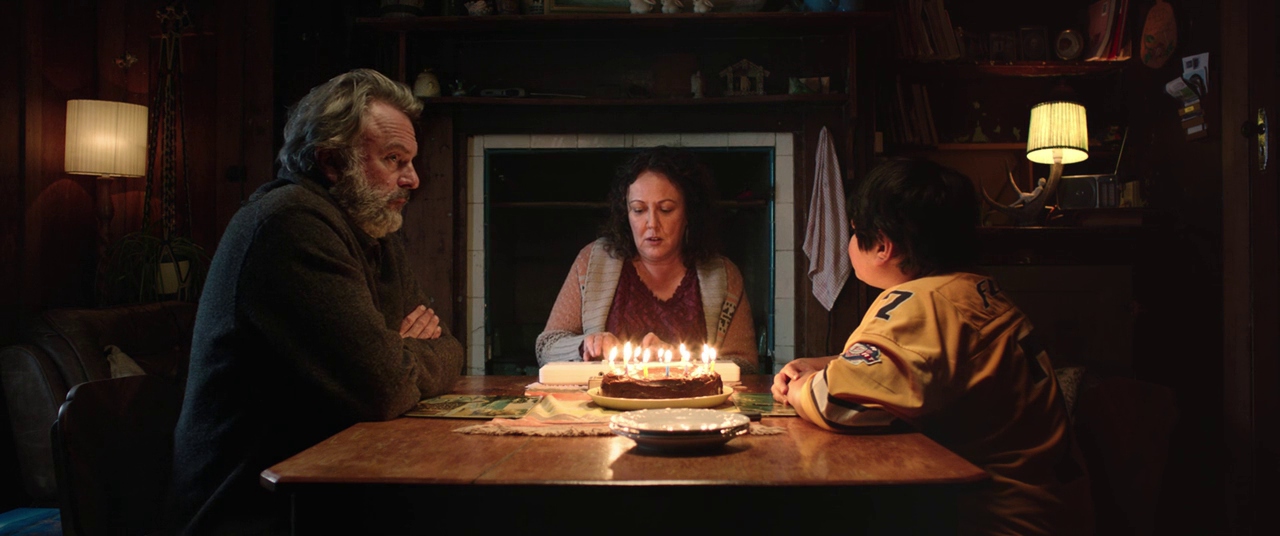
There is a version of that answer that is just modesty from someone who never had the option. This is not that version. Dennison had the option. He took the option. He came back and told me the size of the trailer was the least interesting part of it.
The person coaching him through all of it, at thirteen, was Rachel House — who was also in the film, playing Paula, and who Dennison said on stage that night was his best friend on set. Hold onto that. It matters in about four hundred words.
“Sam was looking after me”
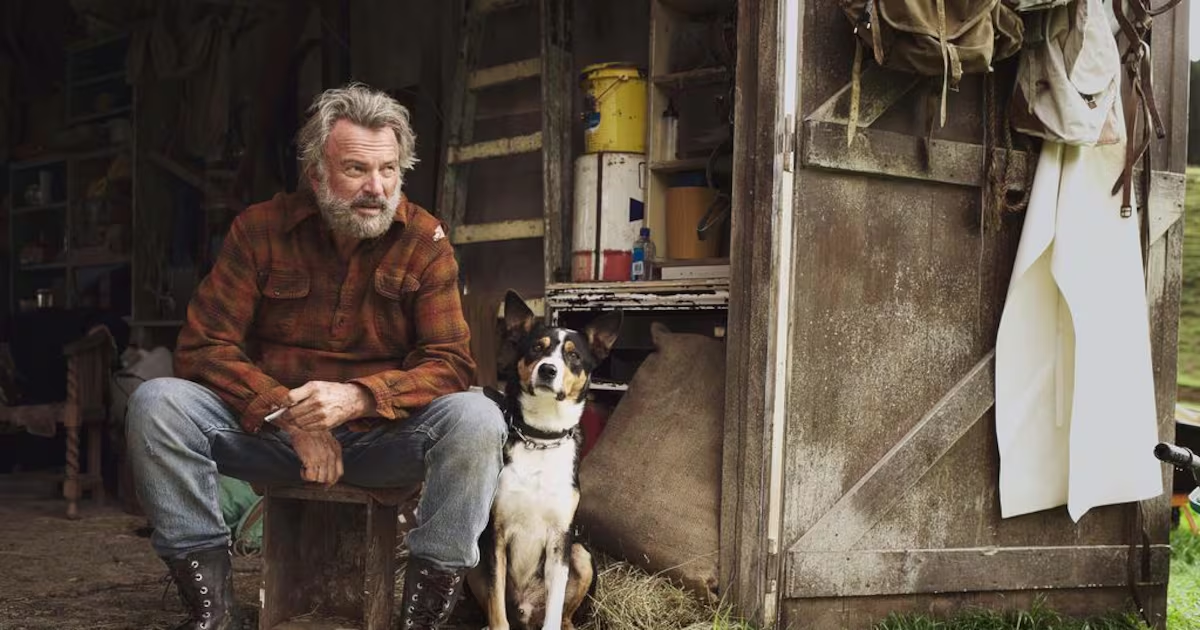
The screening was dedicated to Sir Sam Neill. He died in Sydney on 13 July. Seventeen days later we sat down in the dark and watched him play Uncle Hec.
Nobody on the press line made a speech about it, and I did not ask anyone to. It arrived sideways, in the middle of an answer about something else entirely.
I had asked Dennison what he notices in his own performance now that he could not have seen at thirteen. He talked about the innocence you have as a child, about not really understanding what was going on, about liking the time off school and the small paycheck. And then he listed the people who made it possible.
“Taika was just yelling things at me to do when we were dancing in the bush, and Sam was looking after me.”
Past tense. It is what he had.
There was one more, and it came from House. On stage afterwards, she described being introduced to Neill for the first time. Waititi presented her as Julian’s acting coach, and Neill — forty years and a hundred credits past needing anything explained to him about acting — said: “Maybe you could teach me at some point.” “You don’t need me, my darling,” she told him.
It is a small thing: an introduction on a set ten years ago, retold by someone who was there. It is also the whole register of the man in a single line — the courtesy of pretending to need the help, extended to a colleague he had just met, on a picture that could not afford to pay any of them properly.
Which is, as it happens, the film’s actual subject. An adult who does not want the job of looking after a kid, doing it anyway, out in the bush, until it turns into the only thing either of them has. Ten years is long enough for a shoot to become a memory. Small sets are the ones people remember by name.
The snow
Rachel House gave me the evidence. She had two jobs on that film — Paula on screen, Dennison’s coach off it — so when she talks about camaraderie she is not admiring it from a distance. She was part of the machinery that made it. I asked what a small production offers an actor that a big-budget set can’t. She did not reach for a principle. She reached for a specific afternoon.
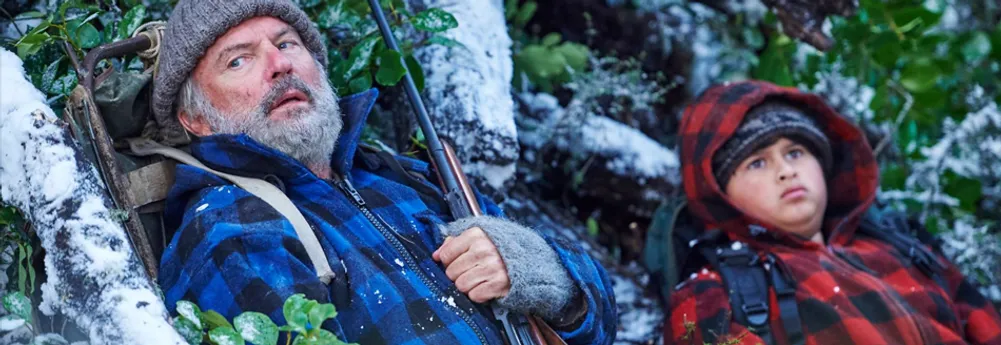
It wasn’t meant to snow. It snowed. “It came out of nowhere, and all of us came together and created this incredible 720º shot that Taika made up in that moment. I don’t know that you quite get that in a big studio film.”
That is the whole argument in one anecdote. The weather changed, the schedule died, and because the unit was small enough to turn on a sixpence, the director invented a shot on the spot and the film got something better than the thing that had been planned. Money buys you a great many things. It does not buy you that. A hundred-person crew cannot improvise; it can only reschedule.
She was careful — actually careful, not diplomatically careful — to add that she does not think big studio films aren’t fantastic too. Nobody here is arguing otherwise. The claim is narrower and much harder to shake: some things are only available at small sizes, and they are not consolation prizes.
Very careful of people like me
So: three people, ninety seconds each, asked separately, ten years after the fact. The director says the short is a complete work — and that hardly anybody watches them any more. The kid who went to Marvel says Marvel wasn’t the finish line. The actor who has done both says the small set gave her something the big one couldn’t.
None of them offered a solution. None of them was asked for one. And none of it is something I am supposed to be passing along, because the director also told me — in the answer I had actually come for — not to listen to people like him. “I did listen to a few people when I was young, and I listened to some people who are in my position now, and they were wrong. I wish I’d never listened to them — some of them nearly ruined my short films. So I’m very careful of people like me.”

He is right. I have published it anyway.
Take the warning with the advice. They came from the same man, thirty seconds apart, with a publicist at my shoulder telling me my time was up.
And if you are sitting on a ten-minute short with no idea what to do with it: it is not an audition tape. Send it to us anyway. We watch everything.
Read the full interview HERE