Nothing creates better ground for a terrifying story than pain, or a haunting, rooted in love. A cursed, doomed love. The idea of monsters and zombies and demons asks us to accept something beyond what we can see or touch, meaning their threat can feel distant from our everyday lives. But not love. It can be waiting behind a door just down the hall.
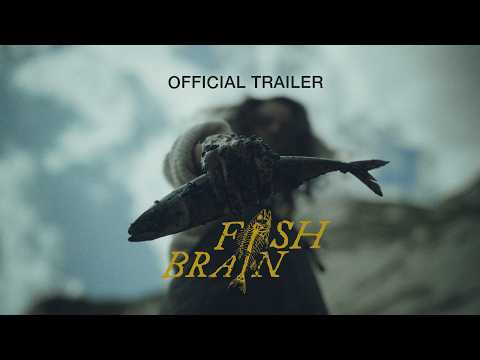
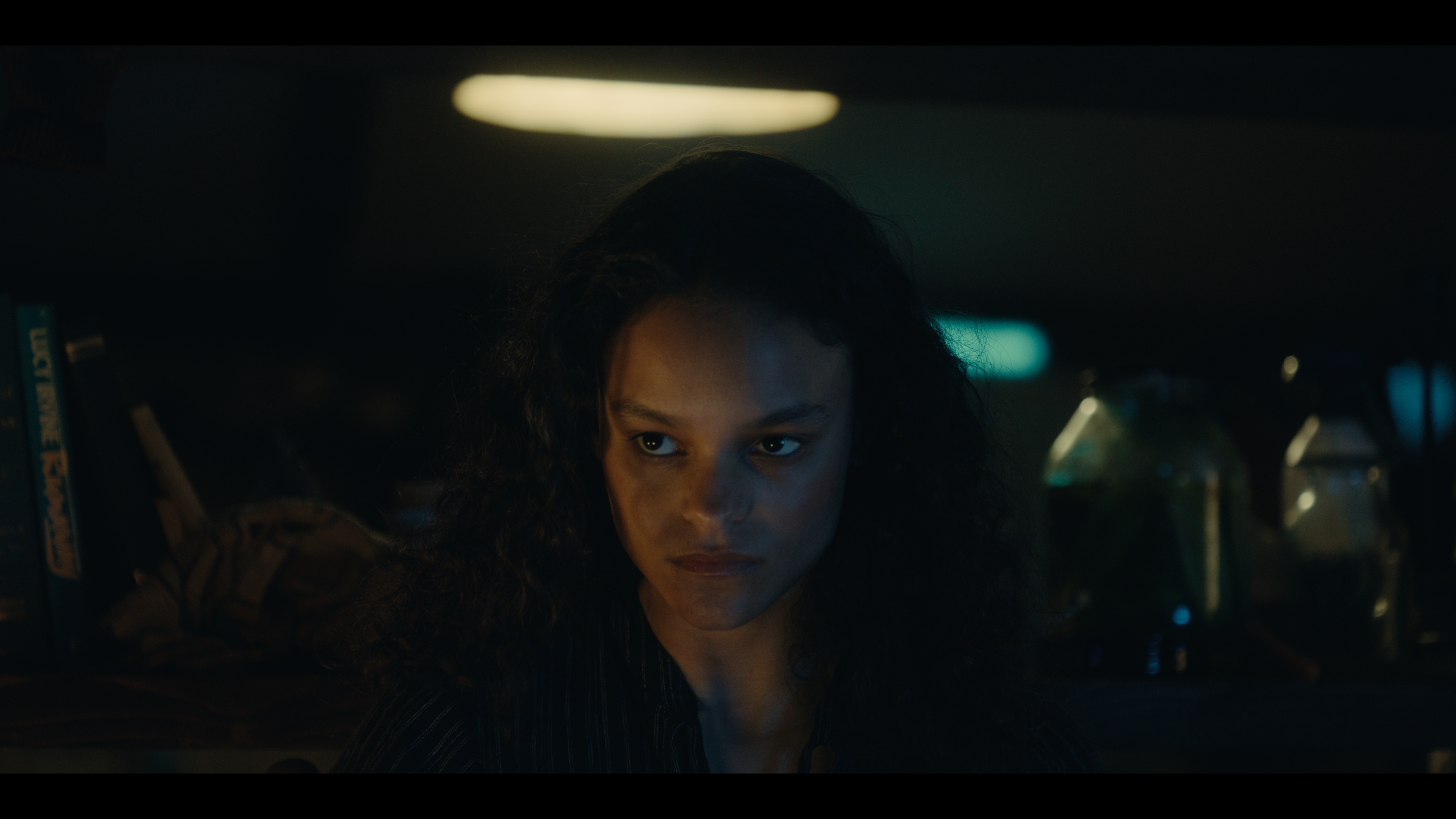
Fishbrain tells the story of Ori, a young woman who returns to a British coastal town to care for her grandfather, Jeb, following her grandmother Imogen’s disappearance. Meanwhile, dead fish have been washing ashore. In 22 minutes, Max Vanderspuy’s short film presents a sensory horror story anchored in their relationship. Ori is filled with resentment towards her grandfather, while he refuses to get up from his armchair, not looking anywhere but at the television.
We got the chance to speak with writer and director Max Vanderspuy about the love and resentment at the heart of Fishbrain – and, of course, all the dead fish.
This interview has been edited for length and clarity.
Eloísa: I wanted to start by asking a little more about where the idea for Fishbrain came from. I read that your mother grew up by the British seaside and that the film began with an image of dead fish on the coast. Where did the idea of love becoming captivity come from, and how did it come together with that image?
Max: Yeah, so as you've sort of highlighted, my mother grew up in a small town, just outside Canterbury in Kent. And I have these very early on memories of walking along the coastline, especially in bad weather as well, where it's misty and the rain is really coming down.
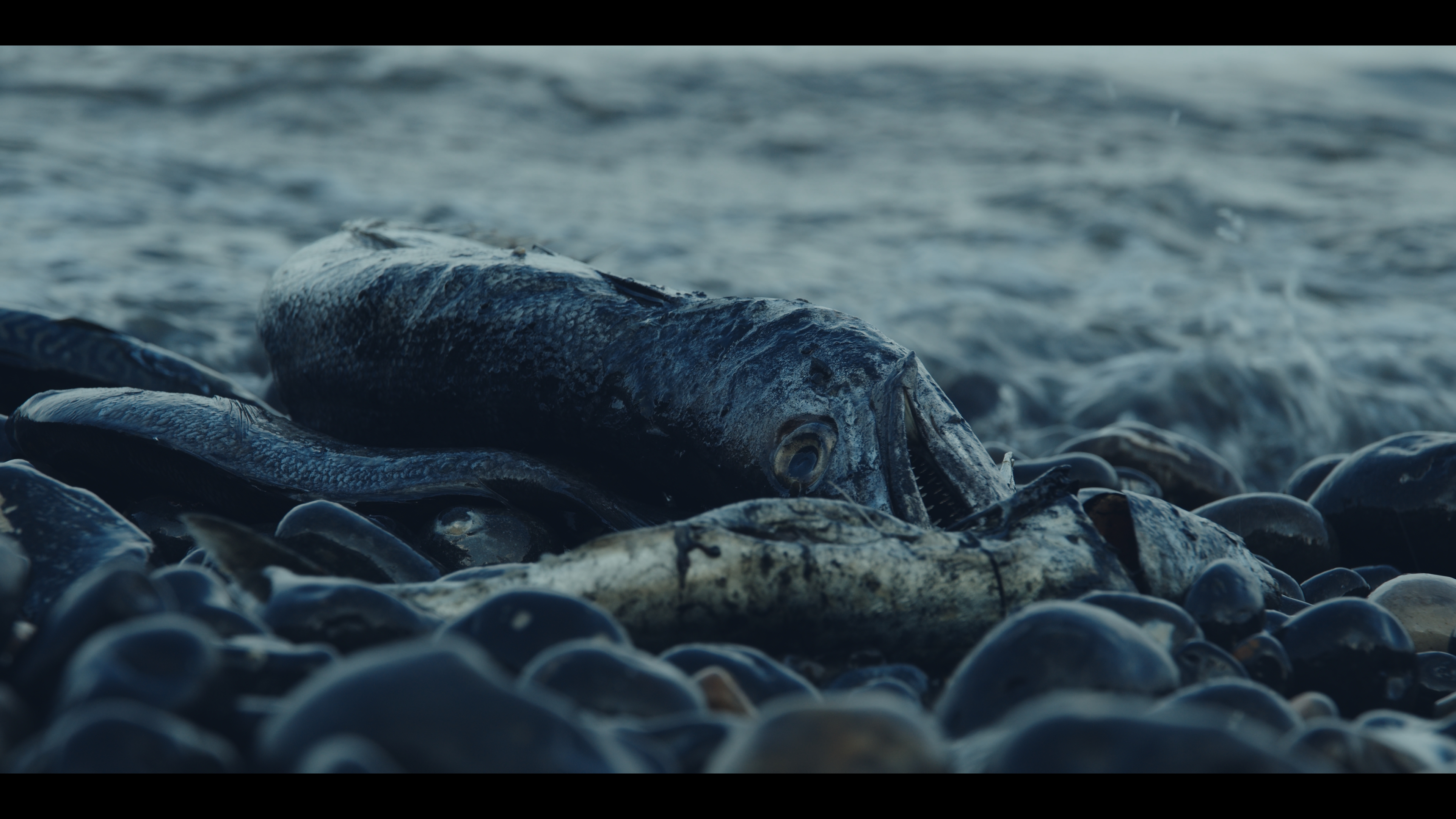
And that image has really stuck with me throughout my life. I've always wanted to do a coastal set horror film, it's something I've been dreaming about for a long time. And then I think I almost had a dream of just seeing these beaches covered with dead fish and it was so horrific. You know? It's so unnatural, it's something you just don't see. And I really wanted to dig in.
Eloísa: It’s an image that gives a very bad omen kind of feeling, right?
Max: Yeah, exactly. Very bad omen. So I was really exploring that image in my head. And I think I'm also really drawn to family in my filmmaking as well. My previous short, Recursive Dreams, also explored family and their relationships.
And so this time I just came to this story of this granddaughter and grandfather trapped in this very claustrophobic house near the seaside. And then I wanted to connect that to this horrific image of dead fish covering the beach. It sort of just grew from there, to be honest.
I think I was really intrigued by the relationship between love and resentment because they can both coexist in a relationship. Just because you love someone doesn't mean you can't deeply resent them as well. And that's sort of where the character of Ori came from as well, that interesting tension.
Eloísa: Yeah, I loved how their relationship was portrayed. You could feel the resentment, but also that they loved each other – especially Ori’s resentment at wanting to have had more from her grandfather throughout her life. There's a lot of grief as well, not only about losing Imogen, but also a town that's dying, a house that's decaying… Were you particularly interested in exploring that emotional conflict?
Max: I think one of the other themes I was really interested in is the concept of neglect. Not just in the relationship, but also physically. As in, you know, the dead fish covering the local beaches. I think it touches upon neglect of the environment. I didn't necessarily want this to be an allegory for the climate crisis. I think it's closer to home. This idea of townspeople neglecting the place that they live in and grew up in, and how it reflects in the world around them.
The other thing I had going throughout the film was the idea that the sea doesn't stay outside. It comes into the house, it contaminates it, it contaminates the relationship. Also speaking of neglect in the family there's shots in the film of the roof dripping and the floorboards are worn out. Ori keeps telling Jeb “you should fix the house, it's our home”.
Eloísa: And it's like a perfect picture of someone grieving, I think. I was really interested in why you chose the action of decay, instead of just death or indifference? Because nothing in the film ends cleanly, everything lingers. Feelings just go under the rug.
Max: The second half of the film was very much like the physical manifestation of neglect, right? Jeb as a character is just shoving all his feelings and emotions beneath him. My art team and I put a lot of care into how we dressed [the set], and we actually got a lot of photos from the actor who played Jeb, John Henshaw, and we put them on the walls.
When I worked with John on set, I said “you're confronting your past, your history, all your memories”. That’s, for me, the real horror. It’s that you've hidden all this stuff from your life, you've completely suppressed it beneath you, and now you're in it. And what do you do? That's horrifying.
Eloísa: I was very curious about Imogen's character, I was wondering if you could tell me a little bit more about her. She's absent from the present time of the film, but she's probably the most important character. Could you tell me a little bit more about her relationship to that town and to the house?
Max: At least from the backstory perspective, I think this is her town. I think she actually brought Jeb to her home, so there's this extra complication. This isn't his home and he feels alienated from it in some way. And I think after Imogen disappeared, I think he almost felt betrayed. As in the thing keeping him there is no longer with him.
So I think that's part of the reason he suppressed his grief and all his feelings so deep down. He felt like “well, why am I here anymore?”. But ultimately it's his home, he's spent who knows how long of his life in this place. I think that's a really interesting thing for a character to explore. What do you do in that situation? It's not easy for someone to just uproot their life if they've been living there for so long. So I think that was something else I wanted to explore.
Eloísa: I need to ask you about all the fish. Really, congratulations on making the movie feel so sensory. I've spent my whole life trying to teach myself how to eat fish without feeling icky, and you've ruined that, I think. How much of that was literally there, on the set?
Max: Yeah, so we did have real fish on the beach. We actually worked with a few local fishmongers in the area, and I think we managed to collect probably a hundred fish. But that was it. The irony is that when I say a hundred, it feels like “oh, that's a lot of fish”. But when you have to cover a whole beach… it's nothing. You can barely see it. So honestly, humongous credit to the VFX team, because they made it look so, so good.
And once again, I think it is just that it's the marriage between the practical and the VFX. Because we actually did go ahead and put real fish on the beach, so it's an amazing reference for the VFX team. But, honestly, hats off. I think they did such a phenomenal job.
Eloísa: Let's talk about next week. You'll be premiering the film at the London Festival, and with both screenings sold out. How does it feel to finally get to show Fishbrain to a broader audience?
Max: I'm incredibly excited, and of course nervous. We really wanted this film to be experienced on a big screen, you know. It looks amazing and it sounds amazing on a big screen. So I genuinely hope people are blown away because we've put so much passion and love into this film.
I think it's a roller coaster as well. I think you really go on a journey with these characters and, you know, through the sequences. I'm just very excited and I'm really curious to see how people are going to feel.
Eloísa: And you're turning Fishbrain into a feature, your debut feature. Was it always supposed to be a longer story, or did that desire come while making the short?
Max: Yeah, I think it quickly became apparent as I was writing the film that there was a much bigger story to tell. And I think there's two things. I hope that people can watch the short and feel like they've experienced a film. To me it's not just a proof of concept. It's not just a scene from a larger world. It is its own contained piece. But I think there's so much that we can expand from it into a bigger story.
I think there's so much more of the world that I want to unpack. Like the local town, how the fish got there, the relationship between Ori, Jeb and Imogen. There's so much to explore in that relationship and the wider world and also, the mythology of it. Why is the fish washing up on the beaches? That's what I want to explore in the future.
Fishbrain most definitely does a wonderful job as a short film, but leaves enough open to keep you hooked on its world. Through what’s left unsaid or unseen, the story becomes a little bit our own. And I can’t wait to see it further explored.
Screening in the Land of Hope and Gory shorts programme at Prince Charles Cinema, Fishbrain premiered at the BFI London Film Festival on 7 October. A second screening takes place on 18 October at BFI Southbank. In the meantime, Vanderspuy’s earlier short, Recursive Dreams, is available to watch on the Viridian Films website.