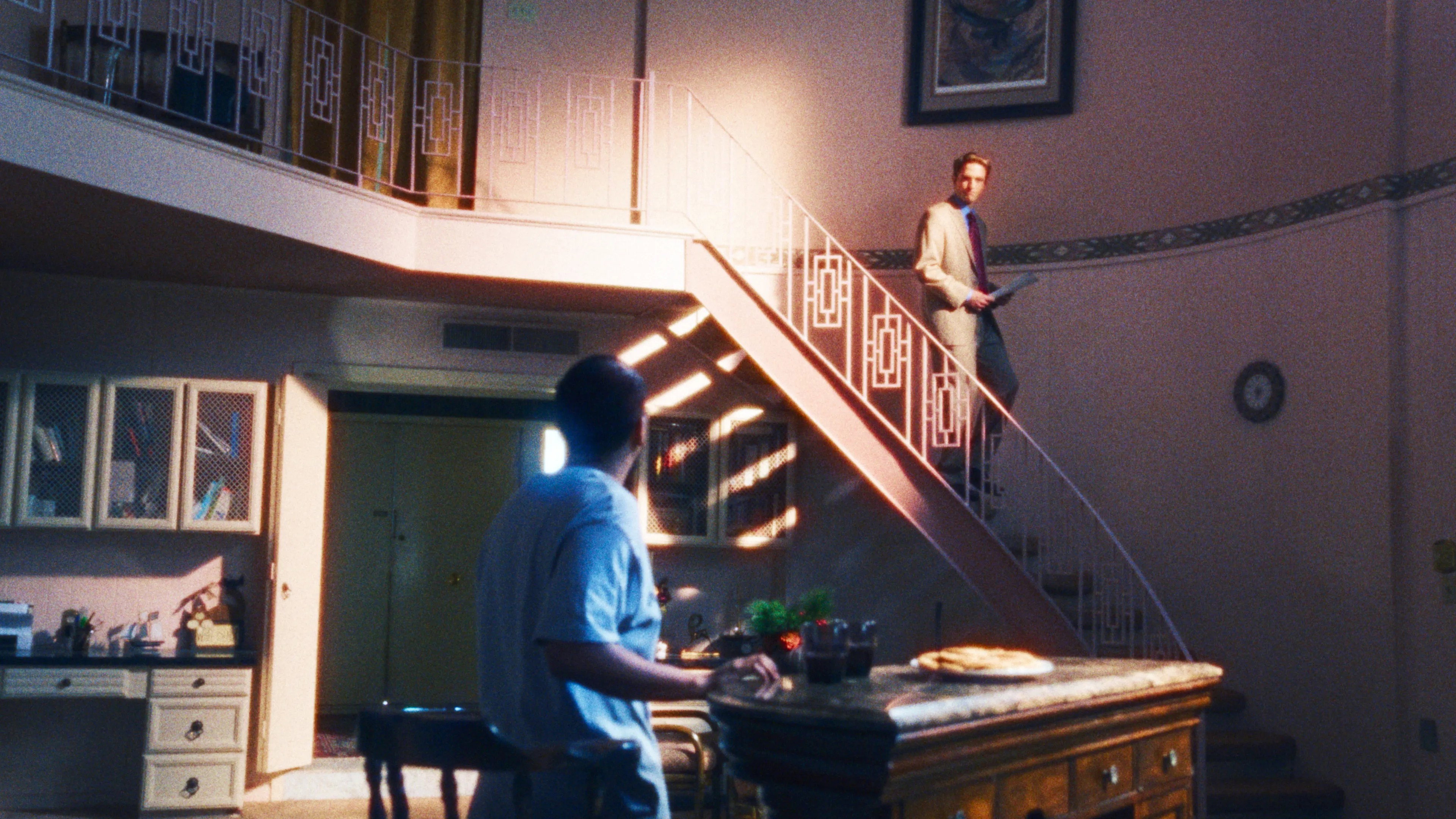
Over the last two weeks Venice Lido has been swarmed by scores of filmmakers, celebrities, critics and fans alike in honour of the 83rd edition of the Venice International Film Festival. With Maggie Gyllenhaal as Jury President for this year, the event celebrated films from all corners of the globe, and stoked Oscars buzz for some, as well as political debate for others. From controversial documentaries to dark comedy thrillers, here is the run-down of the 2026 Venetian extravaganza.
The festival opened on September 2nd, inaugurated by Danny Boyle’s Ink, followed by George Clooney’s acceptance of the Leone d’oro alla carriera, or Lifetime Achievement Award. Ink, which premiered globally at Venice, was well received by critics and fans alike, although the director has recently come under fire for using generative AI in the film. Jack O’Connell plays Larry Lamb and stars alongside Guy Pearce, playing media mogul Rupert Murdoch, in this biographical drama about the foundation of one of Britain’s most notorious tabloids — The Sun. Set in 1969, the script is adapted from James Graham’s original stage play and also features Claire Foy as Larry’s fictional mistress, Jules Davies.
Clooney was the first of two to receive the festival’s greatest honour, in recognition of his long career spanning across genres and formats, including ER and the Ocean’s film series. The festival’s artistic director, Alberto Barbera, credited him as “a complete and charismatic artist, impassioned and original, who has transformed a deep vocation into one of the most luminous parabolas of contemporary film.” Ellen Burstyn, the Oscar-winning lead of Alice Doesn’t Live Here Anymore (1974) and The Exorcist (1973), also received the accolade later in the week, with Barbera dubbing her “an actress of rare intensity and truth.” Burstyn also stars in Flesh Impact, Maggie Gyllenhaal’s short film on Marilyn Monroe, which was screened at the festival.
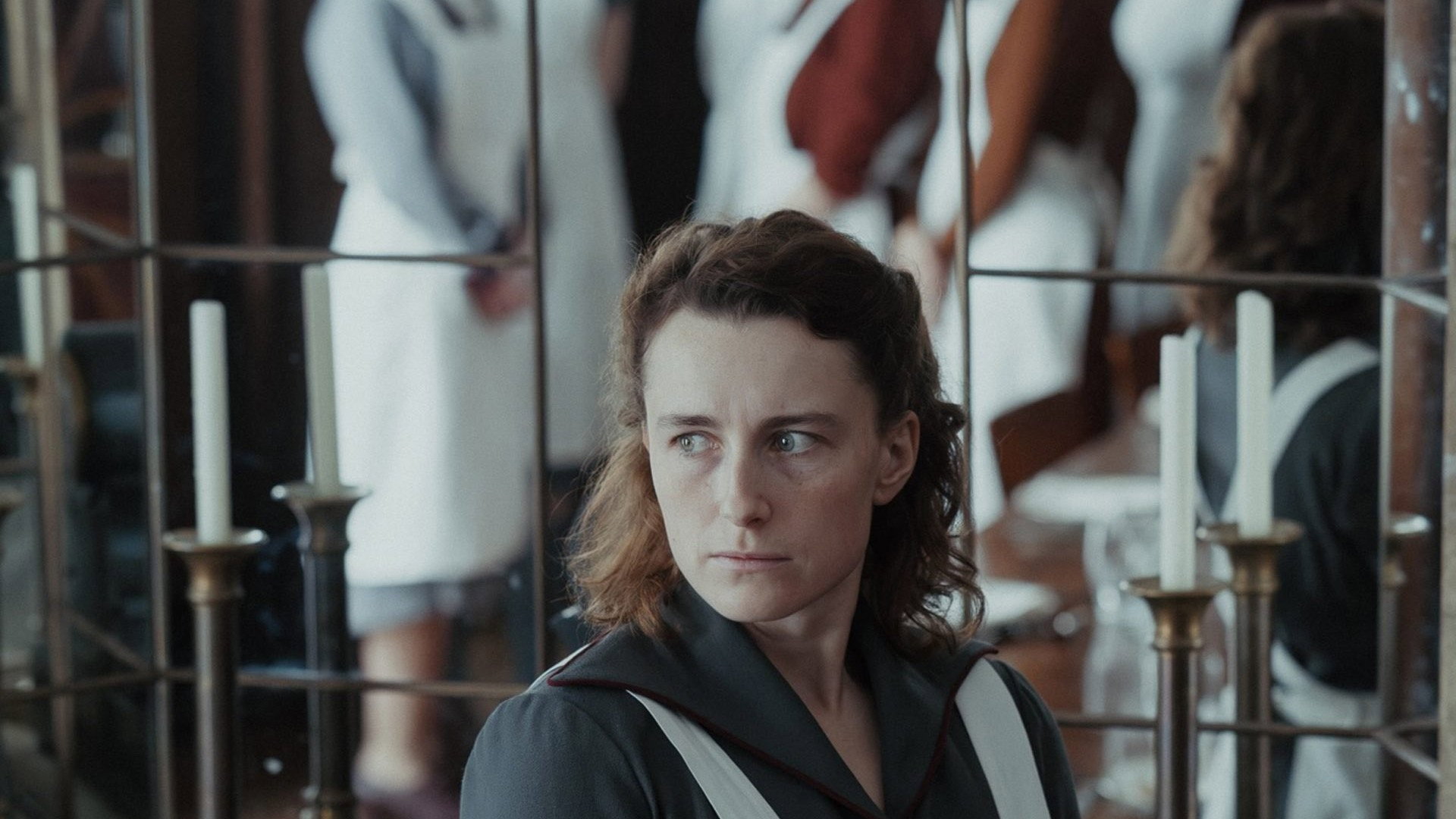
In leading the Jury this year, Gyllenhaal stated that she would “not be standing in judgement, but in curiosity, admiration and excitement,” and called out the lack of women in the festival’s competition line-up: “there’s a systemic problem. It’s harder for women to get films financed.” This was echoed by May el-Toukhy upon her reception of the Golden Lion for best film for Woman Unknown: “Thank you to the jury for this great honour — and to you, Maggie, especially for using your voice and shining a light on the lack of equal opportunities for female filmmakers in our industry.” The Danish psychological drama/thriller was the only female-led film out of the 21 competing features, and it follows a housemaid’s secret relationship with a German soldier during World War II. Mathilde Arcel — who also won the Volpi Cup for best actress — stars in the leading role.
Following a new rule to be implemented from the 99th Academy Awards (2027), Woman Unknown automatically qualifies as one of the four non-English language submissions to the category of Best International Feature Film thanks to its win at Venice. It will compete alongside this year’s best picture winners from the Berlinale, Cannes, Sundance, Busan and Toronto festivals, as well as Lee Chang-dong’s Possible Love — winner of the Grand Jury Prize at Venice last week, and South Korea’s official submission to the International Feature category. The film follows two couples from different social backgrounds and has received much critical praise, as well as being swept up by Netflix — who are positioning it as a major contender for the upcoming awards season — for global release on their platform next month.
The Special Jury Prize was awarded to NAZA, a documentary on the conflict in Gaza which earned a record-breaking 25-minute long ovation amid the waving of Palestinian flags in the Sala Grande where it was screened. The British documentary was directed by Rachel Szor and Yuval Abraham — two of the four Oscar-winning directors of No Other Land (2025) — and produced by The Guardian and JW Films alongside executive producer Jonathan Glazer — the Oscar-winning team behind Zone of Interest (2023). Following the screening, Israel’s Minister of Culture, Miki Zohar, has stated his intention to revoke the filmmaker’s Israeli citizenship, declaring the film is “vile,” and “constitutes treason.”
The documentary features the testimony of Israeli military officers describing the alleged systems used in Israeli strikes on civilians in Gaza, with the title coming from the Israeli military’s shorthand for civilian casualties. Szor noted that the testimonies were given in Hebrew so more Israelis could understand the atrocities outlined by officers, while Abraham reiterated that “it’s especially important … that Israelis watch this film — it’s our country that is doing these crimes — that Europeans watch it, and especially here in Italy because your government and the German government are blocking pressure on Israel that can end this, that Americans watch it because that country is funding much of the killing.”
More controversy surrounded DAU, the drama piece following Soviet scientists by Ilya Khrzhanovsky, recipient of the Silver Lion for best director. The choice to include the film in the festival’s official line-up was quickly condemned by Ukrainian state authorities, with the Ministry of Foreign Affairs and the Ministry of Culture of Ukraine issuing a joint statement of their concern that the film was funded by Russian businessman Sergey Adonyev — who is currently under sanctions by the US and Ukraine, and has confirmed ties to Putin’s regime — as well as being filmed in the Ukrainian location of Kharkiv while disregarding the city’s own history and identity, and rather imposing upon it a Russian imperial narrative. The Biennale’s official response stated that the film, which was two decades in the making, was not part of Russia’s alleged hybrid warfare, noting the country was absent in the film’s financing, and that the director was a dissident filmmaker who has renounced his Russian citizenship. Khrzhanovsky himself dedicated the three-hour long film to “Ukrainians who are fighting in this terrible war for freedom and peace and victory.”
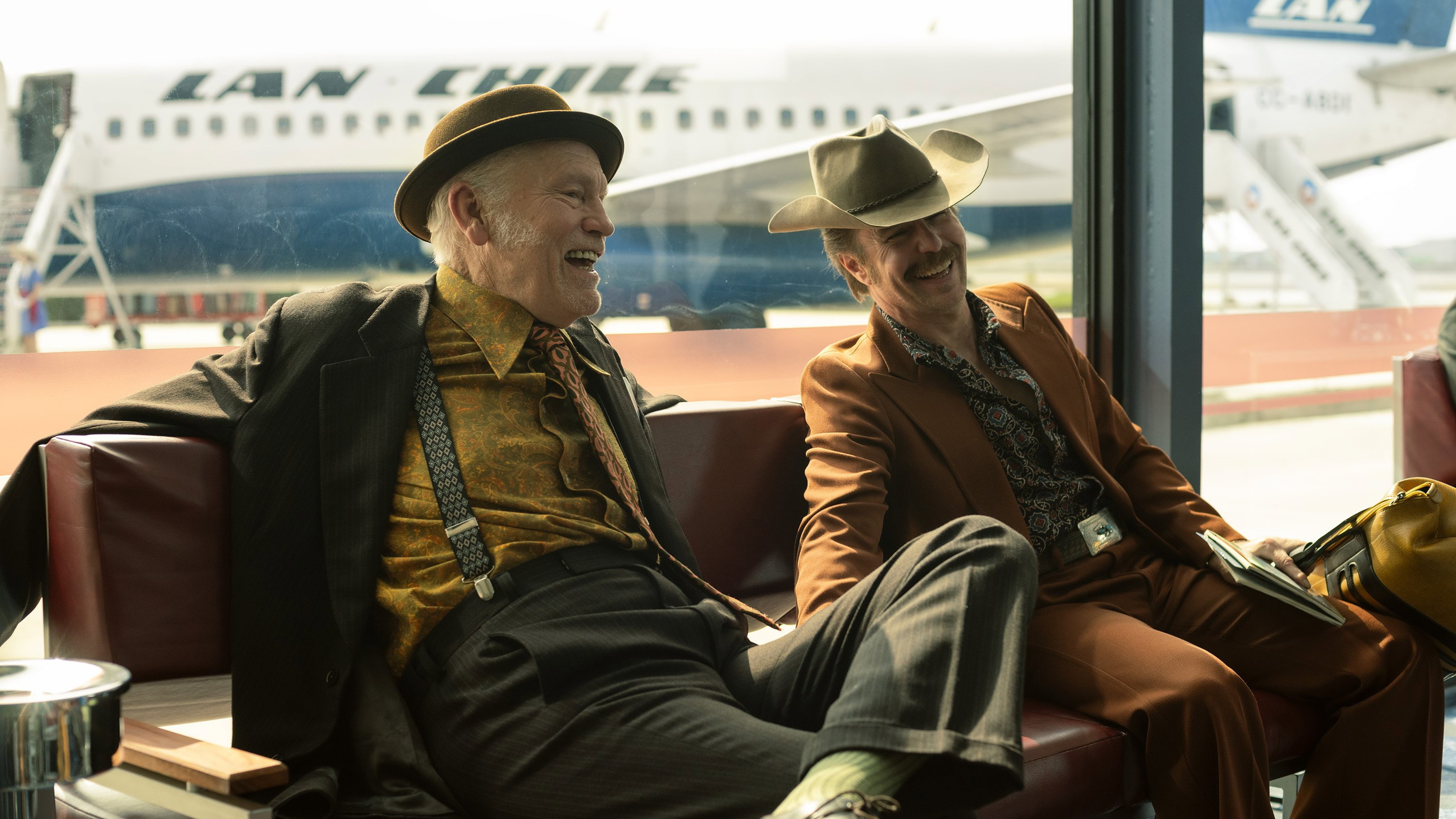
Other contenders to watch this awards season include Martin McDonagh’s Wild Horse Nine, which has created much Oscars buzz around John Malkovich’s leading performance, for which he received the Volpi Cup for Best Actor. The black comedy action thriller is the latest in McDonagh’s catalogue of Academy Award-winning films, as well as being the second feature to ever be filmed on Rapa Nui/Easter Island. It follows CIA agents who find themselves on the island shortly before the 1973 Chilean coup, and features performances from Sam Rockwell, Steve Buscemi, Tom Waits and Parker Posey.
Similarly, Robert Pattinson is eyed for the same Oscars category following his performance in Lance Oppenheim’s Primetime — a psychological crime thriller produced by A24, loosely following the run of American reality TV show To Catch a Predator. Pattinson plays a fictionalised version of the show’s host, Chris Hansen, while Jeff Zucker — former NBC chief — plays himself. This stardom is matched by Javier Bardem and Penélope Cruz, who walked the red carpet in promotion of Florian Zeller’s psychological thriller Bunker, where they star alongside Paul Dano, Stephen Graham, and Patrick Schwarzenegger.
Also hitting the headlines were the Gallagher brothers, who appeared in Venice for the world premiere of Oasis: Don’t Look Back in Anger, the documentary film of the band’s recent reunion tour, written by Peaky Blinders’ creator Steven Knight, directed by Will Lovelace and Dylan Southern, and produced by Disney. Werner Herzog’s Bucking Fastard also caught critical attention with Kate and Rooney Mara starring as fictional versions of twins Freda and Greta Chaplin in their search for love and acceptance, while Alex Gibney’s documentary Musk has attracted the attention of the controversial figure it investigates, as well as overwhelming critical praise.
Many of the festival’s sidebar sections featured international pictures with a particularly political trend across the Asian, South American, French and Italian contingents. The final screening was Dio Ride (God Laughs), a dramatic comedy by Giovanni Veronesi, while a particular home favourite was Nanni Moretti’s Succederà questa notte (It Will Happen Tonight). Another notable inclusion was the conferring of the Queer Lion awards to Victor di Marco and Márcio Picoli’s London, and Theo Rollason’s Queer Edward II, and Luca Guadagnino’s reception of the Cartier Glory to the Filmmaker Award in occasion of his out-of-competition documentary, Joie de vivre.
In its 83rd iteration, this year’s Venice Film Festival had all the original and cutting-edge features of its regular indie filmmakers, whilst also keeping a sprinkle of A-list Hollywood glamour. It follows the trends that emerged in Berlin and Cannes earlier this year, and sets some interesting new ones as the awards race picks up speed. It’s all eyes on TIFF and the upcoming film events from now on and in the lead up to the 99th Academy Awards.