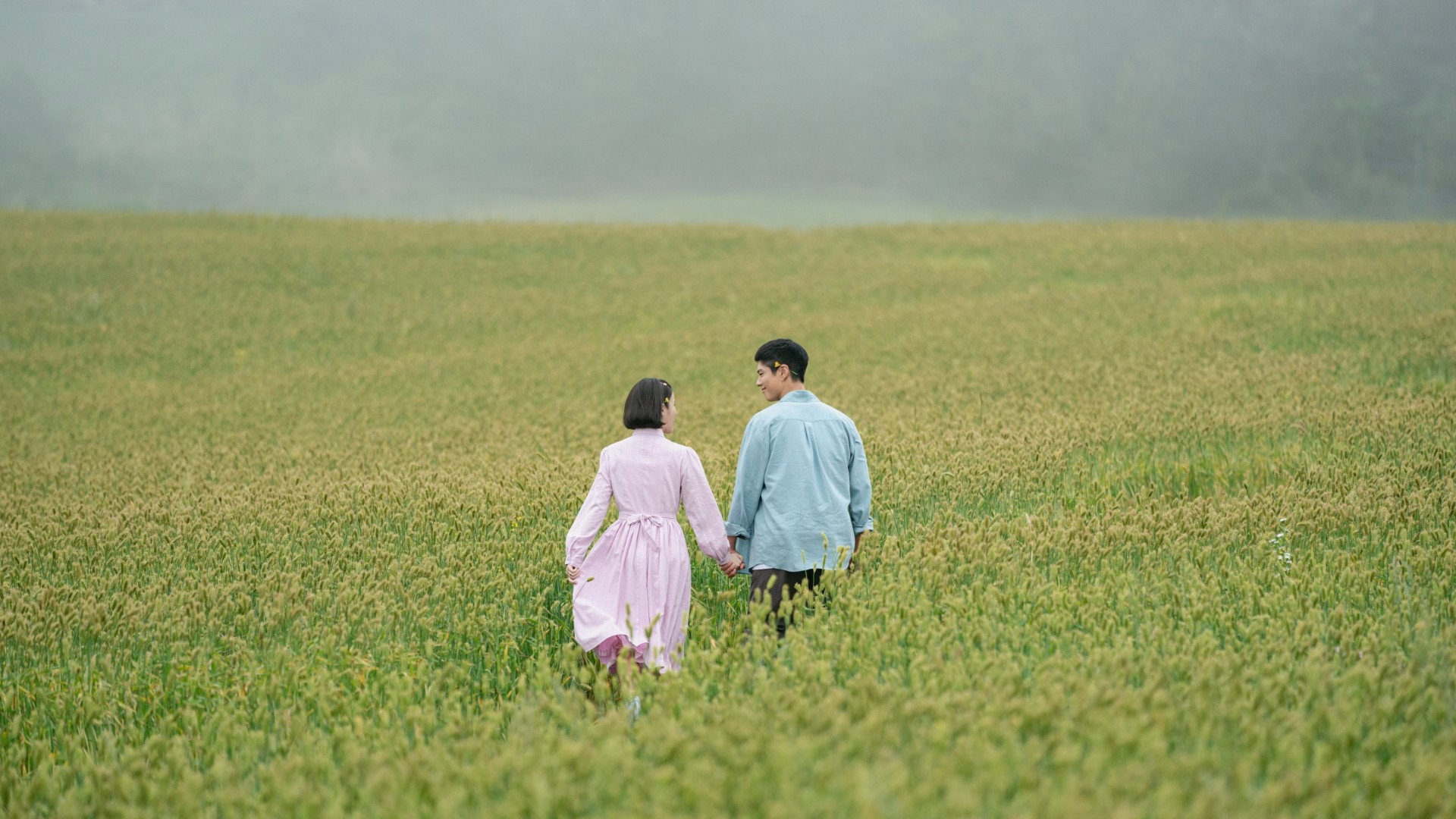
I have never been the biggest fan of what you might call 'plotless' media. Stories like Lady Bird, where the characters are simply moving through life without a clear mission, villain or dramatic goal driving the narrative forward. These stories are deeply loved by many, but I often find myself waiting for the moment when the 'real' story begins: a conflict, a twist or a big event that makes the story really begin for me. Despite this, I can confidently call When Life Gives You Tangerines a masterpiece. Somehow, a story that is built around ordinary lives and everyday struggles managed to keep me completely captivated. It made me laugh, it made me cry, and it moved me more deeply than any other piece of media I have experienced.
When Life Gives You Tangerines is a Korean drama series released on Netflix. The story follows Oh Ae-sun, a young girl growing up in poverty on Jeju Island during the 1950s, and follows her life, her family and the generations that come after her. The series explores not only Ae-sun’s childhood and adulthood, but also the lives and sacrifices of the women who came before her and the children who inherit her fate. Growing up on Jeju, South Korea’s largest island, Ae-sun dreams of escaping poverty, moving to Seoul, attending university and becoming a poet. The series follows her relationship with Yang Gwan-sik and their lives together from the 1950s to the early 2000s across 16 episodes.
If I had to summarise this show, I would describe it as the world’s most emotionally turbulent history lesson. Because the story spans several decades, viewers unintentionally learn about Korea’s changing social and political landscape alongside the characters. The show weaves personal struggles with major historical events, including the aftermath of the Korean War, political corruption, the Seoul Olympics, the Asian Financial Crisis, and the many social changes that shaped modern Korea. One of my favourite things about the show is that, at first, you are constantly trying to identify who the villain is. However, in my opinion, the series never gives you a simple answer. Instead, it challenges the idea that suffering always comes from one person.
Early in the series, we learn that Ae-sun’s mother, Jeon Gwang-rye, is a haenyeo, a female free diver from Jeju. The haenyeo are one of the most fascinating parts of Jeju’s history. Historically, Jeju developed a semi-matriarchal society partly because these women became the primary breadwinners of their families. Haenyeo dive into the ocean without oxygen tanks to harvest seafood, providing both food and income for their communities.
Unlike many traditional Korean inheritance practices, haenyeo traditions and diving skills were passed down from mothers to daughters. These women built their own communities, developed economic independence, and took great pride in their identity. Today, the haenyeo tradition is recognised by UNESCO as an Intangible Cultural Heritage. However, the show does not romanticise this culture. Instead, it explores both the pride and the pain that comes with it. Especially the expectation that daughters must inherit the same difficult life as their mothers.
At first, Ae-sun’s mother appears to be the villain of the story. She is harsh and emotionally distant towards her daughter. She demands obedience and rarely expresses affection in the way Ae-sun wants. Initially, I thought the story would focus on Ae-sun healing from the wounds caused by a difficult mother-daughter relationship. But as the story unfolds, we realise that her harshness comes from a cruel mixture of love and fear. Despite the cultural importance of being a haenyeo and the expectation that Ae-sun would eventually join the profession, one of the first major choices we see from her mother is her refusal to teach Ae-sun how to dive. She does not want her daughter to suffer the same hardships she endured. The physical dangers, health consequences, and sacrifices that come with the life of a haenyeo are things she wants Ae-sun to escape.
Gwang-rye’s greatest act of love here is choosing uncertainty. She does not know how Ae-sun will survive without the skill that has supported generations of women before her, especially because Ae-sun is poor and has limited opportunities. Yet, she still chooses to break the cycle. At this point, the sea itself becomes a character in the story. It represents a lot of the suffering we see. Yet, it provides the haenyeo community with a livelihood, but it also takes a physical and emotional toll on the women who depend on it. After Ae-sun’s mother’s death, the sea becomes one of the first things we associate with Ae-sun’s grief.
After her mother’s death, Ae-sun is raised by the haenyeo community, who promised Gwang-rye that they would never allow her child to become a beggar. Even though Ae sun will never become a haenyeo, they treat her as one of their own. While helping her stepfather raise her siblings and continuing her education, Ae-sun holds onto her dream of leaving Jeju, attending university, and becoming a poet. The haenyeo may believe her dream is simply wishful thinking, but they never dismiss it. Their acceptance represents one of the strongest themes of the series, sisterhood and sacrifice.
The most memorable part of this early part of the series for me is at one point, Ae-sun is devastated after winning class president, only for the position to be given to a boy whose father bought treats for the class. Ae-sun tries to convince herself that becoming vice president is fine, but her mother tells her: “I am the poor one, not you. Don’t hang back. Live your life to the fullest.” To me, these words become the emotional foundation of the entire series. It is the standard by which we, as viewers, begin to understand what true love looks like.
Although Ae-sun’s romance with Yang Gwan-sik is the central romantic relationship of the show, what makes it so powerful is that his love mirrors the love of her mother. Like Gwang-rye, Gwan-sik does not want Ae-sun to shrink herself because of her circumstances. He believes, just as her mother did, that her life should be bigger than the limitations placed upon her. This same belief extends to the daughter they later have together. Throughout the series, Gwan-sik repeatedly breaks tradition in order to give his family a better life. He recognises the privilege he holds as a man in a society where women are often expected to endure silently, and instead of using that privilege to reinforce the system, he uses it to protect the women around him. I believe that as a husband and father, Gwan-sik’s devotion comes from a desire to prevent the women he loves from having to sacrifice parts of themselves. This is why his character is so beloved.
What makes this show feel so deeply human is that, despite Ae-sun being an incredible woman, the series never turns her into a perfect figure. We are also allowed to see the mistakes she makes as a mother. Her love for her children is undeniable, but the series shows us that love does not always prevent people from causing hurt.
I do not usually watch K-dramas, but When Life Gives You Tangerines has become one of my favourite pieces of media and a Letterboxd favourite. I described it as “if Hamnet was a television series”, a story built around grief, family and love.
This show is unique in the way that it does not focus on extraordinary people changing the world. Instead, it honours ordinary people who endure, sacrifice, and love despite everything life places in front of them. It shows us disappointment, worst case scenarios and little triumphs that happen everyday. Most importantly, it places women at the centre not only as mothers, daughters, and wives, but as complete human beings with dreams, regrets, strength and stories of their own.