Although not the first slasher ever made, "Halloween" (1978) helped popularise the genre and establish some of its most recognisable conventions. Its opening sequence encapsulates the mystery and tension of slasher horror through an invasion of privacy. Before revealing the killer’s identity, the film gives the audience access to the killer’s perspective, turning an ordinary house into a place of surveillance and danger.
Through an eerie point-of-view shot, the camera adopts the perspective of someone watching Judith Myers while she’s in her bedroom, brushing her hair in front of a mirror. The girl’s exposed body and unguarded behaviour suggest an expectation of privacy. But the camera violates that expectation before the knife does. When Judith notices she is being watched, it’s already too late.
This sequence brings together sexual intimacy, vulnerability, and violence, a combination closely associated with slasher films. However, the unease it creates depends on more than the nudity and the murder. The point of view puts the audience in the position of someone without permission to be there, while an ordinary house becomes somewhere dangerous. The tension comes from anticipation: we know something is going to happen before we know exactly when or how. It might come with a classic jump scare like a loud sound, or the sudden appearance of a killer who’s been hiding, but the death itself is no surprise.
Watching through windows and moving unnoticed through someone else’s home turn familiar surroundings into places of exposure. But if the basic premise of a slasher sounds so unpleasant, why do audiences keep returning to them?
I turned first to my own experience as a slasher fan. I wondered why I like them so much, or at least why I’m automatically interested in anything with that premise. I instantly thought about one of my favourite things about them: I know what’s going to happen. Even when I don’t.
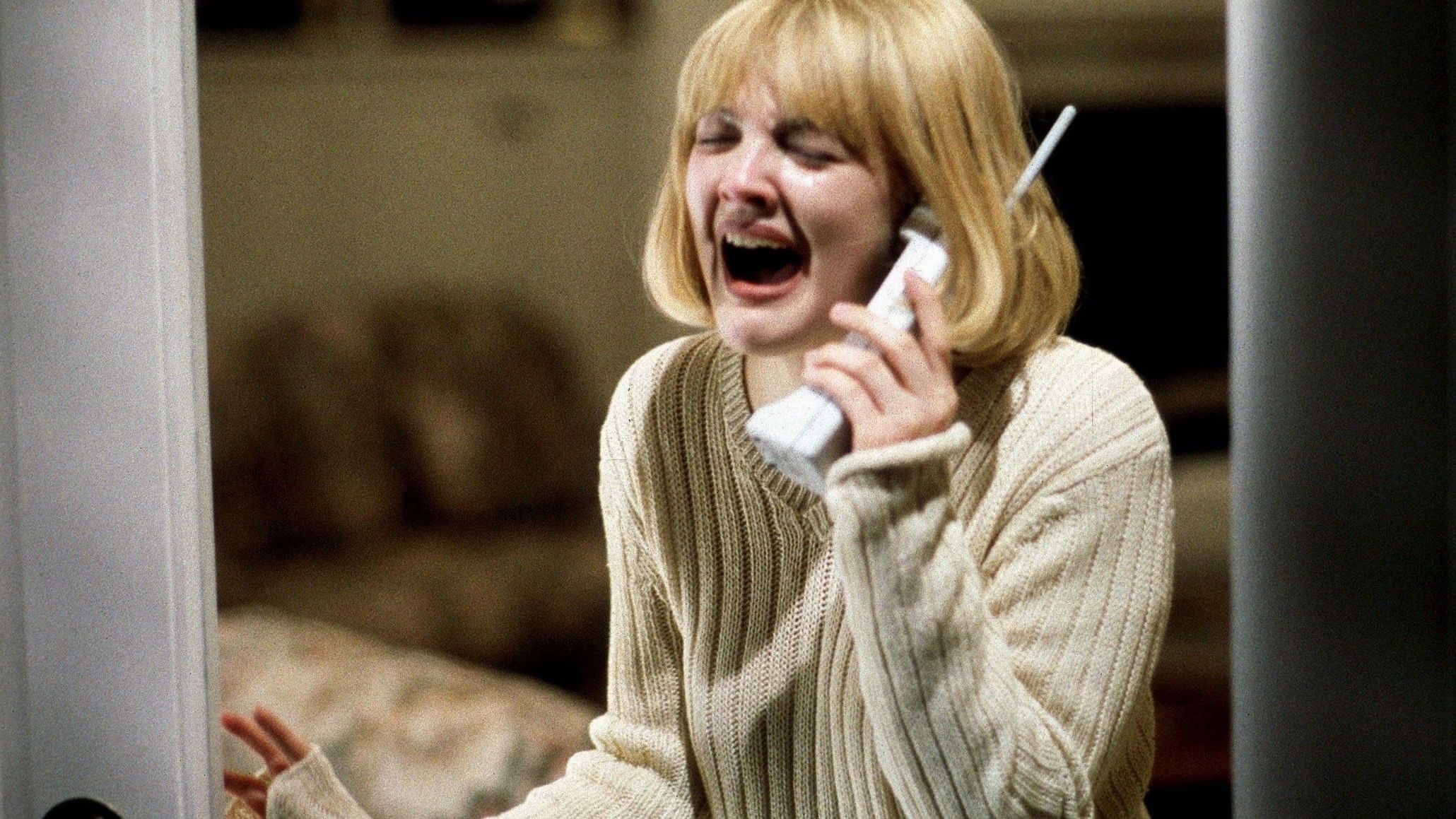
The "Scream" franchise represents that better than any other slasher, in my opinion. Right from the first film, it plays with the conventions its audience already recognises. The opening scene plays with our expectations, making us believe that Drew Barrymore’s character might be its Final Girl, only to kill her before the story has really begun. At the same time, it introduces us to the killer through his voice and antics, beginning with a question that immediately turns horror knowledge into part of the game: “Do you like scary movies?”
The question is directed at the character, but also at the audience. Our first contact with Ghostface is through his playful and mysterious demeanour. Knowing that a huge part of its audience is probably made up of scary-movie fans who actually know the answers to those questions, the film gives viewers the chance to believe that maybe, if it were them, they could survive. Outsmart the killer.
Throughout the franchise, "Scream" keeps playing with its own genre conventions, the idea of a film within a film, and predictability itself. It gives the audience the comfort of sameness, but also the thrill of finding out who dies first, who escapes, and who’s behind the mask this time. Although some entries might disappoint when it’s time for the final revelation, the franchise still succeeds at something big: getting people out of their houses and into cinema rooms, ready to enter its world again.
While trying to find some actual data on why some people like to be scared, I came across a theory developed by psychologist Dolf Zillmann called excitation-transfer theory. Wait wait, don’t run away. It’s a difficult name for a pretty simple idea: physiological arousal – the physical state your body enters when something makes you tense, alert or excited – produced by one emotional experience doesn’t disappear immediately after that experience ends. That means some of this residual arousal can intensify the response to whatever happens next.
In the context of horror, physiological arousal could be caused by being kept in a state of tension, regardless of whether a person enjoys that thrill or hates the unease it creates. Either way, when the suspense is finally resolved, that arousal doesn’t disappear immediately. It lingers as the emotional experience changes from tension into the relief of it being over.
The whole experience can therefore become more satisfying, even though reaching that relief required fear, violence and death.
In slashers specifically, the ending usually gives the audience some form of resolution. Even if we leave the cinema knowing that Michael Myers is still alive or Ghostface will have its copycats, we have the ambulances outside, blankets around the shoulders of those who survived. The immediate threat has been resolved. For now, the Final Girl has won.
At the same time, there is still some mystery left behind: a dread lingering underneath it all because we know the killer isn’t completely gone. That creates another kind of anticipation. We get the relief of knowing that things are okay for now, while still carrying the spine-chilling knowledge that the threat may return.
The Final Girl ultimately becomes the hero. She fights the killer, often not because she is stronger, but because she is intelligent, observant and quick enough to hide, escape or eventually fight back. She often starts as this very girl-next-door kind of figure and gradually becomes a fighter. Her being such an ordinary person gives us, as the audience, an easier way to relate to her and eventually identify with her.
Slashers are predictable and familiar, even when they’re brand new. Film scholar Steve Neale talks about this through the idea of repetition and difference within a genre. We enter the same genre expecting something new, expecting each film to do something different inside what we already recognise. The expectation that something different is coming, something attempting to be new, becomes part of the structure itself.
One of the year’s buzziest films, "Teenage Sex and Death at Camp Miasma", is a great example of that. It brings us different kinds of characters alongside the usual group of potential victims and survivors. It maintains the humour that slashers have increasingly played with, but openly questions the genre’s often troubling treatment of gender and sexuality. And it gives us two Final Girls in a romantic relationship. Not the first, but not exactly usual.
It also plays with the slasher form through its metafictional structure, much like "Scream" does. We have films within films, and a killer who begins as just a character inside those films before the story raises the possibility that perhaps the killer is the one creating the stories everyone else is living through. So although none of these elements are unheard-of, together they make something new.
The killer and the Final Girl are two of the slasher’s most recognisable constants. But there’s also always some kind of home. Be it the classic "Scream" house, the Myers house, or a new one we’ve never seen before, the audience sits eagerly, instinctively knowing their way around. The front door left open for just enough seconds, the backyard door probably unlocked, a closed door with a knife suddenly coming through it.
Maybe a slasher doesn’t always feel like coming home, but it does mean coming to a house, at least. It’s the architecture of a genre. Every slasher builds us a new house out of materials we already recognise. We enter expecting somebody to rearrange the furniture, lock one door, leave another open and hide inside a closet upstairs.
The pleasure is that we know how houses like this work, but we don’t know exactly what the next one is going to do with us.